How to Make an HBAR to BTC Swap Safely and Efficiently
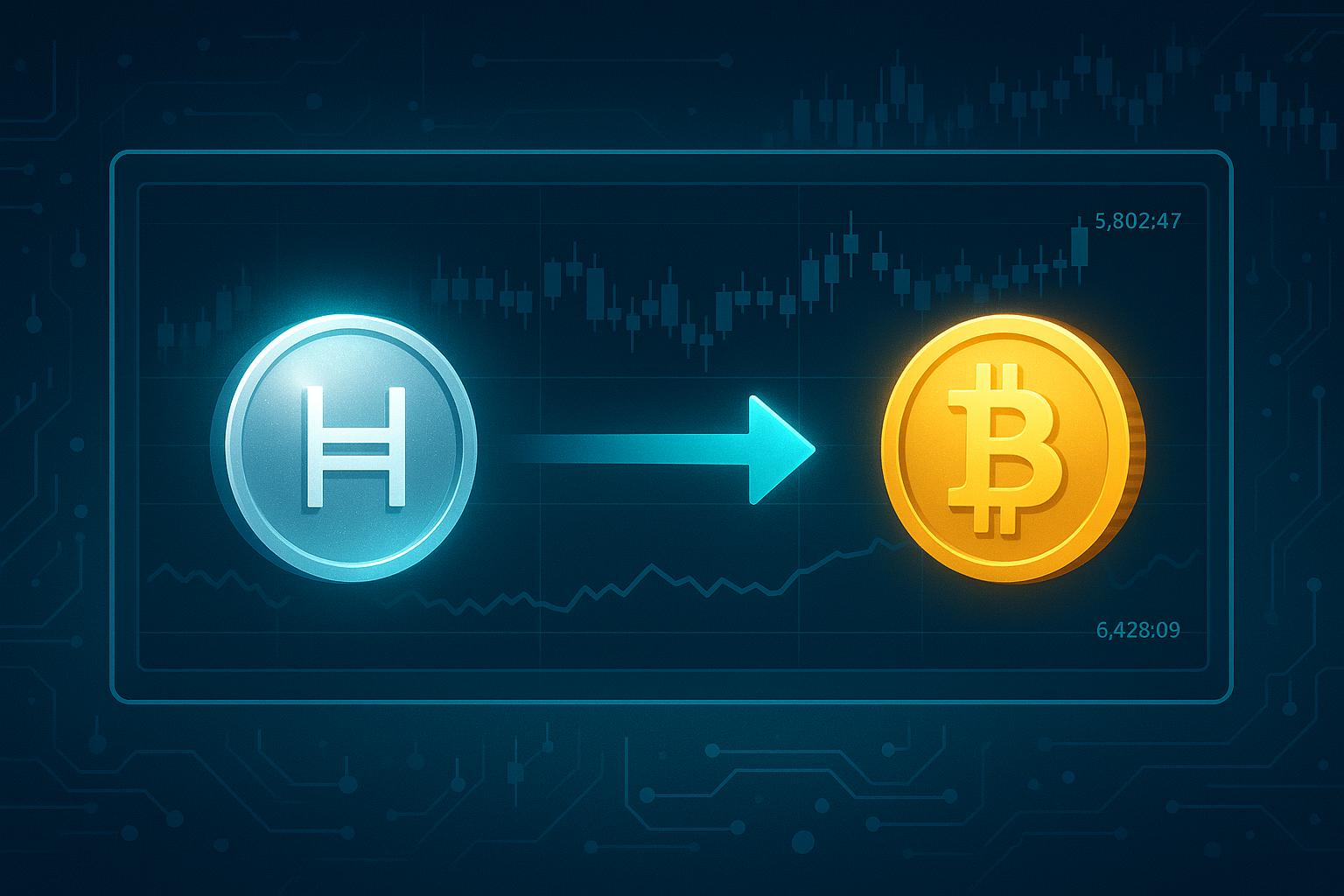
Swapping Hedera Hashgraph’s HBAR for Bitcoin (BTC) has become a common move for traders who want to shift from a fast, low-fee network to the world’s most established cryptocurrency. Whether you are rebalancing your portfolio, cashing out profits, or testing a new strategy, understanding how an hbar to btc swap works can help you avoid mistakes and save money on fees.
In this guide, you will learn why this type of swap matters, what benefits and risks to consider, and how to complete the process step by step on a non-custodial exchange. We will focus on approaches that let you keep control of your keys, protect your privacy, and still swap crypto instantly without getting lost in complex trading interfaces.
If you already hold HBAR on Hedera and want exposure to BTC without going through a traditional centralized exchange, this article will help you navigate the process clearly and safely.
Why an HBAR to BTC Swap Matters
HBAR and BTC serve very different roles in the crypto ecosystem. HBAR is a utility token for Hedera, a high-throughput distributed ledger designed for low-cost, fast transactions. Bitcoin, on the other hand, is the most widely recognized store of value in the crypto market, often treated as “digital gold.”
Strategic Portfolio Rebalancing
Many crypto investors use an HBAR to BTC swap as part of a broader strategy:
- Diversification: Reducing concentration risk in a single asset by adding BTC.
- Risk management: Moving some capital from a higher-risk altcoin into a more established asset.
- Profit taking: Locking in HBAR gains by rotating into BTC during market rallies.
- Liquidity access: Using BTC as a bridge asset to access other markets or off-ramps.
Convenience and Speed
Traditional centralized exchanges (CEXs) require signups, KYC, and full custody of your assets by a third party. A direct HBAR to BTC swap using a non-custodial platform can:
- Cut down on time spent transferring between multiple exchanges
- Reduce the number of on-chain transactions and withdrawal fees
- Lower counterparty risk by avoiding long-term storage on centralized platforms
Key Benefits of Swapping HBAR to BTC
If you choose the right platform and follow best practices, an HBAR to BTC swap can offer several advantages.
1. Non-custodial Control of Your Funds
Non-custodial exchange flows do not require you to deposit and leave your assets with a service provider. Instead, you:
- Send HBAR from your own wallet
- Receive BTC directly to a wallet you control
- Avoid account freezes or withdrawal limits tied to centralized custody
This model aligns with the core crypto principle: “Not your keys, not your coins.”
2. Privacy and Lower Friction
Some swap services allow you to trade without creating a user account or submitting extensive personal data, as long as you are within regulatory limits. This can:
- Preserve more of your financial privacy
- Reduce friction for small or medium-sized swaps
- Make it easier to react quickly to market movements
3. Simplicity Compared to Order Books
Direct swap interfaces typically use a simple “You send / You receive” layout. You do not need to understand:
- Order books
- Limit vs market orders
- Maker / taker fee structures
Instead, you get a quote, confirm it, send your HBAR, and receive BTC to your chosen address.
4. Potentially Lower Total Costs
While every service charges a spread or fee, you might still pay less overall because:
- You avoid multiple deposit and withdrawal fees across exchanges
- You reduce the number of separate network transactions
- You cut down the time your funds sit in a high-risk environment
Risks and Drawbacks to Consider
Even though an HBAR to BTC swap can be efficient, it is not risk free. Understanding the trade-offs helps you avoid costly mistakes.
1. Price Volatility
Crypto prices can move quickly while you are in the middle of a transaction. Depending on the platform:
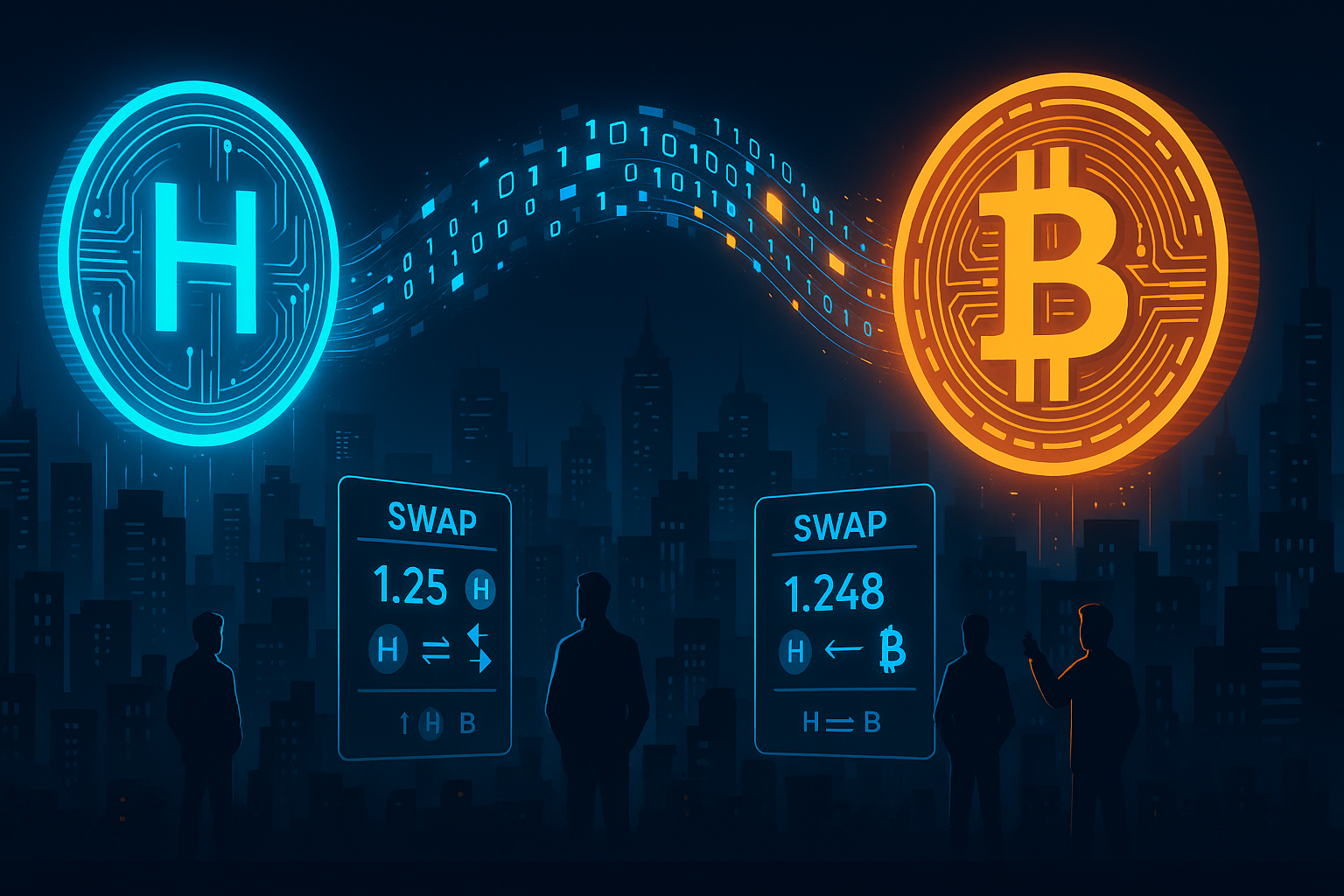
- Fixed-rate quotes protect you from sudden price changes during a set time window but may include a safety margin in the rate.
- Floating-rate quotes are tied to the live market. You might receive more or less BTC than expected if prices move between quote and execution.
2. Network and Confirmation Delays
While Hedera transactions are usually fast, BTC confirmations depend on network conditions and fees. If:
- Bitcoin mempool is congested, your BTC may take longer to appear
- You misconfigure BTC fees from your wallet, you might wait longer than expected
3. Platform Risk
Not every swap service is equal. You should be cautious about:
- Opaque fee structures or unfair spreads
- Lack of transparency about how rates are calculated
- Poor support or no recourse in case of technical issues
Always test with a small amount first when using a new platform.
4. Irreversible Transactions
Blockchain transfers are final. Common mistakes include:
- Sending HBAR from an unsupported network or account type
- Entering the wrong BTC receiving address
- Ignoring minimum deposit amounts required for a swap
Any of these can result in lost funds if the swap platform cannot recover your assets.
Step-by-Step Guide: How to Swap HBAR to BTC
This section outlines a typical non-custodial workflow. Specific screens will vary by platform, but the logic is similar across services like private exchange and non-custodial swap tools.
Step 1: Prepare Your Wallets
You need:
- An HBAR wallet with enough balance to cover the swap plus network fees.
- A BTC wallet address where you will receive your Bitcoin. This could be a hardware wallet, mobile wallet, or desktop client.
Double-check that:
- You control the BTC private keys (avoid sending to custodial deposit addresses unless that is your intention).
- Your HBAR wallet is compatible with external transfers and supports memo/ID fields if required.
Step 2: Choose a Non-custodial Swap Service
Look for these traits when selecting a platform:
- Clear fees or spread information
- No forced account creation for modest amounts
- Reasonable minimum and maximum limits
- Transparent support or documentation
Step 3: Enter Swap Details
On the swap interface:
- Select HBAR in the “You send” field.
- Select BTC in the “You receive” field.
- Type the amount of HBAR you want to exchange, or the target amount of BTC you want to receive.
The platform will display:
- The estimated BTC you will receive
- The type of rate (fixed or floating), if applicable
- Any fees included in the swap
Step 4: Provide Your BTC Receiving Address
Paste your BTC wallet address into the appropriate field. Then:
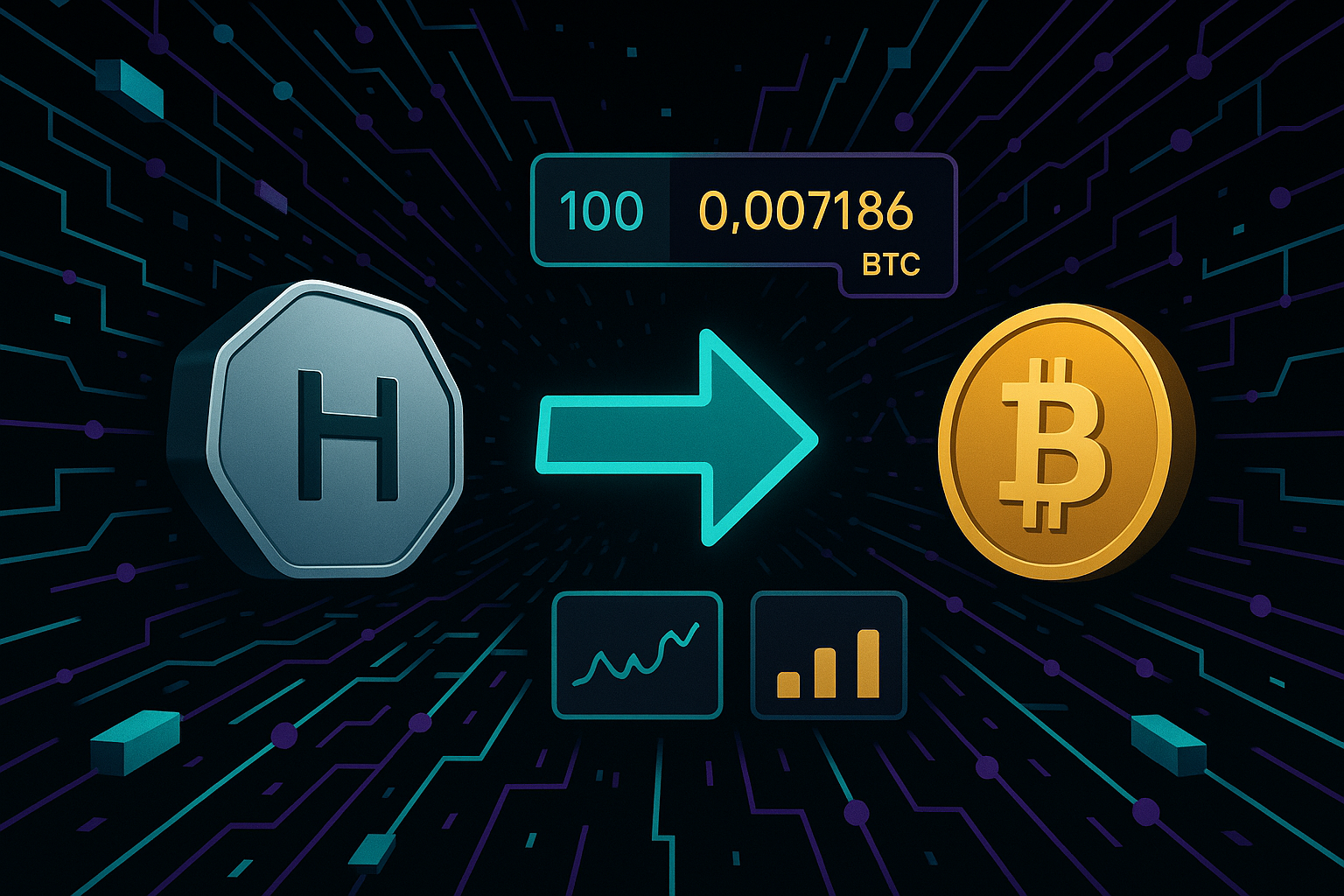
- Check the first and last characters of the address to confirm it is correct.
- Optionally, scan a QR code from your wallet app instead of typing.
- Confirm if the address is a standard on-chain Bitcoin address (not a Lightning invoice unless the service specifically supports it).
Step 5: Review Quote and Confirm
Before committing:
- Verify the HBAR amount you are sending.
- Review the BTC amount you are expected to receive.
- Check any timer for fixed quotes (you may have only a few minutes to complete the transfer).
Once you are satisfied, confirm to create the swap order. The service will show you:
- A unique HBAR deposit address (and possibly a memo or account ID).
- The minimum and maximum amount allowed for that order.
- The deadline by which your HBAR must arrive.
Step 6: Send HBAR From Your Wallet
From your HBAR wallet:
- Copy the deposit address (and memo/ID if required) from the swap page.
- Paste it into your wallet’s send form.
- Enter the exact HBAR amount specified by the order.
- Confirm and broadcast the transaction.
Be extremely careful with memo or account ID fields. Missing or incorrect memo information is a common reason for swap delays.
Step 7: Wait for Processing and BTC Delivery
After you send HBAR:
- The service detects your deposit on the Hedera network.
- Once confirmed, it executes the swap according to the current or locked rate.
- BTC is sent to the receiving address you provided.
Depending on network conditions and service policies, this can take from a few minutes to longer during heavy congestion on Bitcoin. Use the transaction or order ID on the swap page to monitor the status.
Practical Tips for a Smooth HBAR to BTC Swap
1. Start with a Small Test Transaction
Before swapping a large amount:
- Perform a small test swap to confirm that everything works as expected.
- Verify that BTC actually arrives at your wallet and that you entered the address correctly.
2. Double-check Network Details
Make sure:
- You are sending HBAR on the correct network supported by the swap service.
- Your BTC address format (Legacy, SegWit, Bech32) is accepted.
3. Watch Out for Minimum Amounts
Swap services often have minimum deposit thresholds. If you send less than the minimum:
- The service might not process your transaction automatically.
- You may need to contact support, and recovery is not always guaranteed.
4. Consider Total Effective Costs
Compare not just the visible fee, but:
- The swap rate compared to market price
- Any fixed service fees or network withdrawal fees
- The opportunity cost of time locked in lengthy processes
5. Secure Your Wallets
An efficient swap is useless if your wallets are not secure. Always:
- Back up your seed phrases offline and store them safely.
- Enable security features such as passphrases or hardware wallets for large holdings.
- Update your wallet software regularly and download from official sources only.
Conclusion: Make Your HBAR to BTC Swap Work for You
Swapping HBAR to BTC is more than a simple trade. It is a portfolio decision that can impact your risk profile, liquidity options, and long-term strategy. By using a transparent, non-custodial platform, understanding fees and rates, and following a careful step-by-step process, you can move between Hedera and Bitcoin with confidence.
Whenever you initiate an hbar to btc swap on a non-custodial exchange, take a moment to verify addresses, network details, and minimum amounts. Start small, confirm that your BTC arrives as expected, then scale up if the experience matches your expectations. With thoughtful preparation and secure wallet practices, your HBAR to BTC conversions can become a smooth, reliable part of your broader crypto strategy.
Ready to Swap?
Convert your crypto instantly on GhostSwap — no KYC, no sign-up required.
Popular swaps: BTC to XMR | BTC to ETH | XMR to BTC | ETH to XMR | BTC to SOL