Introduction
As crypto users diversify beyond Bitcoin and Ethereum, NEAR Protocol has become a popular choice thanks to its speed, low fees, and developer friendly design. At the same time, Bitcoin remains the primary store of value and the most traded crypto asset. This makes the near to btc swap one of the most useful moves for investors, traders, and DeFi users who want flexibility between an efficient smart contract chain and the security of Bitcoin.
Today, you do not need a centralized account or complex order books to convert NEAR to BTC. With modern non custodial swap services, you can
swap crypto instantly from NEAR to BTC using only your own wallet. This simplifies the process for privacy focused users and for anyone who wants to avoid KYC friction.
This guide explains why the NEAR to BTC market matters, the main benefits and risks, and walks you through a clear, step by step process so you can perform a secure near to btc swap with confidence.
Why the NEAR to BTC Swap Matters
Bridging a high performance L1 and the original store of value
NEAR Protocol is a fast, proof of stake layer 1 blockchain designed for usability, low cost transactions, and scalable dApps. Bitcoin is a slower, proof of work blockchain focused on decentralization, censorship resistance, and long term value storage.
Swapping NEAR to BTC lets you:
- Lock in profits from NEAR price appreciation into a more established asset.
- Rotate capital between a high performance smart contract ecosystem and a conservative store of value.
- Exit NEAR positions quickly during volatility while still staying in crypto rather than cashing out to fiat.
Increasing flexibility without giving up self custody
In the early days of crypto, converting altcoins to BTC usually required depositing funds on a centralized exchange, passing KYC checks, and trusting a third party with your assets. The rise of non custodial swap platforms changed that model.
With a direct near to btc swap, you can:
- Maintain control of your private keys throughout the process.
- Avoid long onboarding flows and exchange withdrawal limits.
- Reduce the number of intermediaries between you and your assets.
Supporting cross chain strategies
Many advanced users run multi chain strategies, such as:
- Yield farming or staking on NEAR while holding BTC as long term collateral.
- Rebalancing portfolios between NEAR, BTC, and stablecoins.
- Funding Bitcoin layer 2 activity (like Lightning or sidechains) using gains earned on NEAR.
Efficient NEAR to BTC swaps allow you to move capital across ecosystems quickly enough to respond to changing markets or opportunities.
Key Benefits of a NEAR to BTC Swap
1. Portfolio diversification and risk management
NEAR and BTC have different risk profiles and market behavior. Swapping between them helps you manage exposure:
- BTC is widely viewed as a macro asset, often used as a hedge against inflation or long term debasement of fiat currencies.
- NEAR is more focused on growth, DeFi, and application usage, which can mean higher upside and higher volatility.
By periodically executing a near to btc swap, you can:
- Lock in gains when NEAR rallies strongly against BTC.
- Reduce downside risk if you think altcoin markets might correct.
- Maintain a predefined allocation between growth assets (NEAR) and store of value (BTC).
2. Faster access to Bitcoin without traditional exchanges
If your capital is already on NEAR, swapping straight to BTC through a non custodial, cross chain swap can be much faster than:
- Sending NEAR to an exchange.
- Waiting for confirmations and deposit credit.
- Placing an order on the order book.
- Withdrawing BTC to your wallet.
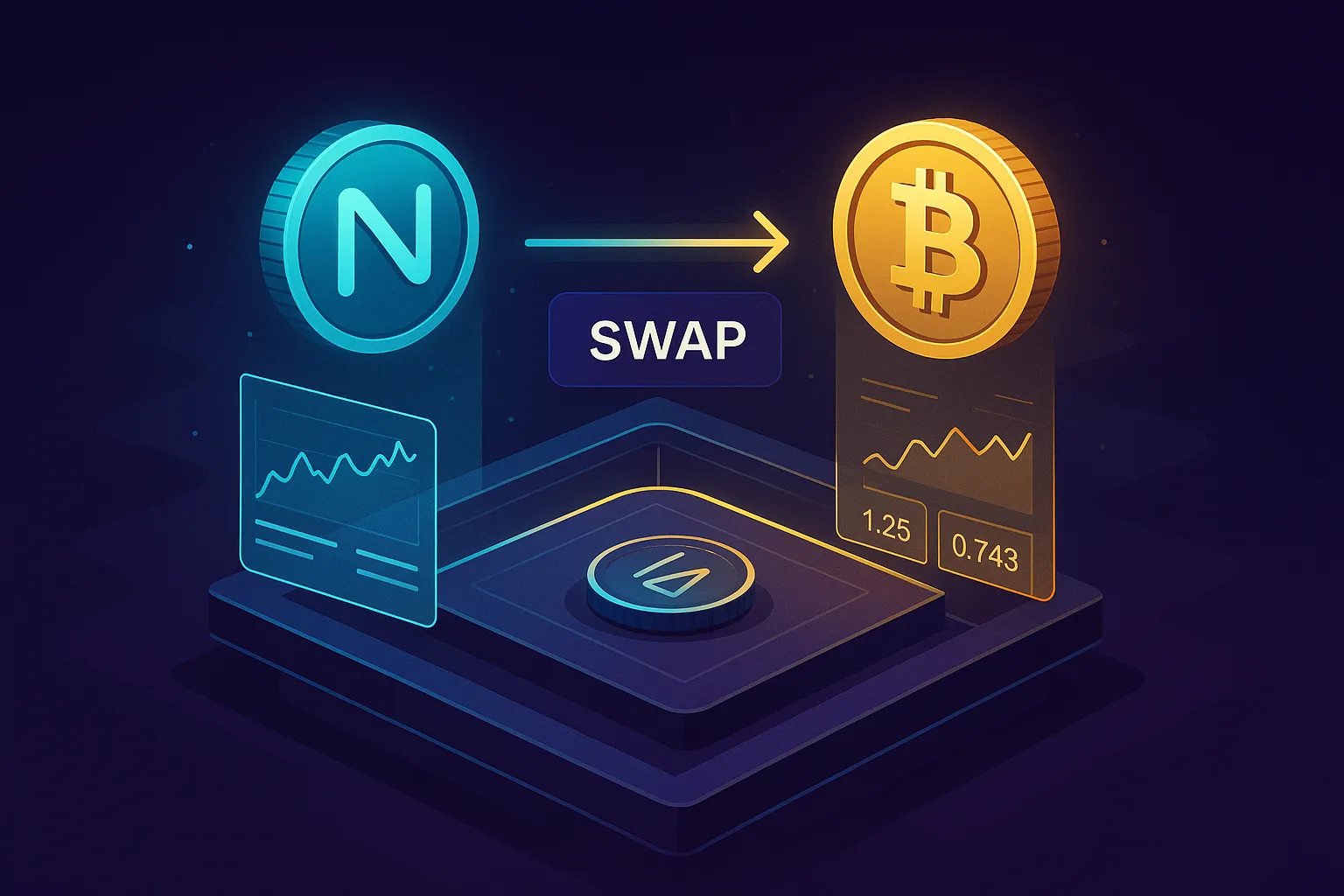
Direct NEAR to BTC solutions compress that into a single transaction flow. This efficiency is especially valuable in volatile markets where prices can move quickly while you wait for exchange approvals and blockchain confirmations.
3. Maintaining privacy and control
Centralized exchanges often require extensive identity verification and maintain detailed records of trading activity. When you use a reputable
private exchange for NEAR to BTC, you can:
- Stay in control of your keys, reducing custodial risk.
- Avoid mixing your on chain activity with centralized exchange databases.
- Perform swaps from any compatible wallet, often without account creation.
Privacy oriented, non custodial swaps are especially useful for security conscious users or those managing funds on behalf of clients who require minimized counterparty exposure.
Risks and Drawbacks of NEAR to BTC Swaps
1. Price slippage and exchange rate risk
Any time you trade, you face potential slippage between the quoted rate and the execution rate. During a near to btc swap, this can be caused by:
- Rapid market movements between quote time and on chain confirmation.
- Limited liquidity on the route or pools that provide the swap.
- Network congestion or unusual gas spikes that slow execution.
To manage this, verify the quoted amount of BTC you will receive for your NEAR and check if the service offers fixed rate or floating rate options. Fixed rates lock your output for a short window, while floating rates track the market but may change by the time your transaction confirms.
2. Network and smart contract risk
Most cross chain swaps rely on smart contracts, liquidity providers, or specialized middleware. Risks include:
- Smart contract bugs or vulnerabilities.
- Temporary service outages or maintenance.
- Incorrectly set parameters (e.g., sending the wrong amount, using incompatible address formats).
You should always double check addresses, supported networks, and any minimum or maximum limits. Using a tested, well documented platform and keeping your own wallet secure significantly reduces your exposure.
3. Regulatory and compliance considerations
Regulations around crypto services vary by country. While a non custodial NEAR to BTC swap typically involves less direct custody risk than centralized exchanges, you still need to:
- Understand your local tax obligations when realizing gains or losses.
- Comply with any reporting requirements if you manage funds professionally.
- Monitor regulatory changes that may affect access to certain platforms.
Always consult a qualified advisor for legal or tax issues in your jurisdiction.
Step by Step Guide: How to Perform a NEAR to BTC Swap
This is a general workflow for conducting a near to btc swap using a non custodial exchange interface. Exact details may vary slightly depending on the platform and wallet you choose.
Step 1: Prepare your wallets
-
NEAR wallet
Ensure you have a functioning NEAR wallet (for example, a browser wallet, hardware wallet, or official NEAR wallet) that holds:- Enough NEAR to swap.
- A small extra amount of NEAR for transaction fees.
-
Bitcoin wallet
Prepare a BTC address where you want to receive the Bitcoin:- Use a wallet that supports native SegWit (bech32, starting with
bc1) or legacy formats as supported by the swap service. - Make sure you control the seed phrase or private key, not a custodian.
- Use a wallet that supports native SegWit (bech32, starting with
Step 2: Choose a non custodial swap platform
Pick a platform that explicitly supports NEAR to BTC. On a dedicated page such as
this NEAR to BTC swap interface, you typically specify:
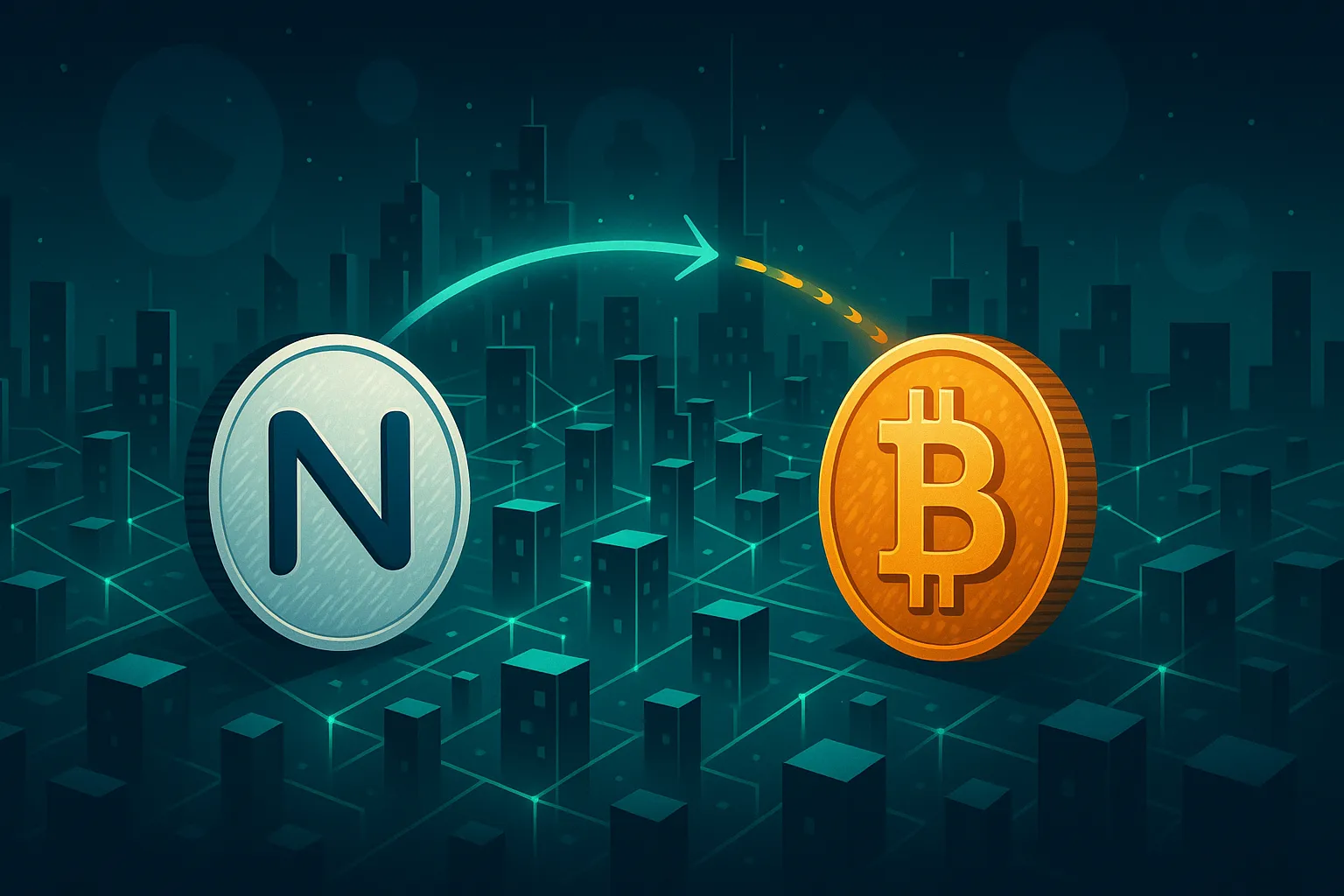
- Input asset: NEAR.
- Output asset: BTC.
- Amount of NEAR you want to exchange.
At this step, carefully read any rate details, minimum amounts, and service fees.
Step 3: Enter your BTC address
- Copy your Bitcoin receiving address from your BTC wallet.
- Paste it into the swap interface in the “Receive BTC” or equivalent field.
- Verify the address characters at the beginning and end to avoid typos.
- Optionally, send a small test swap first if you are using this address or service for the first time.
Step 4: Confirm the quote and terms
Before sending NEAR, confirm:
- The estimated amount of BTC you will receive.
- The type of rate (fixed or floating, if available).
- The time window during which the quote is valid.
- Any network fee assumptions and platform service fees.
If everything looks correct, proceed to generate the NEAR deposit address or connection prompt.
Step 5: Send NEAR from your wallet
You will receive either:
- A NEAR address (or QR code) to which you must send your NEAR, or
- A wallet connection request (e.g., via browser extension) that lets you approve the transaction directly from your wallet interface.
In your NEAR wallet:
- Enter the provided deposit address as the recipient, or approve the transaction if your wallet is integrated.
- Enter the exact NEAR amount required by the quote.
- Review gas fees and total cost.
- Confirm and sign the transaction.
Step 6: Wait for confirmations and BTC arrival
Once your NEAR transaction is detected and confirmed, the service will perform the swap and send BTC to your specified Bitcoin address. Depending on network conditions:
- The NEAR side is usually confirmed quickly due to low block times.
- The BTC side might take longer because Bitcoin blocks are slower and may require multiple confirmations before your wallet shows the funds as fully spendable.
Most platforms provide a status tracker so you can see when:
- NEAR is received.
- The swap is executed.
- BTC is broadcast and confirmed to your address.
Step 7: Verify and secure your BTC
After the swap completes:
- Check your BTC wallet balance to confirm the expected amount arrived.
- Verify the transaction hash in a Bitcoin block explorer.
- Back up your wallet seed phrase securely if you have not already.
Practical Tips for a Smooth NEAR to BTC Swap
1. Double check every address
- Always copy and paste addresses instead of typing them manually.
- Confirm the first and last several characters of both NEAR and BTC addresses.
- Beware of clipboard malware that can alter addresses; consider verifying on a second device if handling large amounts.
2. Start with a small test amount
If you are using a new platform or wallet for the first time, perform a small near to btc swap first. This helps validate:
- Correct network support.
- Correct address formats.
- Approximate processing time and fee levels.
3. Monitor fees and timing
Although NEAR fees are generally low, Bitcoin network fees can vary significantly. Before confirming a swap:
- Check current BTC fee conditions through a Bitcoin fee estimator.
- Factor in expected confirmation times for the chosen fee level.
- Avoid major network spikes during highly volatile events if you want predictable timing.
4. Keep your software updated
- Use the latest versions of your NEAR and BTC wallets.
- Update browser extensions regularly to ensure compatibility with swap platforms.
- Enable security features such as hardware wallet support and 2FA where applicable.
5. Maintain good operational security
- Never share your seed phrase or private keys with any service.
- Avoid using public Wi Fi for large swaps unless you use a trusted VPN.
- Bookmark swap URLs instead of clicking random links to reduce phishing risk.
Conclusion
The near to btc swap is a powerful tool for traders, long term investors, and DeFi users who want to move efficiently between a fast, application oriented chain and Bitcoin, the most established crypto asset. By using a non custodial, privacy friendly service to swap NEAR to BTC securely, you can keep control of your keys, minimize reliance on centralized intermediaries, and respond quickly to market changes.
As with any crypto transaction, success comes from preparation: verify addresses, understand fees and rates, test with small amounts, and keep your wallets secure. If you follow the steps and best practices outlined above, converting NEAR to Bitcoin can be a straightforward, fast, and reliable part of your broader crypto strategy.
Ready to swap?
Convert your crypto instantly on GhostSwap, a no-KYC crypto exchange, no sign-up required.
Popular swaps: BTC to XMR ETH to BTC BTC to ETH USDT (TRC20) to BTC BTC to USDT (TRC20)