XMR to ETH Swap: A Complete Guide to Exchanging Monero for Ethereum Securely
Introduction
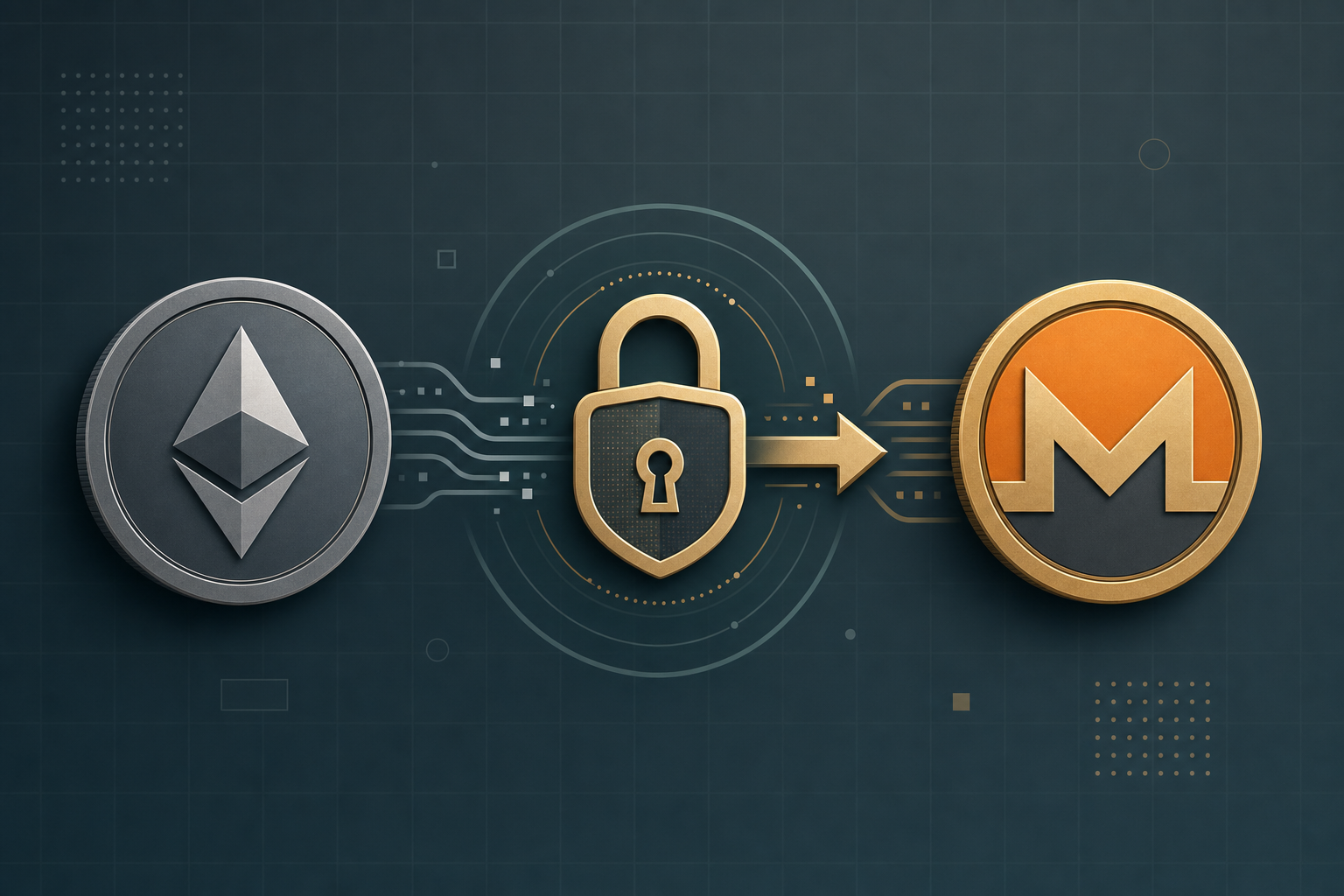
Swapping Monero (XMR) to Ethereum (ETH) has become a common move for privacy-focused users who also want access to the broader Ethereum ecosystem. Whether you are interested in DeFi, NFTs, or simply want a more liquid asset, understanding how an xmr to eth swap works is essential for both security and cost efficiency.
Unlike simple spot trades on centralized exchanges, moving from a privacy coin like Monero to a transparent smart contract platform like Ethereum involves a few extra considerations. Choosing a fast, reliable and non-custodial service that lets you swap crypto instantly can help you avoid unnecessary friction, KYC hurdles, and custody risk.
This guide walks you through why XMR to ETH swaps matter, how they work, the benefits and risks, and a practical step-by-step process you can follow today. Whether you are a casual holder or an advanced user, you will find actionable tips to make your swaps smoother and safer.
Why XMR to ETH Swaps Matter
Bridging Privacy and Utility
Monero is one of the most privacy-centric cryptocurrencies. Its ring signatures, stealth addresses, and confidential transactions make it extremely difficult to trace. Ethereum, on the other hand, is a public smart contract platform that powers:
- DeFi protocols (lending, borrowing, yield farming)
- NFT marketplaces and gaming platforms
- DAO governance and on-chain voting
- Layer 2 scaling solutions and rollups
Moving from XMR to ETH lets you bridge two very different worlds. You can preserve your transactional privacy while funding activities that require an Ethereum balance such as trading on DEXs, paying gas for smart contracts, or interacting with Web3 dapps.
Regulatory and Exchange Landscape
Many centralized exchanges have delisted or restricted privacy coins due to compliance pressure. This sometimes makes direct XMR trading pairs harder to access, especially for users in specific jurisdictions.
Non-custodial XMR to ETH swap services:
- Reduce dependence on centralized exchanges
- Limit personal data exposure and KYC requirements
- Provide global access where exchange options are limited
As regulation around privacy coins continues to evolve, knowing how to perform a direct XMR to ETH swap through a private exchange can be a valuable skill for long-term crypto users.
Key Benefits of an XMR to ETH Swap
1. Access to the Ethereum Ecosystem
ETH is the fuel for the Ethereum network. Swapping to ETH opens up:
- DeFi platforms like Uniswap, Aave, Curve, and others
- NFT marketplaces such as OpenSea, Blur, and more
- Layer 2 networks (Arbitrum, Optimism, Base) where gas fees are lower but still paid in ETH or wrapped ETH variants
If most of your holdings are in XMR, swapping to ETH is often the quickest way to participate in these ecosystems without first going through fiat.
2. Liquidity and Market Depth
ETH is one of the most liquid assets in all of crypto. The advantages of holding some ETH include:
- Tight spreads and deep order books on major exchanges and DEXs
- Easier entry and exit between crypto and fiat
- More trading pairs and arbitrage opportunities
Converting from XMR to ETH can make your portfolio easier to rebalance and manage, especially if you are actively trading or yield farming.
3. Preserving Privacy at the Entry Point
Swapping XMR to ETH via a non-custodial service lets you:
- Use Monero’s privacy features before revealing balances on Ethereum
- Avoid centralized KYC procedures for smaller amounts, depending on the service
- Retain control of your keys during the swap
For many users, this is preferable to depositing directly onto a centralized exchange, where any subsequent deposits and withdrawals may be linked to verified identity.
4. Non-Custodial Control
With a properly designed non-custodial swap service, you stay in control of your funds from start to finish. The provider coordinates the exchange, but:
- Never holds your assets in a shared custodial wallet
- Does not require login or account creation in many cases
- Completes the trade directly between two addresses you control
This minimizes counterparty risk compared to leaving funds on a centralized exchange.
Risks and Drawbacks to Consider
Every crypto operation carries some risk. An XMR to ETH swap is no exception. Before proceeding, evaluate the following:
1. Price Volatility and Slippage
Both XMR and ETH are volatile assets. Between the time you lock in a rate and when the transaction confirms, prices can move. Common issues include:
- Slippage: You receive slightly less ETH than expected if the rate moves against you.
- Market spikes: Sudden moves may cause providers to adjust or cancel quotes.
- Network delays: Slow confirmations on the Monero or Ethereum network can affect the final effective rate.
Mitigation: Use providers that show clear minimum output amounts and read the fine print about variable vs fixed rates.
2. Network Fees
Network fees affect both sides of the swap:
- Monero side: XMR transaction fees are usually reasonable, but can increase in times of heavy use.
- Ethereum side: ETH gas fees vary widely, especially when the network is congested.
If you only swap a very small amount of XMR, network fees can eat a noticeable percentage of the total value. Always check fee estimates and consider consolidating smaller swaps into a single larger one where appropriate.
3. Provider Trust and Reliability
Using a third-party swap service introduces a layer of trust. Potential issues include:
- Unclear or hidden fees
- Slow or unresponsive customer support
- Poorly documented processes for stuck or delayed transactions
Mitigation steps:
- Check reviews and community feedback before large swaps.
- Start with a test transaction using a small amount of XMR.
- Verify that the provider supports secure, non-custodial workflows and clear refund policies.
4. Privacy Trade-Offs
Monero is highly private by default, while Ethereum is fully transparent. After the swap:
- Your ETH balance and transfers are visible on-chain.
- Any linking between your identity and your Ethereum address can reveal your transaction history.
To manage this, you may want to:
- Use fresh Ethereum addresses when receiving swapped funds.
- Consider using privacy-preserving tools on Ethereum where legally allowed.
- Avoid reusing addresses tied directly to centralized exchanges or KYC accounts.
Step-by-Step Guide: How to Perform an XMR to ETH Swap
The exact interface will vary depending on the platform, but the core process is similar across non-custodial swap services. Below is a general, practical walkthrough.
Step 1: Prepare Your Wallets
You will need:
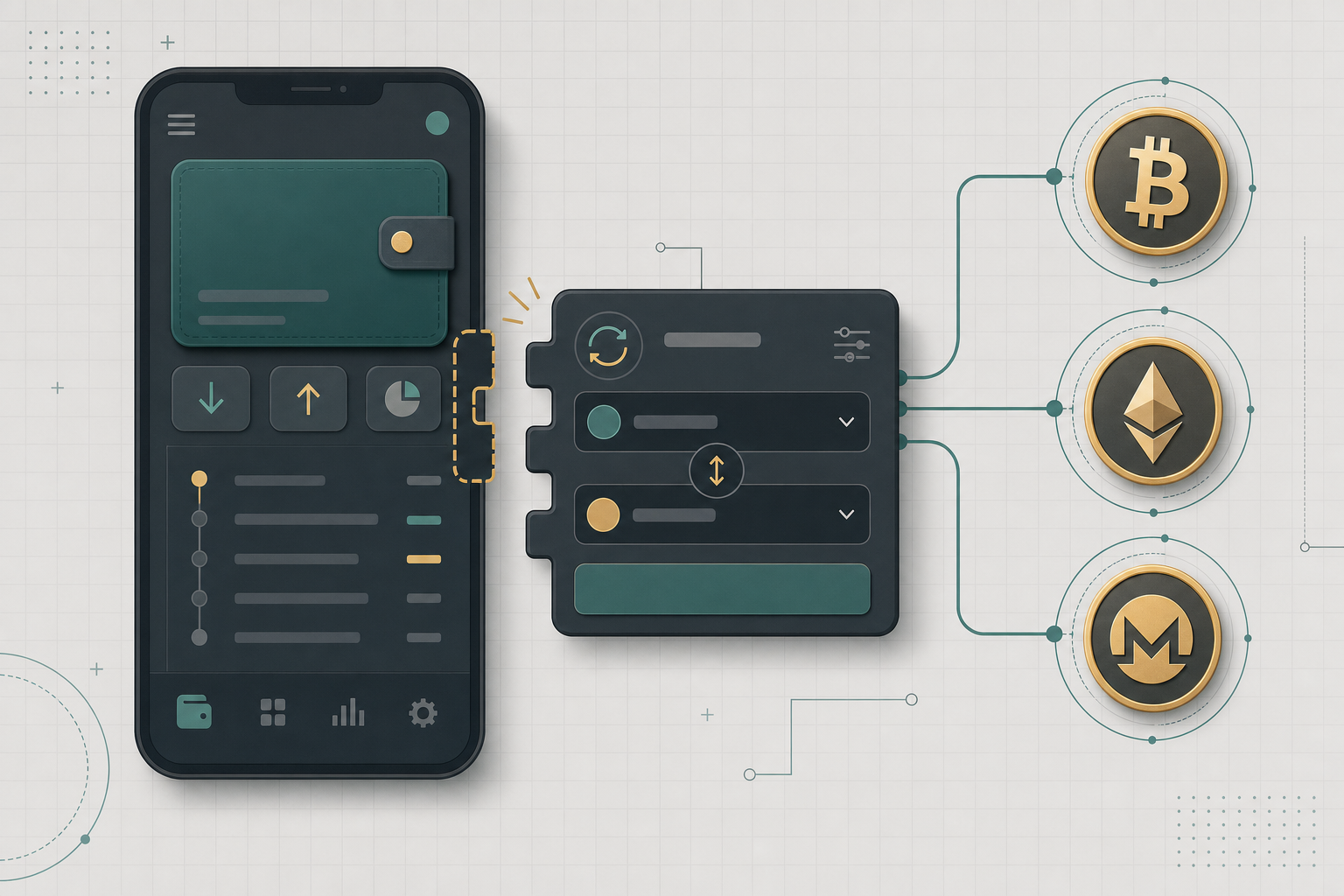
- A Monero wallet that can send XMR (desktop, mobile, or hardware wallet that supports XMR).
- An Ethereum wallet that can receive ETH (MetaMask, hardware wallet, mobile wallet, etc.).
Tips:
- Backup your seed phrases securely before starting.
- Verify you have enough XMR to cover both the swap amount and the Monero network fee.
- Ensure your ETH receiving address is correct and under your control.
Step 2: Choose a Trusted Swap Platform
Look for an XMR to ETH swap service with:
- Clear fee structure
- Strong uptime and good user feedback
- Non-custodial design and privacy-friendly policies
On many services, you can select “XMR” as the asset you send and “ETH” as the asset you receive. For example, you can use a dedicated xmr to eth swap page where the pair is preconfigured for convenience.
Step 3: Enter Swap Details
Within the swap interface:
- Select XMR as the currency you are sending.
- Select ETH as the currency you want to receive.
- Enter the amount of XMR you wish to swap or the target amount of ETH you want to receive.
- Paste your Ethereum receiving address carefully.
Many services will display:
- The estimated amount of ETH you will receive
- Network fees and provider fees (explicitly or embedded)
- Expected processing time
Check whether the rate is:
- Floating/variable: Final output may change slightly with the market.
- Fixed: Locked-in rate for a limited time window.
Step 4: Confirm and Generate the Deposit Address
After reviewing the details:
- Confirm the swap terms.
- The service will generate a unique XMR deposit address for this transaction.
- You might also see a payment ID or integrated address, depending on how Monero is handled by the service.
Double-check the following before sending any funds:
- The currency is correctly set to XMR.
- Any minimum and maximum limits are respected.
- The time window for sending (if specified) has not expired.
Step 5: Send XMR from Your Wallet
Open your Monero wallet:
- Paste the provided XMR deposit address exactly as shown.
- Enter the exact XMR amount specified in the swap order.
- Adjust fees if your wallet allows, ideally using a recommended or default setting to avoid delays.
- Confirm and broadcast the transaction.
Important notes:
- Sending a different amount than specified can delay processing or trigger manual review.
- Due to Monero’s privacy features, transaction tracking is handled differently from typical block explorers, so rely on your wallet and the swap platform’s status updates.
Step 6: Wait for Confirmations
After you send the XMR:
- The swap service waits for a predefined number of Monero confirmations.
- Once confirmed, it executes the corresponding trade and sends ETH to your provided address.
- You can usually monitor progress using a transaction or order ID on the service’s status page.
Typical timeframes:
- Monero confirmations: Depends on network conditions and the service’s policy.
- Ethereum transfer: Often within a few minutes after execution, but can vary based on gas fees and network congestion.
Step 7: Verify Receipt of ETH
Finally:
- Open your Ethereum wallet and confirm the updated ETH balance.
- Use an Ethereum block explorer (like Etherscan) to verify the incoming transaction if your wallet supports it.
- Store any transaction IDs or receipts for your records, especially if you track tax obligations.
Once your ETH is confirmed, your XMR to ETH swap is complete and you are ready to interact with the Ethereum ecosystem.
Practical Tips for a Smooth XMR to ETH Swap
1. Start with a Small Test Amount
If you are using a new platform or wallet:
- Begin with a small XMR amount as a test swap.
- Confirm that the workflow and timing match the provider’s description.
- Scale up after you are confident everything works as expected.
2. Double-Check Every Address
Because transactions are irreversible:
- Always copy-paste addresses instead of typing them manually.
- Compare the first and last several characters of the pasted address to make sure it matches.
- Consider using a hardware wallet for added security when dealing with larger values.
3. Watch Network Conditions and Gas Prices
On the Ethereum side:
- High gas prices can make small swaps uneconomical.
- Consider performing swaps during off-peak times when fees are lower.
- Use tools that estimate current gas to avoid surprises.
4. Understand the Fee Structure
Before executing any swap, make sure you know:
- Whether the provider charges a percentage fee or bakes it into the rate.
- Any minimum output guarantees or variable rate clauses.
- Additional fees on the Ethereum side, especially if the provider sends ETH via a smart contract rather than a simple transfer.
5. Keep Privacy and Compliance in Mind
Although XMR is private, ETH is not. Useful practices include:
- Using new Ethereum addresses for swapped funds where appropriate.
- Avoiding unnecessary linking of your ETH addresses to publicly known identities.
- Staying informed about the legal status of privacy tools and coins in your jurisdiction.
Conclusion
An xmr to eth swap is a powerful way to combine Monero’s privacy with Ethereum’s utility. By moving some of your holdings from XMR into ETH, you unlock access to DeFi, NFTs, DAOs, and a vast array of Web3 applications, all while retaining non-custodial control over your assets.
The key to a successful swap is choosing a reliable, privacy-conscious service, understanding the fee and rate structure, and following a careful step-by-step process. Taking a few extra minutes to double-check addresses, amounts, and network conditions can save you time and money in the long run.
If you are ready to move from Monero into the Ethereum ecosystem, using a focused, private exchange for XMR to ETH can help you manage that transition efficiently while keeping control of your funds. With the right tools and practices, XMR to ETH swaps can become a seamless part of your broader crypto strategy.
Ready to Swap?
Convert your crypto instantly on GhostSwap — no KYC, no sign-up required.
Popular swaps: BTC to XMR | BTC to ETH | XMR to BTC | ETH to XMR | BTC to SOL