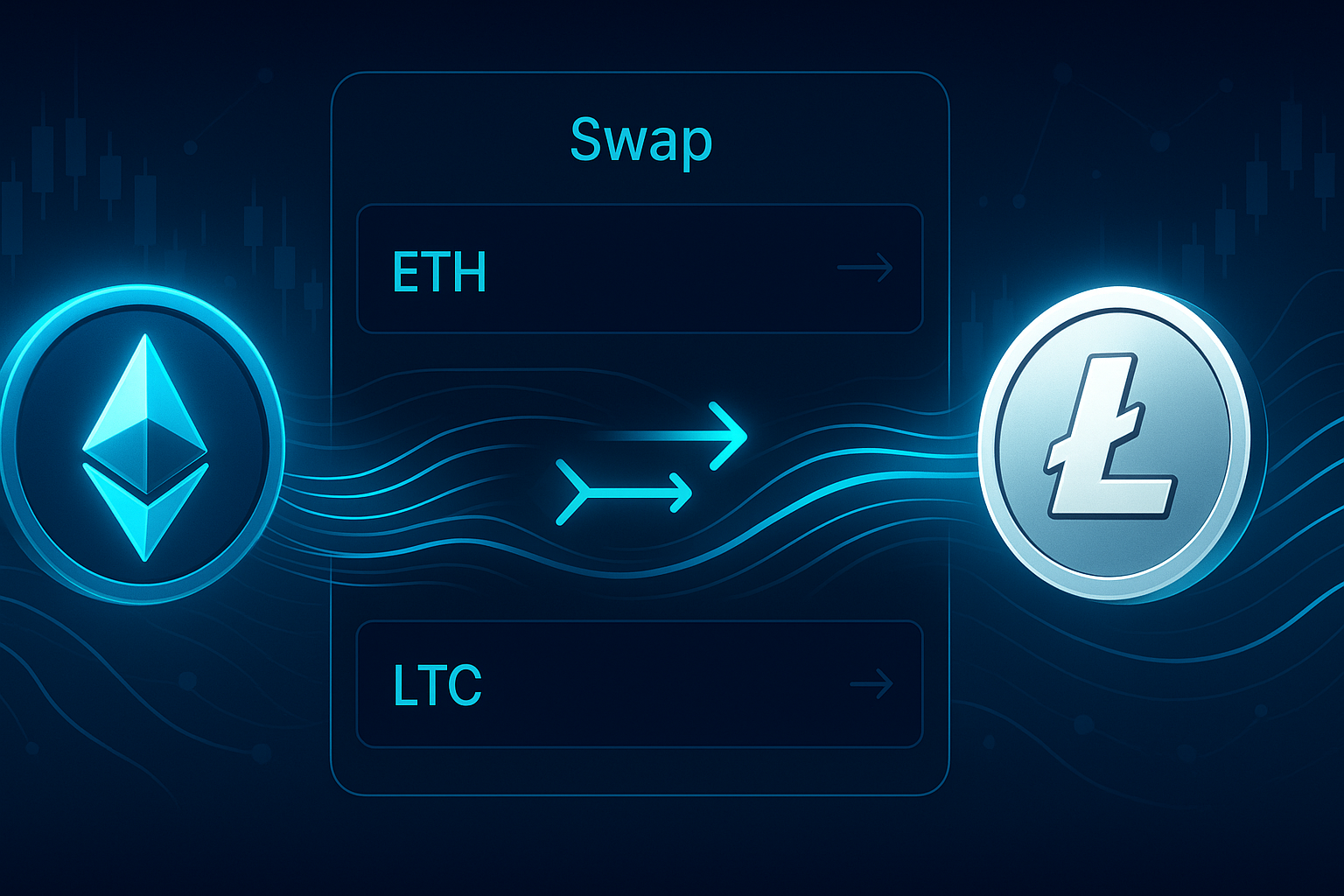
ETH to LTC Swap: A Complete Guide to Exchanging Ethereum for Litecoin
Introduction
Swapping Ethereum (ETH) for Litecoin (LTC) has become a common move for traders, long-term holders, and yield seekers who want to rebalance their crypto portfolios or adjust their risk exposure. Whether you are looking to capture potential price moves, lower fees, or simply diversify your holdings, understanding how an eth to ltc swap works is essential.
Unlike the early days of crypto, you no longer have to send funds to a centralized exchange, wait for deposits, place manual orders, and then withdraw to your own wallet. Today, you can use non-custodial swap services and decentralized tools that let you exchange ETH to LTC directly from your own wallet, often in minutes.
This guide walks through why swapping ETH to LTC matters, the key benefits and potential risks, a step-by-step process, and practical tips to keep your transaction fast, secure, and cost effective.
Why ETH to LTC Swaps Matter
Ethereum and Litecoin are both major cryptocurrencies, but they serve different roles in the crypto ecosystem. Understanding those differences helps you decide when and why to move from ETH to LTC.
Different use cases and ecosystems
- Ethereum (ETH)
ETH is the backbone of a massive smart contract ecosystem that powers DeFi apps, NFTs, DAOs, and more. Holding ETH often gives you access to:- Decentralized finance protocols
- Staking and yield opportunities (directly or via L2s and liquid staking)
- Smart contract-based services and dApps
- Litecoin (LTC)
LTC was built as a “lighter” version of Bitcoin, optimized for faster and cheaper transactions. It tends to be used more for:- Everyday payments and transfers
- Low-fee on-chain movements
- As a simpler hedge within a crypto portfolio
Swapping ETH to LTC allows you to shift from a smart contract ecosystem focus to a payments and transfer focus, depending on your goals.
Market conditions and portfolio rebalancing
Traders and investors often perform an ETH to LTC swap in response to:
- Changing market trends where Litecoin may look undervalued compared to Ethereum, or vice versa.
- Risk management if you feel ETH has run up in price and want to rotate some capital into another large-cap coin.
- Fee optimization if Ethereum gas fees are high and you want to move value into a network with cheaper on-chain fees.
In all of these cases, having a fast, low-friction way to exchange assets makes your strategy more flexible.
Key Benefits of Swapping ETH to LTC
1. Faster and cheaper transactions
Litecoin is known for:
- Shorter block times, which often translates into faster confirmation for simple transfers.
- Lower fees than many peak-period Ethereum transactions.
If you need to send value frequently or in smaller amounts, moving from ETH to LTC can significantly reduce transaction costs.
2. Diversification and risk management
Holding only one crypto asset exposes you to asset-specific risks such as protocol bugs, regulatory attention, or ecosystem failures. By converting a portion of ETH to LTC, you:
- Spread your exposure across different networks and user bases.
- Reduce dependence on a single protocol’s performance.
- Potentially smooth out volatility if the two coins move differently over time.
3. Flexible access to different opportunities
Sometimes particular opportunities are easier or cheaper to capture in LTC:
- Exchanges or services that list LTC pairs with better liquidity.
- Merchants that accept Litecoin but not Ethereum.
- Cross-chain strategies where LTC plays a role as a low-fee bridge asset.
Swapping between ETH and LTC lets you adapt to these opportunities quickly.
4. Non-custodial, privacy-conscious options
You are no longer limited to centralized accounts that hold your funds. Today, you can use non-custodial platforms where:
- You retain control of your private keys.
- Swaps occur wallet to wallet, without depositing to a long-term exchange account.
- The process can be more private than traditional KYC-heavy platforms.
Using a private exchange for quick ETH to LTC conversion can reduce counterparty risk while preserving convenience.
Risks and Drawbacks of ETH to LTC Swaps
No crypto transaction is risk free. Before you swap ETH to LTC, consider the following factors.
1. Market volatility and slippage
Crypto prices can move quickly. During an ETH to LTC swap, you may face:
- Price volatility where the exchange rate changes between the time you initiate and the time it confirms.
- Slippage if liquidity is low or your order size is large relative to the available liquidity.
To mitigate this, choose platforms that show clear rate information and understand whether you are getting a fixed or floating rate.
2. Network fees and congestion
While Litecoin fees are usually low, Ethereum network costs can be high during peak activity. This can affect:
- The total cost of your ETH to LTC swap.
- Transaction speed if you use low gas settings.
You should always factor in gas fees on the Ethereum side when calculating the real cost of your swap.
3. Custodial vs non-custodial risk
If you use a custodial exchange, you are trusting that platform with your funds and data. Risks include:
- Withdrawal freezes or delays.
- Security breaches or mismanagement.
- Regulatory issues that impact your access to funds.
Non-custodial swap tools reduce some of these concerns, but you still need to be careful about:
- Double-checking contract addresses.
- Ensuring you are on the legitimate website, not a phishing copy.
- Backing up your wallet seed phrase securely.
4. Irreversible transactions
Blockchain transactions are essentially final. If you:
- Send ETH to the wrong address.
- Choose the wrong network for withdrawal.
- Misconfigure your wallet destination.
You are unlikely to recover the funds. Always verify destination addresses and network details before confirming.
Step-by-Step Guide: How to Perform an ETH to LTC Swap
Below is a general, practical walkthrough of how to exchange ETH for LTC using a non-custodial, instant swap service. Specific steps may vary slightly by platform, but the overall process is similar.
Step 1: Prepare your wallets
1. Ethereum wallet
Ensure you have:
- ETH available to swap.
- Enough extra ETH to pay for gas fees.
- A secure wallet such as MetaMask, hardware wallet, or another reputable client.
2. Litecoin wallet
Prepare a Litecoin address where you want to receive the LTC:
- Use a trusted LTC wallet (desktop, mobile, or hardware).
- Copy your LTC receive address and store it temporarily for the swap.
Step 2: Choose a swapping platform
Look for a platform that offers:
- Direct ETH to LTC pairs.
- Non-custodial operation where you retain control of your funds.
- Clear rate information and reasonable fees.
For example, you can use a non-custodial swap interface to swap crypto instantly from ETH to LTC without opening an exchange account.
Step 3: Select the ETH to LTC trading pair
On the chosen platform:
- Select ETH as the currency you are sending.
- Select LTC as the currency you will receive.
- Enter the amount of ETH you wish to swap. The platform should show an estimated amount of LTC you will receive.
At this stage, pay attention to:
- Exchange rate (fixed or variable).
- Estimated network and service fees.
- Minimum and maximum swap limits.
Step 4: Enter your Litecoin receiving address
Paste your LTC wallet address into the receiving field. Then:
- Double-check for any leading or trailing spaces.
- Verify at least the first and last several characters of the address before proceeding.
- Confirm that the address is compatible with the LTC network, not a different blockchain.
Some platforms may also ask for a refund address in case the swap cannot be completed. Typically this would be an ETH address where your funds can be returned.
Step 5: Confirm details and initiate the swap
Before sending anything:
- Review the amount of ETH you will send.
- Check the estimated LTC output.
- Confirm the destination LTC address.
- Take note of any time limits for the provided rate (if applicable).
Once you are satisfied, confirm the transaction. The platform will then give you an ETH deposit address or prompt your wallet to sign a transaction.
Step 6: Send your ETH
From your ETH wallet:
- Send the exact specified amount of ETH to the deposit address given by the swap service.
- Adjust gas settings to a reasonable level based on current network conditions so the transaction confirms in a timely manner.
- Wait for blockchain confirmations. Many services will update progress automatically.
Step 7: Receive LTC in your wallet
After the ETH transaction is confirmed and processed:
- The platform completes the conversion to LTC.
- Your LTC is sent to the address you provided.
- You can verify the inbound LTC transaction on a Litecoin block explorer using your address or transaction ID.
Once the LTC appears in your wallet, your ETH to LTC swap is complete.
Practical Tips for a Smooth ETH to LTC Swap
1. Check network conditions before you start
- Look up current Ethereum gas prices using a reliable gas tracker.
- If fees are unusually high, you might choose to wait for a quieter period.
- On very congested days, consider using gas-saving options or layer 2 solutions where applicable.
2. Start with a small test amount
If this is your first time using a particular swap service:
- Send a small test swap from ETH to LTC first.
- Confirm that you receive the LTC correctly.
- After confirming, proceed with the main amount.
This reduces the risk of a costly mistake if you mis-enter an address or misinterpret the interface.
3. Always verify URLs and smart contracts
Phishing is a common risk in crypto. To protect yourself:
- Type URLs manually or use trusted bookmarks instead of clicking random links.
- Check SSL certificates and domain spelling carefully.
- If using a web3 wallet, verify that the contract you interact with is the official one.
4. Understand fee structures and rates
Not all swap services charge fees in the same way. Some use:
- Spread-based pricing where the fee is included in the exchange rate.
- Explicit service fees plus network fees.
- Fixed or floating rate models.
Read the fee and rate details so you know exactly how much LTC you can expect and what it costs.
5. Keep good records for tax and accounting
In most jurisdictions, swapping one crypto for another is a taxable event. To stay organized:
- Save transaction IDs for both ETH and LTC legs of the swap.
- Record the value of ETH and LTC in your local currency at the time of the trade.
- Use portfolio tracking or tax software that supports crypto swaps.
Conclusion: Making ETH to LTC Swaps Simple and Secure
Converting ETH to LTC is a practical way to rebalance your crypto portfolio, access lower-fee transfers, or diversify into another established asset. By using a non-custodial ETH to LTC swap tool, you can keep control of your keys while avoiding the friction of traditional centralized exchanges.
To get the most out of your swaps:
- Understand why you are moving from ETH to LTC.
- Evaluate fees, rates, and network conditions before confirming.
- Use secure wallets and verified platforms.
- Start with small test transactions when using a service for the first time.
With these practices, you can perform ETH to LTC swaps confidently, quickly, and in a way that supports your broader trading or long-term investment strategy.
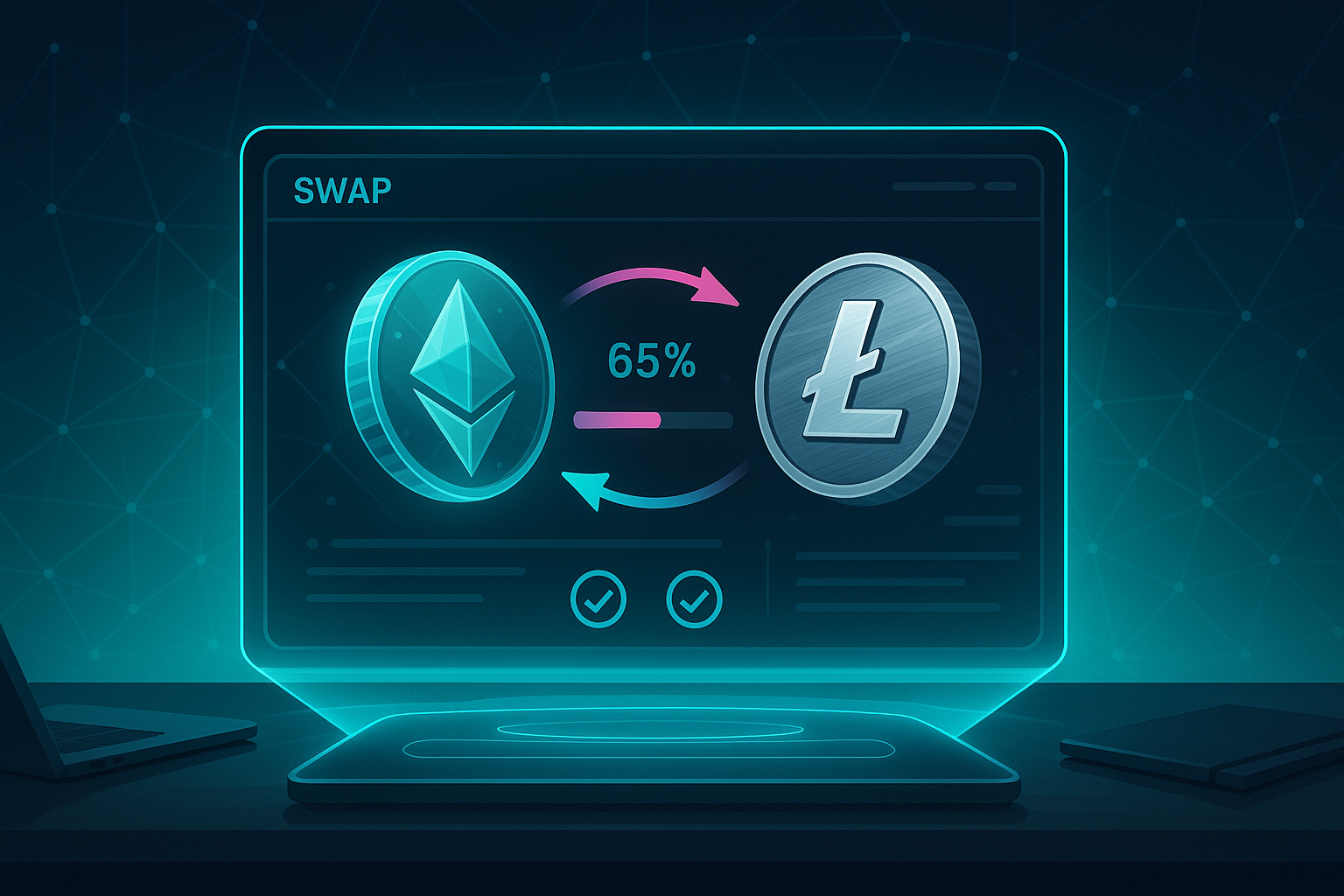
Ready to Swap?
Convert your crypto instantly on GhostSwap — no KYC, no sign-up required.
Popular swaps: BTC to XMR | BTC to ETH | XMR to BTC | ETH to XMR | BTC to SOL