ETH to DOGE Swap: How to Exchange Ethereum to Dogecoin Safely and Efficiently
Introduction
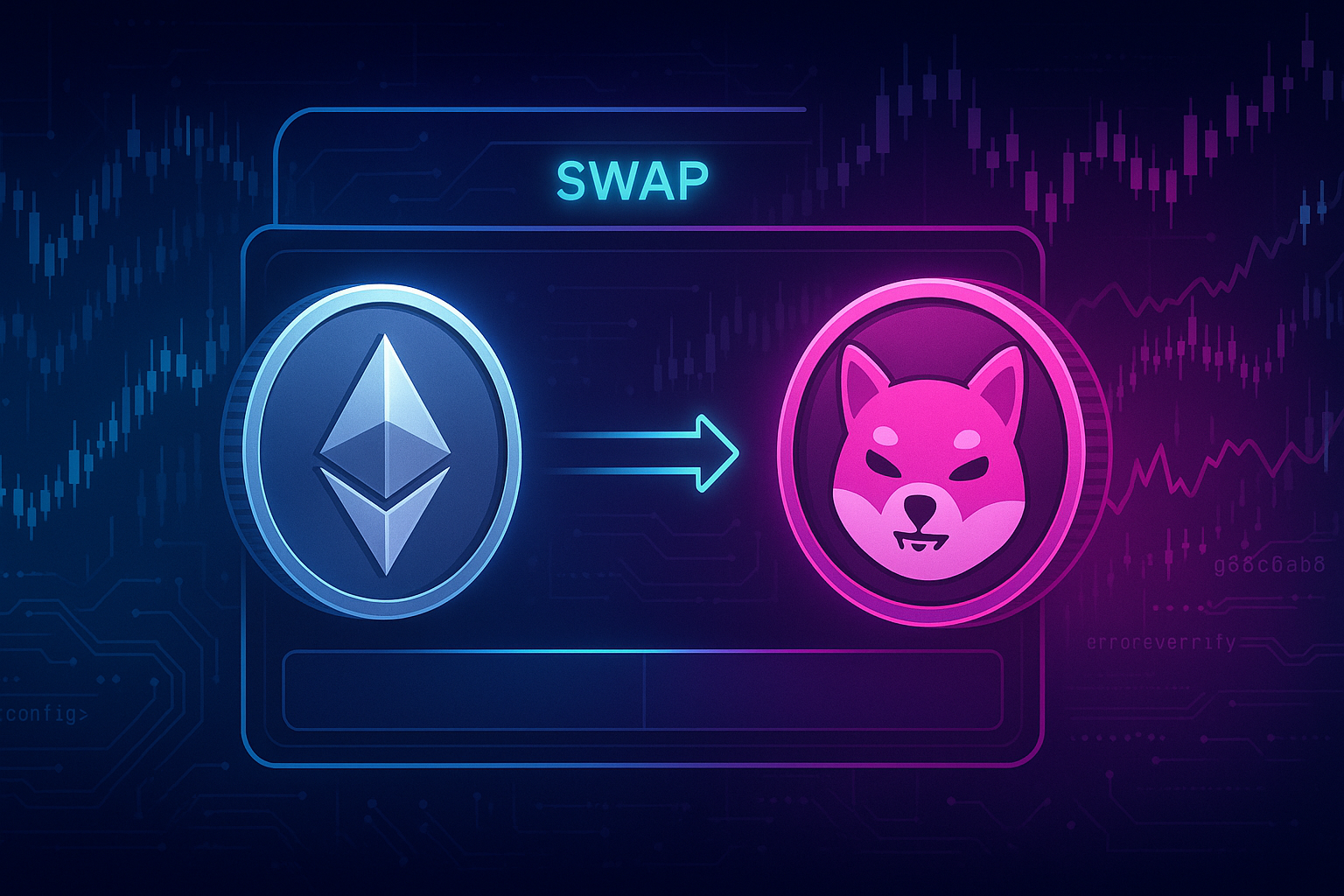
The crypto market moves fast, and there are plenty of reasons you might want to perform an ETH to DOGE swap. Maybe you are taking profits from Ethereum and rotating into a meme coin with strong community support, or perhaps you want cheaper transfers and a more speculative position. Whatever your goal, knowing how to swap ETH to DOGE securely and at a fair rate is essential.
Today you do not need to register on a centralized exchange or complete lengthy verification in order to move between assets. Non-custodial swap services let you convert ETH to DOGE directly from your wallet, often within minutes. For example, a platform like eth to doge swap on GhostSwap lets you exchange without depositing funds into an account or giving up control of your private keys.
This guide walks through why an ETH to DOGE swap might matter for your portfolio, what benefits and risks to consider, and how to complete the process step by step. You will also find practical tips to avoid common mistakes that can cost you time and money.
Why an ETH to DOGE Swap Matters
At first glance, moving from Ethereum to Dogecoin can look like a purely speculative trade. In practice, though, there are several strategic reasons you might want to swap ETH for DOGE.
1. Portfolio diversification
Ethereum and Dogecoin are very different assets:
- Ethereum (ETH) is a programmable smart contract platform used for DeFi, NFTs, and countless dApps.
- Dogecoin (DOGE) originated as a meme coin but has grown into a high-liquidity asset with a large and active community.
Holding both can diversify your exposure instead of concentrating all risk in a single network or narrative.
2. Taking advantage of volatility
Crypto markets are volatile. That volatility can be a risk or an opportunity:
- If ETH has appreciated strongly, you might want to lock in gains by shifting some value into DOGE.
Swapping between assets gives you flexibility to respond to market conditions without going back to fiat.
3. Lower transfer costs or different use cases
ETH transfers can become expensive in periods of high network congestion. Dogecoin tends to have lower network fees, which can make it attractive if you:
- Frequently move funds between wallets or exchanges
- Tip creators or send small amounts to friends
- Need quick, inexpensive transfers for small balances
4. Custody and privacy considerations
Many people prefer non-custodial tools that reduce their dependence on centralized exchanges. Using a private exchange for ETH to DOGE helps you stay in control of your keys instead of parking assets on a custodial platform where they can be frozen or lost if the platform fails.
Key Benefits of Swapping ETH to DOGE via Non-Custodial Services
Not all ETH to DOGE swaps are equal. Doing everything through a traditional exchange introduces counterparty, KYC, and withdrawal risks. Non-custodial swap platforms solve many of these issues.
1. You keep control of your funds
On a non-custodial swap platform:
- You send ETH directly from your own wallet.
- You receive DOGE into a wallet you control.
- No long-term deposits sit on the service.
This drastically reduces exposure to hacks or insolvency events compared to leaving your assets on an exchange account.
2. No account or KYC in many cases
In most jurisdictions, non-custodial swap tools do not require user registration for simple swaps. That means:
- No lengthy sign-up process.
- Fewer personal data points stored by third parties.
- Faster execution from decision to completion.
Always confirm what is required in your country and with your chosen service, since compliance rules can differ.
3. Faster execution
Centralized exchanges often require multiple steps: deposit to the exchange, wait for confirmation, trade, then withdraw. A non-custodial ETH to DOGE swap can compress this into a single streamlined flow, usually completed once both blockchains confirm the transactions.
4. Transparent pricing
Good swap platforms show you the estimated rate and fees before you commit. That transparency helps you compare against other options and decide whether the rate is acceptable, especially in volatile conditions.
5. Enhanced privacy
If you value privacy, using a non-custodial swap to move between ETH and DOGE means you do not need to link a centralized account or provide extensive personal info in many cases. Your transactions are still visible on the blockchains, but less tied to a central identity hub such as a large exchange account.
Risks and Drawbacks to Consider Before You Swap ETH to DOGE
Every crypto transaction carries risk. Understanding these helps you avoid surprises and manage your exposure.
1. Market volatility and slippage
ETH and DOGE are both volatile assets. Between the moment you see a quote and the moment your transaction confirms, the price may have moved. That can lead to:
- Positive slippage where you receive more DOGE than expected.
- Negative slippage where you receive less DOGE than expected.
Some services offer fixed-rate swaps for a limited time, while others work with floating rates. Make sure you understand which model you are using.
2. Network fees
Swapping from ETH to DOGE typically involves at least:
- An Ethereum network fee (gas) when sending ETH.
- A Dogecoin network fee when the service sends DOGE to your wallet.
High gas prices on Ethereum can materially affect your effective rate, especially for smaller swap amounts.
3. Irreversible mistakes
Blockchain transactions are generally irreversible. Common errors include:
- Sending ETH from the wrong network (for example, a non-mainnet chain) when the swap expects Ethereum mainnet.
- Entering an incorrect DOGE destination address.
- Sending an amount smaller than the minimum required by the service.
In many of these cases, funds may be lost or difficult to recover. Double-check every field before confirming.
4. Liquidity and limits
Depending on the service and market conditions, there may be:
- Minimum and maximum swap amounts.
- Limited liquidity for very large swaps.
- Occasional delays if on-chain congestion is high.
If you plan a large ETH to DOGE swap, consider breaking it into smaller chunks or contacting support in advance if the service offers that option.
5. Regulatory considerations
Regulation is evolving. What is allowed or frictionless in one country may be restricted in another. You are responsible for:
- Understanding local rules related to crypto trading and reporting.
- Complying with tax obligations on gains or losses from swaps.
Step-by-Step Guide: How to Swap ETH to DOGE Safely
The exact interface varies by platform, but the basic flow for an ETH to DOGE swap is usually similar. Below is a generalized process you can follow.
Step 1: Prepare your wallets
- Ethereum wallet: Make sure you have ETH on the Ethereum mainnet in a wallet such as MetaMask, hardware wallets (Ledger, Trezor), or another compatible option.
- Dogecoin wallet: Set up a DOGE wallet and have a valid receiving address ready. This could be:
- An official Dogecoin wallet.
- A multi-coin wallet that supports DOGE.
- A hardware wallet with DOGE support.
- Backup and security: Ensure your seed phrases are securely stored offline and never shared.
Step 2: Choose a reliable non-custodial swap platform
Look for a platform that:
- Supports direct ETH to DOGE swaps.
- Has a clear fee structure and transparent rate display.
- Is non-custodial and does not require you to leave funds on deposit.
- Has a track record of successful transactions and responsive support.
Services like GhostSwap, which lets you swap crypto instantly between ETH and DOGE, are designed around a straightforward experience that minimizes friction.
Step 3: Enter the swap details
- Select ETH as the asset you send and DOGE as the asset you want to receive.
- Input the amount of ETH you plan to swap. Most interfaces will automatically display the estimated DOGE output.
- Review any additional parameters such as:
- Fixed vs floating rate (if offered).
- Minimum and maximum amounts.
- Estimated completion time.
Step 4: Provide your DOGE receiving address
Paste your Dogecoin wallet address into the destination field:
- Confirm you are using a Dogecoin address format, not a BTC or other chain address.
- Double-check the first and last characters after pasting.
- Optionally, send a small test amount on your first swap to build confidence.
Step 5: Review the quote, rate, and fees
Before sending any funds, carefully review:
- The estimated rate (how much DOGE per 1 ETH).
- The service fee, if displayed separately.
- Any network fees or minimums mentioned by the platform.
- Whether the rate is locked for a time window or subject to change until completion.
Step 6: Send ETH from your wallet
Once you confirm the details, the platform will show a unique ETH deposit address or a wallet connection request:
- If you see a deposit address, send the exact amount of ETH from your wallet to that address.
- If the platform connects to MetaMask or another wallet, approve the transaction directly via your wallet pop-up.
- Set a reasonable gas fee based on current network conditions to avoid getting stuck with a pending transaction.
Step 7: Wait for confirmations
After sending ETH:
- The Ethereum transaction must confirm on-chain.
- The service then executes the swap according to its liquidity and routing mechanisms.
- Finally, DOGE is sent to your DOGE address, which also requires confirmation on the Dogecoin network.
Most ETH to DOGE swaps will complete within minutes once both networks are functioning normally, but during heavy congestion it may take longer.
Step 8: Verify receipt of DOGE
Open your Dogecoin wallet and confirm:
- The DOGE balance has increased by the expected amount (accounting for estimated fees or rate changes).
- The transaction is confirmed on the Dogecoin blockchain.
If something looks off, verify the transaction hash on a block explorer and consult the swap service support if needed.
Practical Tips for a Smooth and Secure ETH to DOGE Swap
1. Use small test amounts first
If this is your first time swapping on a new platform, try a small transfer first. Once you see it complete successfully and understand the exact flow, scale up to larger amounts.
2. Double-check networks and addresses
Common pitfalls:
- Sending ETH on an incompatible network (like a testnet or sidechain) when the swap expects mainnet.
- Pasting a BTC or LTC address instead of DOGE if your wallet supports multiple coins.
Always confirm the chain and address format match what the platform expects.
3. Monitor gas fees
Before an ETH to DOGE swap, check current Ethereum gas prices:
- If gas is extremely high, consider waiting if your swap is not urgent.
- Set a gas limit and price that balances speed and cost.
4. Avoid public Wi-Fi for large swaps
For significant amounts, treat your crypto activity like online banking:
- Avoid unsecured public Wi-Fi networks.
- Use a reputable VPN if possible.
- Keep your device free from malware and always updated.
5. Use hardware wallets for higher security
For larger holdings, consider connecting a hardware wallet:
- Sign ETH transactions on a hardware device rather than a browser extension alone.
- Store DOGE long term in a hardware wallet that supports it.
6. Keep records for tax and tracking
Swaps are often taxable events depending on your jurisdiction. Maintain:
- The date and time of the swap.
- The amount of ETH spent and DOGE received.
- Screenshots or exported data from the swap service if available.
7. Check liquidity and limits before large swaps
If you plan to swap a substantial amount of ETH to DOGE:
- Verify the service can handle your order without extreme slippage.
- Consider splitting the swap into multiple smaller transactions.
- Review any daily or per-transaction limits that might apply.
Conclusion: Is an ETH to DOGE Swap Right for You?
Swapping ETH to DOGE can be a smart tactical move if you want to diversify your portfolio, take advantage of market conditions, or gain access to a coin with lower transfer fees and a unique community profile. The key is to do it securely, with clear awareness of rates, fees, and the risks involved.
Non-custodial platforms make it far easier to move between Ethereum and Dogecoin without surrendering control of your keys or going through complex account setups. If you value privacy and speed, using a private, non-custodial ETH to DOGE exchange flow can be an efficient approach.
Before you start your next ETH to DOGE swap, review the steps in this guide, test with a small amount, and always verify networks, addresses, and fees. With a disciplined process, you can navigate the conversion safely and integrate DOGE into your broader crypto strategy with confidence.
Ready to Swap?
Convert your crypto instantly on GhostSwap — no KYC, no sign-up required.
Popular swaps: BTC to XMR | BTC to ETH | XMR to BTC | ETH to XMR | BTC to SOL