TRX to USDT Swap: A Complete Guide for Fast, Safe, and Low‑Cost Conversions
Introduction
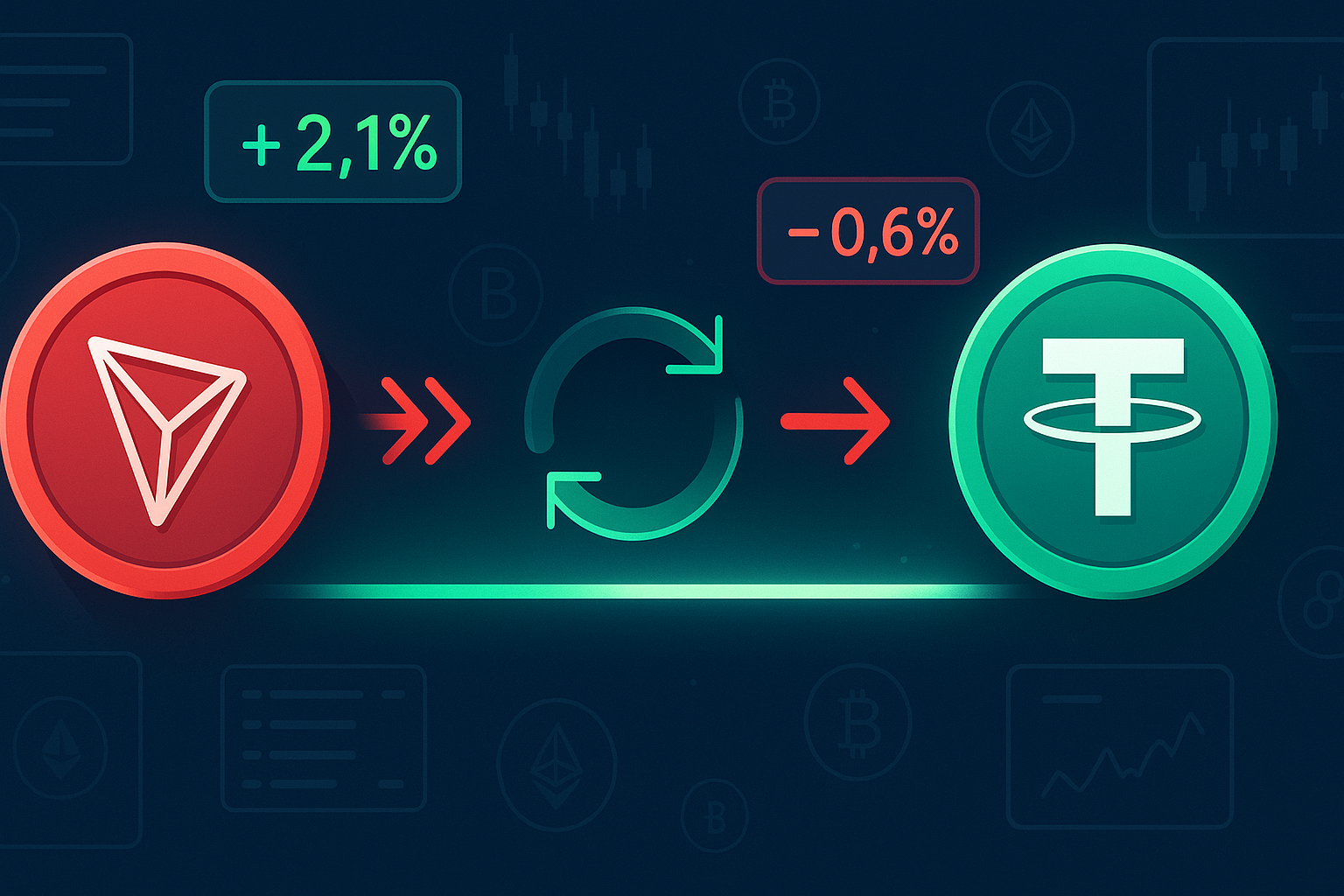
Converting TRX to USDT is one of the most common actions Tron users take, especially during volatile market conditions. Whether you are taking profits, protecting your portfolio from price swings, or moving funds between platforms, knowing how to make a trx to usdt swap efficiently can save you both time and money.
In this guide, you will learn how to swap TRX to USDT using simple, non‑custodial tools, what fees to expect, and how to reduce risks. If you want to jump in quickly and swap TRX to USDT instantly, you can use an on‑chain exchange that requires no sign‑up and no KYC.
TRX runs on the Tron network, while USDT is a popular stablecoin available on multiple blockchains, including Tron (commonly called USDT‑TRC20). Swapping between these two assets is typically fast and inexpensive, but you still need to understand how routing, fees, and wallet security work to avoid costly mistakes.
Why TRX to USDT Swaps Matter
Risk management in volatile markets
TRX is a volatile asset. Its price can move several percent in a single day. USDT, by contrast, is a stablecoin designed to track the value of 1 US dollar. Moving from TRX to USDT is a common strategy for:
- Locking in profits after a strong price rally
- Reducing exposure when you expect a market correction
- Parking funds in stablecoins while you wait for new entry points
By using a fast trx to usdt swap, you can execute that strategy without leaving the Tron ecosystem.
Liquidity and on‑chain utility
TRX is used for gas fees and resource management on the Tron network, but many DeFi opportunities, NFT platforms, and lending protocols use USDT as the main settlement asset. Swapping from TRX to USDT allows you to:
- Provide liquidity in USDT‑based pools
- Participate in lending or yield‑farming protocols that require USDT
- Send stable value between wallets or exchanges at low Tron network fees
On‑ramp and off‑ramp flexibility
Many centralized exchanges list both TRX and USDT. However, some users prefer to stay on‑chain and avoid centralized custody. By using a non‑custodial private exchange for TRX to USDT, you keep control of your keys while still gaining access to the liquidity and stability of USDT.
Key Benefits of Swapping TRX to USDT
1. Hedge against volatility
Storing part of your portfolio in USDT reduces exposure to sudden market drops. When TRX price falls, your USDT position should remain close to 1 USD, which helps preserve capital.
2. Fast, low‑cost Tron network transactions
On Tron, transactions are typically:
- Very fast – often confirmed within a few seconds
- Low fee – network fees are usually much lower than many alternative blockchains
This makes frequent TRX to USDT swaps feasible even for smaller amounts.
3. Easy access to DeFi and stablecoin payments
TRC20 USDT is widely integrated in:
- DeFi protocols
- Cross‑exchange arbitrage strategies
- Merchant payments and P2P trading
Holding USDT on Tron after your swap gives you a flexible asset you can deploy almost anywhere that supports Tron.
4. Non‑custodial control
Using a non‑custodial swap keeps your private keys in your wallet at all times. You are not depositing funds into an exchange account, which means:
- No exchange withdrawal holds
- Less counterparty risk
- Full control over when and how you transact
Risks and Drawbacks to Consider
1. Smart contract and protocol risk
When you use decentralized protocols to perform a trx to usdt swap, you interact with smart contracts. Even audited contracts can have bugs or vulnerabilities. To mitigate:
- Use reputable protocols with a security track record
- Avoid connecting hardware wallets to unknown or unverified dApps
- Double‑check contract addresses from official sources
2. Stablecoin issuer and peg risk
USDT is designed to maintain a 1:1 peg with USD, but:
- Market conditions can cause minor deviations from $1 on exchanges
- There is ongoing debate and regulatory scrutiny around stablecoin reserves and transparency
Stay informed about stablecoin‑related news and consider diversifying across several stablecoins if your exposure is large.
3. Slippage and price impact
Slippage occurs when the executed price of your swap is slightly worse than the quoted price, usually due to:
- Low liquidity in the specific trading pair
- Large order size relative to pool depth
- Rapid market movement
On automated market makers (AMMs), big TRX orders against a small TRX/USDT pool can move the price. Always review slippage tolerance settings and quoted amounts before confirming.
4. Network congestion and gas settings
Although Tron is usually fast, any blockchain can experience:
- Temporary congestion
- Higher than usual transaction fees
- Slower confirmations
If speed is critical, check network status and recent fee levels, and keep a small buffer of TRX in your wallet to cover transaction costs.
Step‑by‑Step Guide: How to Perform a TRX to USDT Swap
Below is a typical workflow for a non‑custodial, on‑chain swap. Specific interface elements can vary by platform, but the general process is similar.
Step 1: Prepare a Tron‑compatible wallet
You will need a wallet that supports TRX and USDT on the Tron network, such as:
- Browser extension wallets (e.g., TronLink)
- Mobile wallets that support TRC20 tokens
- Hardware wallets integrated with Tron via a compatible interface
Make sure:
- You have access to your seed phrase backed up securely offline
- Your wallet is updated to the latest version
- You hold enough TRX to cover both the swap amount and network fees
Step 2: Connect to a non‑custodial swap interface
Open a reputable dApp or aggregator that allows you to swap crypto instantly between TRX and USDT. In general:
- Navigate to the exchange dApp URL directly (avoid search‑engine ads when possible)
- Click “Connect Wallet” or similar
- Select your Tron wallet and approve the connection request
Always verify the site URL and certificate before connecting your wallet.
Step 3: Select currencies and network
On the swap interface:
- In the “From” field, select TRX
- In the “To” field, select USDT (make sure it is USDT on the Tron network, often shown as USDT‑TRC20)
- Confirm that the network shown is Tron, not Ethereum or another chain
Step 4: Enter the swap amount
Type the amount of TRX you want to swap. The interface should show:
- Estimated amount of USDT you will receive
- Current exchange rate
- Estimated network fee
Check that:
- You still have a small balance of TRX left after the swap to cover future fees
- The rate looks reasonable compared with other sources or price aggregators
Step 5: Review slippage and settings
Before confirming:
- Check the slippage tolerance value (for most users, a low single‑digit percentage is usually sufficient)
- Review any deadline or “transaction will revert if pending longer than X minutes” settings
- Ensure there are no unexpected extra fees added by the platform
Step 6: Confirm the trx to usdt swap
When everything looks correct:
- Click “Swap” or “Confirm Swap”
- Approve the transaction in your wallet, verifying:
- The contract address matches the one provided by the official dApp
- The TRX amount is correct
- The network fee is acceptable
After submission, you can view the transaction status in your wallet or via a Tron block explorer.
Step 7: Verify receipt of USDT
Once the transaction is confirmed:
- Open your wallet and check the updated USDT balance
- If USDT does not appear, make sure the token is added or visible in your wallet interface
- Optionally confirm your transaction details on a Tron explorer by pasting your wallet address
Practical Tips for Better TRX to USDT Swaps
1. Always double‑check token and network
On Tron, USDT is usually labelled as USDT‑TRC20. To avoid mistakes:
- Confirm that you are not accidentally swapping to another wrapped or synthetic asset
- On centralized exchanges, verify that deposit and withdrawal networks match (TRC20 to TRC20)
2. Use small test transactions for large swaps
If you are moving a large amount:
- Start with a small test swap from TRX to USDT
- Confirm that the funds arrive correctly and the address is correct
- Only then execute the full amount
This simple habit can prevent irreversible losses due to typos or misconfigurations.
3. Monitor fees and liquidity
Although Tron fees are low, it is still useful to:
- Check current TRX network status and recent gas usage
- Compare expected output across different dApps or aggregators
- Avoid times of extremely high volatility when spreads and slippage widen
4. Keep some TRX for future transactions
Avoid swapping your entire TRX balance to USDT. You will still need some TRX for:
- Future swaps
- Sending USDT or interacting with smart contracts
Leaving a buffer of TRX in your wallet saves you from having to re‑deposit or buy more later just to pay fees.
5. Protect your wallet and privacy
To reduce security and privacy risks:
- Never share your seed phrase or private keys with any site or person
- Bookmark trusted swap URLs to avoid phishing links
- Consider using a private, non‑custodial swap instead of centralized exchanges if you prioritize privacy and control
Conclusion: Making TRX to USDT Swaps Simple and Secure
A trx to usdt swap is a straightforward yet powerful action: it lets you move from a volatile asset to a dollar‑pegged stablecoin while staying within the Tron ecosystem. By understanding the basic mechanics, reviewing slippage and fees, and using secure non‑custodial tools, you can execute swaps quickly without sacrificing safety.
Whether you are hedging against volatility, preparing to enter new DeFi positions, or simply managing your portfolio, a reliable on‑chain interface for a non‑custodial TRX to USDT swap can streamline the process. Combine that with careful wallet security and a habit of double‑checking every transaction, and you will be well positioned to use TRX and USDT effectively as part of your broader crypto strategy.
Ready to Swap?
Convert your crypto instantly on GhostSwap — no KYC, no sign-up required.
Popular swaps: BTC to XMR | BTC to ETH | XMR to BTC | ETH to XMR | BTC to SOL