How to Make a TRX to BTC Swap Safely and Efficiently
Introduction
The crypto market moves quickly, and knowing how to perform a smooth TRX to BTC swap is essential for traders, long-term investors, and privacy-conscious users alike. Whether you are reallocating your portfolio, taking profits, or exiting Tron into Bitcoin for greater liquidity, the way you perform the swap directly affects cost, speed, and security.
Today you do not need to open accounts at multiple centralized exchanges or go through complicated trading interfaces just to convert TRX to BTC. With the rise of non-custodial services, it is possible to swap crypto instantly from TRX to BTC in a way that is fast, secure, and privacy-friendly.
This guide explains what a TRX to BTC swap is, why it matters, the key benefits and risks, and a clear step-by-step process so you can perform your exchange with confidence.
What Is a TRX to BTC Swap?
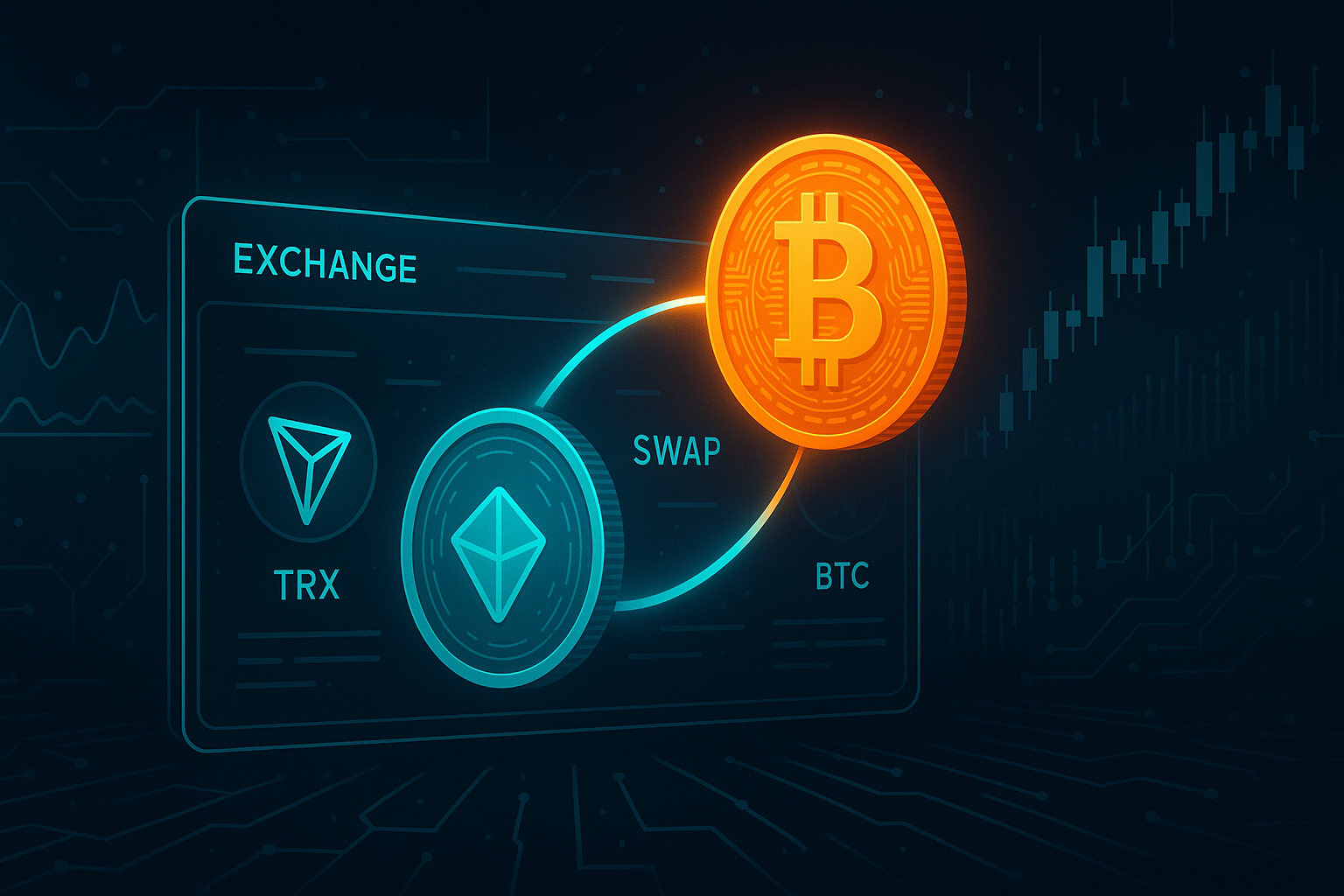
A TRX to BTC swap simply means exchanging Tron (TRX) tokens for Bitcoin (BTC) at the current market rate using an exchange service or platform. You send TRX from your wallet, and you receive BTC at your Bitcoin address, typically within minutes.
There are two main ways to perform this swap:
- Centralized exchanges (CEXs): Platforms like Binance or Kraken where you deposit funds, trade on an order book, and withdraw BTC.
- Non-custodial swap services: Protocols and interfaces that allow you to trade directly from your wallet without giving up custody of your private keys.
Both can work, but they differ significantly in terms of control, privacy, and convenience.
Why TRX to BTC Swaps Matter
1. Portfolio Management and Risk Adjustment
BTC is widely considered the benchmark digital asset. Many users who hold Tron for staking, DeFi, or speculative reasons periodically rebalance into Bitcoin to:
- Reduce exposure to a single ecosystem such as Tron
- Take profits when TRX has risen in value
- Increase long-term BTC holdings as a store of value
Being able to move from TRX to BTC quickly gives you more flexibility in managing volatility and market cycles.
2. Liquidity and Acceptance
Bitcoin has deeper liquidity, wider exchange support, and broader merchant acceptance than most altcoins. Converting TRX to BTC can be useful if you plan to:
- Cash out to fiat currency through an exchange or ATM
- Use Bitcoin for payments or remittances
- Access BTC-only products such as certain derivatives or lending platforms
3. Privacy and Custody Control
When you choose a non-custodial method for your TRX to BTC swap, you keep control over your private keys throughout the process. This reduces counterparty risk and can help preserve privacy compared to centralized KYC-heavy platforms.
Key Benefits of a Smart TRX to BTC Swap Strategy
Not all swaps are equal. The platform and method you choose can significantly impact your overall experience. Here are some of the main benefits you can gain by using an efficient, non-custodial TRX to BTC swap service.
1. You Retain Ownership of Your Coins
With a non-custodial swap, you never hand over your private keys. You send TRX directly from your wallet and receive BTC directly to a BTC address you control. This model aligns with the core crypto principle: “not your keys, not your coins.”
2. Faster Execution and Less Friction
Traditional exchanges often require:
- Account registration
- Identity verification (KYC)
- Deposits and withdrawal waiting periods
By contrast, a streamlined trx to btc swap using a private exchange can be as simple as entering your BTC address, sending TRX, and waiting for the transaction to settle.
3. Fewer Intermediaries and Lower Custodial Risk
Every extra intermediary introduces additional points of failure: hacks, withdrawal freezes, insolvency, mismanagement, and regulatory pressure. Non-custodial swaps minimize your dependence on centralized entities, which helps limit systemic and custodial risks.
4. Potentially Better Fees and Transparent Rates
Many swap services offer competitive rates and clearly show the estimated amount of BTC you will receive. You may also avoid:
- Trading fees on multiple pairs (for example, TRX to USDT, then USDT to BTC)
- Extra withdrawal fees from centralized platforms
- Hidden spreads that are not easy to understand
Risks and Drawbacks You Should Consider
No method of crypto swapping is perfect. Before you convert TRX to BTC, be aware of the main risks and tradeoffs, and plan accordingly.
1. Price Volatility
Both TRX and BTC are volatile assets. Between the moment you initiate the swap and the moment it executes, the price can move. If you are using a floating-rate swap, this can slightly change the amount of BTC you receive.
How to mitigate:
- Check the estimated rate and minimum expected output before confirming
- Avoid swapping during extreme market spikes or crashes when spreads widen
- Split a large swap into smaller chunks if you are worried about slippage
2. Network Congestion and Fees
Both Tron and Bitcoin have network fees. Tron fees are usually low, but Bitcoin transaction fees can vary significantly depending on network congestion.
How to mitigate:
- Check current BTC network fee levels and recommended fee rates
- Decide whether speed or cost is more important (higher fee for faster confirmation)
- Avoid performing large swaps during peak congestion periods if possible
3. Service Reliability and Security
Not all swap services are equally reliable. Centralized and decentralized platforms have different security models, and each has experienced issues historically.
How to mitigate:
- Research the reputation and track record of any service you use
- Start with a small test amount before swapping a large balance
- Use strong wallet security practices and keep your seed phrase offline
4. Regulatory and KYC Requirements
Some exchanges require extensive personal information and may restrict users based on their location. This can slow down your ability to swap or even block access completely.
Non-custodial swap services that focus on privacy reduce the amount of information you must provide, but you should still ensure you operate within the legal framework of your jurisdiction.
Step-by-Step Guide: How to Perform a TRX to BTC Swap
Below is a general, practical workflow for swapping TRX to BTC using a non-custodial swap platform. The exact interface can differ between services, but the core steps remain similar.
Step 1: Prepare Your Wallets
- TRX wallet: Ensure you have TRX in a wallet you control, such as TronLink, Trust Wallet, or a hardware wallet that supports Tron.
- BTC wallet: Have a Bitcoin address ready from a wallet like Sparrow, BlueWallet, Electrum, or a hardware device. Double-check that the wallet is for Bitcoin mainnet, not a testnet or another chain.
Always confirm you can send and receive small test amounts before moving large sums.

Step 2: Choose a Non-Custodial Swap Platform
Select a reliable swap service that supports both TRX and BTC. A platform focused on privacy, security, and ease of use can streamline the process and reduce risk. Make sure that:
- The site uses HTTPS
- There are clear instructions and visible support or documentation
- You can view fees and estimated output before confirming the swap
Step 3: Set the Direction and Amount
- On the swap interface, choose TRX as the asset you are sending.
- Select BTC as the asset you want to receive.
- Enter the amount of TRX you want to swap.
- Review the estimated BTC output, the rate, and any fee information provided.
Step 4: Provide Your BTC Receive Address
Paste your Bitcoin address into the appropriate field. Carefully verify:
- The address is correct and belongs to your BTC wallet
- There are no extra spaces or hidden characters
- You are not mixing network formats (for example, sending to a testnet address)
Consider using a QR code scan if available, but still visually inspect the first and last few characters.
Step 5: Confirm the Swap and Send TRX
- After verifying the details, confirm or create the swap order.
- The platform will display a TRX deposit address to which you must send your coins.
- Using your wallet, send the exact amount of TRX requested to that address.
- Copy and paste the address rather than typing it manually to avoid errors.
Most platforms will monitor the Tron blockchain and detect your incoming transaction automatically once it has the required number of confirmations.
Step 6: Wait for BTC Delivery
After your TRX transaction is confirmed, the service executes the swap and sends BTC to your specified address. Depending on network conditions, you may see BTC appear in your wallet within minutes to an hour.
Once you see the incoming BTC transaction in your wallet with sufficient confirmations, the swap is complete.
Practical Tips for a Smooth TRX to BTC Swap
1. Always Test with a Small Amount First
Especially when using a new platform, start with a small TRX amount to confirm that:
- The interface works as expected
- Your BTC address receives funds correctly
- You are comfortable with the timing and fees
After a successful test, scale up to the amount you actually want to swap.
2. Double-Check All Addresses and Networks
Sending funds to the wrong chain or mis-typed address can result in permanent loss. Before confirming any transaction:
- Match the first and last characters of the address
- Ensure you are on the correct network (Tron for TRX, Bitcoin mainnet for BTC)
- Beware of clipboard malware that can change addresses after you copy them
3. Time Your Swap Around Network Conditions
Monitor Bitcoin fee levels and general market conditions. During periods of high congestion or extreme volatility, fees and slippage may be higher than usual. If your swap is not time-sensitive, waiting for calmer conditions can save money.
4. Use a Private, Non-Custodial Swap Where Possible
If you value privacy and control, use a non-custodial swap that keeps your keys and data in your hands. This helps you avoid unnecessary KYC, centralized custody risk, and invasive data collection.
5. Secure Your Wallets Before and After the Swap
- Store seed phrases offline and never share them
- Enable additional security like hardware wallets or multi-signature if possible
- Keep your devices free of malware and keyloggers
Once your TRX to BTC swap is complete, consider moving large BTC balances to cold storage or a more secure wallet setup suited to your threat model.
Conclusion
Performing a TRX to BTC swap does not have to be complicated or risky. By choosing a reliable non-custodial service, double-checking all details, and understanding the role of volatility and network fees, you can convert TRX to Bitcoin quickly and securely.
Whether you are rebalancing your portfolio into BTC, seeking greater liquidity, or prioritizing privacy, an efficient trx to btc swap through a private exchange interface can help you execute your strategy with minimal friction. Take your time to test with small amounts, keep control of your keys, and you will be well positioned to navigate the Tron to Bitcoin conversion whenever market conditions make it worthwhile.
Ready to Swap?
Convert your crypto instantly on GhostSwap — no KYC, no sign-up required.
Popular swaps: BTC to XMR | BTC to ETH | XMR to BTC | ETH to XMR | BTC to SOL