How to Do a BTC to UNI Swap: A Complete Beginner Friendly Guide
Introduction
Bitcoin (BTC) and Uniswap (UNI) are two of the most popular crypto assets in the market. BTC is the original store of value in crypto, while UNI is the governance token of Uniswap, one of the largest decentralized exchanges on Ethereum. Knowing how to perform a secure, low cost, and fast btc to uni swap is useful for traders, DeFi users, and long term investors alike.
Today you do not have to open multiple accounts or send funds through centralized exchanges just to change BTC into UNI. Modern non custodial services let you swap crypto instantly directly from your own wallet, keeping control of your keys the whole time.
This guide will walk you through what a BTC to UNI swap is, why people do it, the main benefits and risks, and a clear step by step walkthrough of how to swap. We will focus on practical tips so you avoid hidden fees, poor exchange rates, and security mistakes.
Why a BTC to UNI Swap Matters
Converting BTC to UNI is more than a simple trade. It reflects a shift between two very different parts of the crypto ecosystem:
- BTC is often used as a long term store of value and “digital gold.”
- UNI is closely tied to the DeFi ecosystem, governance, and liquidity on Uniswap.
By swapping BTC for UNI you are:
- Rebalancing your portfolio from a conservative “store of value” asset into a DeFi governance token.
- Gaining direct exposure to Uniswap’s growth and activity on Ethereum.
- Positioning yourself to participate in governance votes or incentive programs that may require UNI.
On a practical level, a reliable BTC to UNI swap process also matters because:
- It can help you avoid unnecessary centralized exchange risk.
- It can reduce the number of transfers and on chain fees you pay.
- It saves time compared with routing BTC through multiple trading pairs.
Key Benefits of Swapping BTC to UNI
1. Access to DeFi and Governance
UNI is the governance token of Uniswap, one of the largest decentralized exchanges in crypto. Holding UNI allows you to:
- Vote on protocol upgrades, fee changes, and incentive programs.
- Delegate your voting power to active community members.
- Align yourself with the growth of the Uniswap ecosystem.
For long term investors, this governance exposure can be strategically valuable in addition to pure price speculation.
2. Diversification
If your portfolio is heavily weighted in BTC, converting a portion into UNI can diversify your risk. BTC and UNI can react differently to market events:
- BTC often moves with macro trends and institutional adoption.
- UNI can be more correlated with DeFi usage, Ethereum activity, and protocol specific news.
Diversification does not eliminate risk, but it can smooth out some volatility over time.
3. Using Non Custodial Swap Services
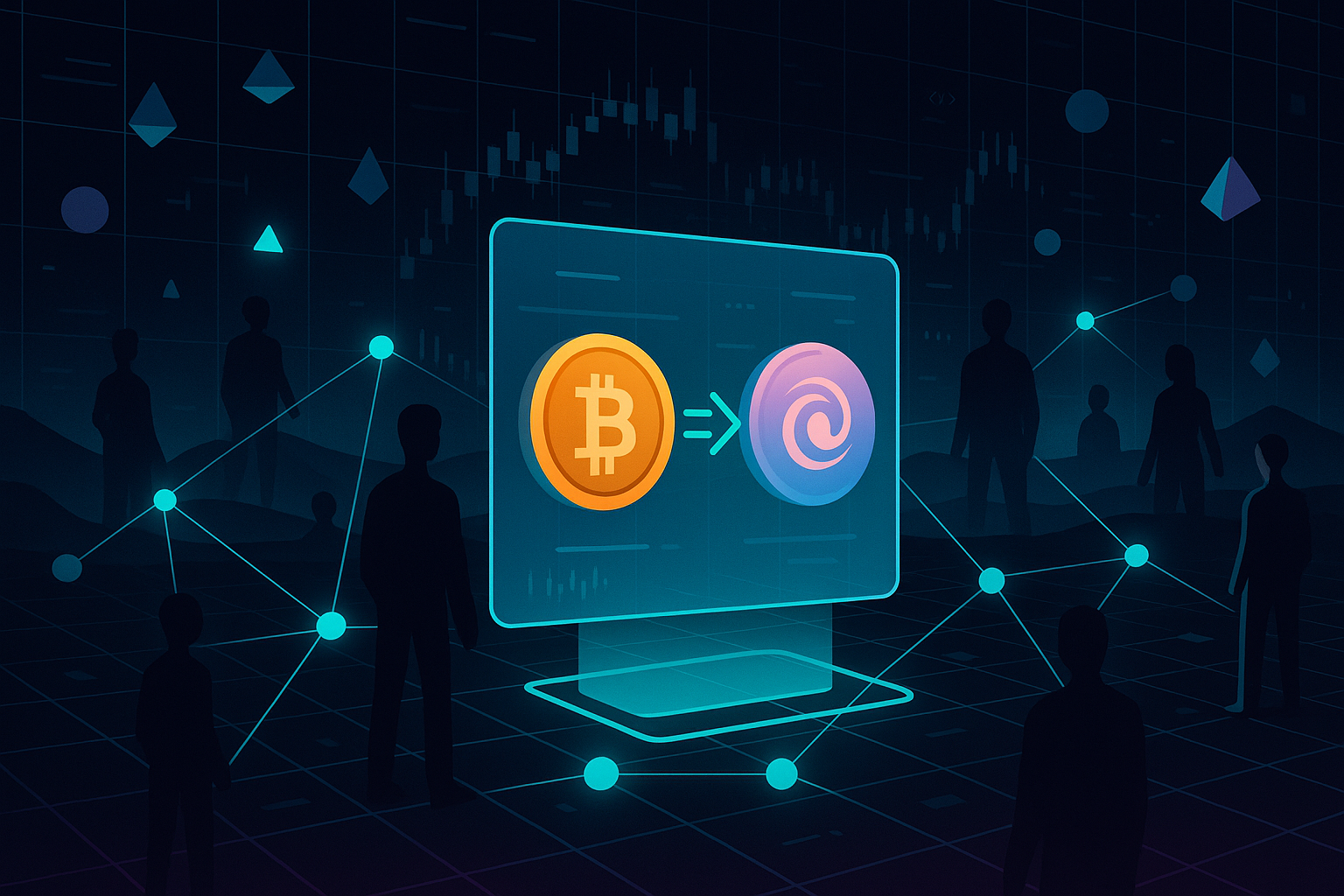
Instead of sending BTC to a centralized exchange, waiting for confirmations, trading BTC/USDT and then USDT/UNI, then withdrawing again, you can perform a btc to uni swap in a single step. Services like private exchange platforms that offer non custodial swaps are built for this use case.
Non custodial swaps typically offer:
- No registration or KYC for modest sized trades (subject to your local regulations).
- Direct wallet to wallet exchanges so you retain control of your keys.
- Simple user interfaces that automate routing and conversion.
4. Privacy and Control
When you rely on centralized exchanges, your identity and transaction history can be linked together and stored by third parties. A careful, privacy focused swap process can reduce that exposure by:
- Limiting how much personal information you share.
- Avoiding centralized custody of your coins.
- Letting you choose which wallet addresses you use for each swap.
This will not make you fully anonymous, but it can improve your privacy compared with traditional on exchange trading flows.
Risks and Drawbacks of BTC to UNI Swaps
Every crypto trade includes risk. Before you convert BTC to UNI, be aware of the main drawbacks:
1. Market Volatility
Both BTC and UNI are volatile assets. Their prices can change quickly, especially during high volume events. This can affect your swap in several ways:
- You may receive fewer UNI tokens than expected if the UNI price spikes during your transaction.
- Fixed rate swaps often include a premium, while floating rate swaps expose you to slippage.
To reduce volatility risk, avoid trading during extreme market swings and always review the estimated output before you confirm a swap.
2. Smart Contract and Platform Risk
When you swap through DeFi or aggregator services, you are relying on smart contracts, backend infrastructure, and routing logic. Possible risks include:
- Bugs or vulnerabilities in smart contracts used by the service.
- Downtime or instability at integrated liquidity sources.
- Incorrect routing that leads to excessive slippage.
Choose platforms that are widely used, transparent about their processes, and ideally have some level of security review. No system is risk free, so only trade amounts you can afford to risk.
3. Fee and Rate Risk
Several kinds of costs can affect your actual result:
- Network fees on Bitcoin and Ethereum.
- Service fees or spreads built into the swap rate.
- Slippage from large trades or low liquidity.
Small hidden spreads can add up significantly over time, especially if you trade frequently. Always compare the total cost against other venues, not just the visible service fee.
4. Regulatory and Tax Considerations
Swapping BTC to UNI is generally a taxable event in many jurisdictions, similar to selling one asset to buy another. You may need to:
- Record the value of BTC you spend and the UNI you receive at the time of the swap.
- Calculate gains or losses for each trade.
- Report your activity according to local rules.
Consult a qualified tax professional in your jurisdiction if you are unsure how to treat crypto swaps for reporting purposes.
Step by Step Guide: How to Do a BTC to UNI Swap
This section outlines a generic process you can follow to convert BTC into UNI using a non custodial exchange flow. Interfaces vary by platform, but the core steps are similar.
Step 1: Prepare Your Wallets
You will need:
- A wallet that holds your BTC and can send transactions.
- An Ethereum compatible wallet (such as MetaMask or a hardware wallet) to receive UNI.
Before starting:
- Back up your seed phrases securely and never share them with anyone.
- Ensure your ETH wallet has enough ETH to cover future transaction fees if you plan to move or trade UNI later.
- Double check wallet addresses by copying and pasting instead of typing.
Step 2: Choose a Non Custodial Swap Service
Look for a service that supports a direct BTC to UNI pair, offers clear fee information, and allows you to keep custody of your coins. One example is the btc to uni swap page on GhostSwap, which is designed for simple cross asset exchanges.
Criteria to compare when picking a platform:
- Whether you need to create an account or complete KYC.
- Supported minimum and maximum swap amounts.
- Displayed estimated rate and total fees.
- Reputation and user feedback from independent sources.
Step 3: Select BTC as Input and UNI as Output
In the swap interface:
- Choose BTC as the asset you are sending.
- Choose UNI as the asset you will receive.
- Enter the amount of BTC you want to swap, or the amount of UNI you want to receive if the platform allows reverse calculation.
The system should display:
- An estimated amount of UNI you will receive.
- The exchange rate used.
- Any service fee or spread if shown separately.
Step 4: Provide Your UNI Receiving Address
Copy your Ethereum wallet address where you want to receive UNI. Then:
- Paste it into the “UNI receiving address” or similar field.
- Check the first and last characters of the address to verify it matches.
- Avoid using exchange deposit addresses unless you are sure UNI deposits are supported and safe.
Many issues occur due to wrong addresses. Take your time to verify before you proceed.
Step 5: Review the Terms, Rates, and Limits
Before sending BTC, carefully review:
- The estimated UNI output and whether it is “fixed” or “floating.”
- The allowed time window you have to send BTC to the deposit address.
- Any minimum or maximum deposit amounts.
- The network confirmations required for BTC.
If the terms look acceptable, confirm within the platform so it generates a BTC deposit address for your order.
Step 6: Send Your BTC to the Provided Address
After you get a unique BTC address for the swap:
- Open your BTC wallet, initiate a send, and paste the provided address.
- Enter the exact BTC amount specified by the swap service to avoid issues.
- Choose an appropriate network fee so that your transaction confirms within the time window specified.
- Confirm the transaction and save the transaction ID (TXID) for reference.
Once your BTC transaction receives enough confirmations, the service will convert it according to the agreed conditions and send UNI to your provided Ethereum address.
Step 7: Wait for UNI to Arrive and Verify
The final steps:
- Monitor the status page or order tracking link, if provided.
- Once marked as complete, open your ETH wallet and check the UNI balance.
- If UNI does not appear automatically, add the official UNI token contract to your wallet (only from a trusted source, such as the official Uniswap documentation).
- Verify on a blockchain explorer like Etherscan that the transfer reached your address.
If something does not look right, use the order ID and TXID to contact the service’s support team.
Practical Tips to Optimize Your BTC to UNI Swap
1. Time Your Transactions Around Network Congestion
BTC and ETH network fees can spike during high demand. To save money:
- Check current fee estimates on monitoring sites before you transact.
- Avoid peak times around major news events or liquidations when possible.
- Use lower priority fees only if your swap platform offers a generous time window.
2. Consider Trade Size vs Fees
For very small swaps, network fees may represent a high percentage of the total value. In such cases:
- Evaluate if the trade size is large enough to justify the costs.
- Consider batching multiple planned swaps into one larger swap when appropriate.
3. Double Check All Addresses
Mistyped or maliciously replaced addresses are a common cause of irreversible loss. To protect yourself:
- Copy and paste addresses directly, never type them manually.
- Verify at least the first and last 4 to 6 characters after pasting.
- Beware of clipboard replacing malware and only download wallets from official sources.
4. Understand Slippage and Rate Types
Some services offer:
- Fixed rate swaps where the amount of UNI is locked for a time window, often with a small premium.
- Floating rate swaps where the amount of UNI you receive may change with the market.
There is no one “best” choice for all situations. Fixed rates can be preferable when markets are volatile, while floating rates might be slightly cheaper in quiet markets.
5. Keep Records for Taxes and Tracking
Keep a simple log of your swaps:
- Date and time of each trade.
- BTC amount spent and its value at time of trade.
- UNI received and its value at time of trade.
- Service fees and network fees paid.
These records help with portfolio tracking, risk management, and tax reporting later.
Conclusion: Making BTC to UNI Swaps Simple and Secure
Converting Bitcoin into Uniswap’s UNI token is a practical way to diversify your holdings and gain exposure to the DeFi ecosystem. By using a btc to uni swap service that is non custodial, transparent about fees, and easy to use, you can avoid the friction of traditional exchange based routes.
The core principles are straightforward:
- Stay in control of your keys and use reputable wallets.
- Check rates, fees, and limits before sending any BTC.
- Verify addresses carefully and maintain basic transaction records.
- Only trade amounts that fit your risk tolerance and long term strategy.
If you want a direct way to move from BTC into UNI without opening exchange accounts or managing complex order books, platforms that offer a non custodial BTC to UNI swap interface can be an efficient solution. With a clear process and some basic precautions, you can perform these conversions quickly while maintaining a strong focus on security and privacy.
Ready to Swap?
Convert your crypto instantly on GhostSwap — no KYC, no sign-up required.
Popular swaps: BTC to XMR | BTC to ETH | XMR to BTC | ETH to XMR | BTC to SOL