ADA to ETH Swap: Complete Guide to Exchanging Cardano for Ethereum
Introduction
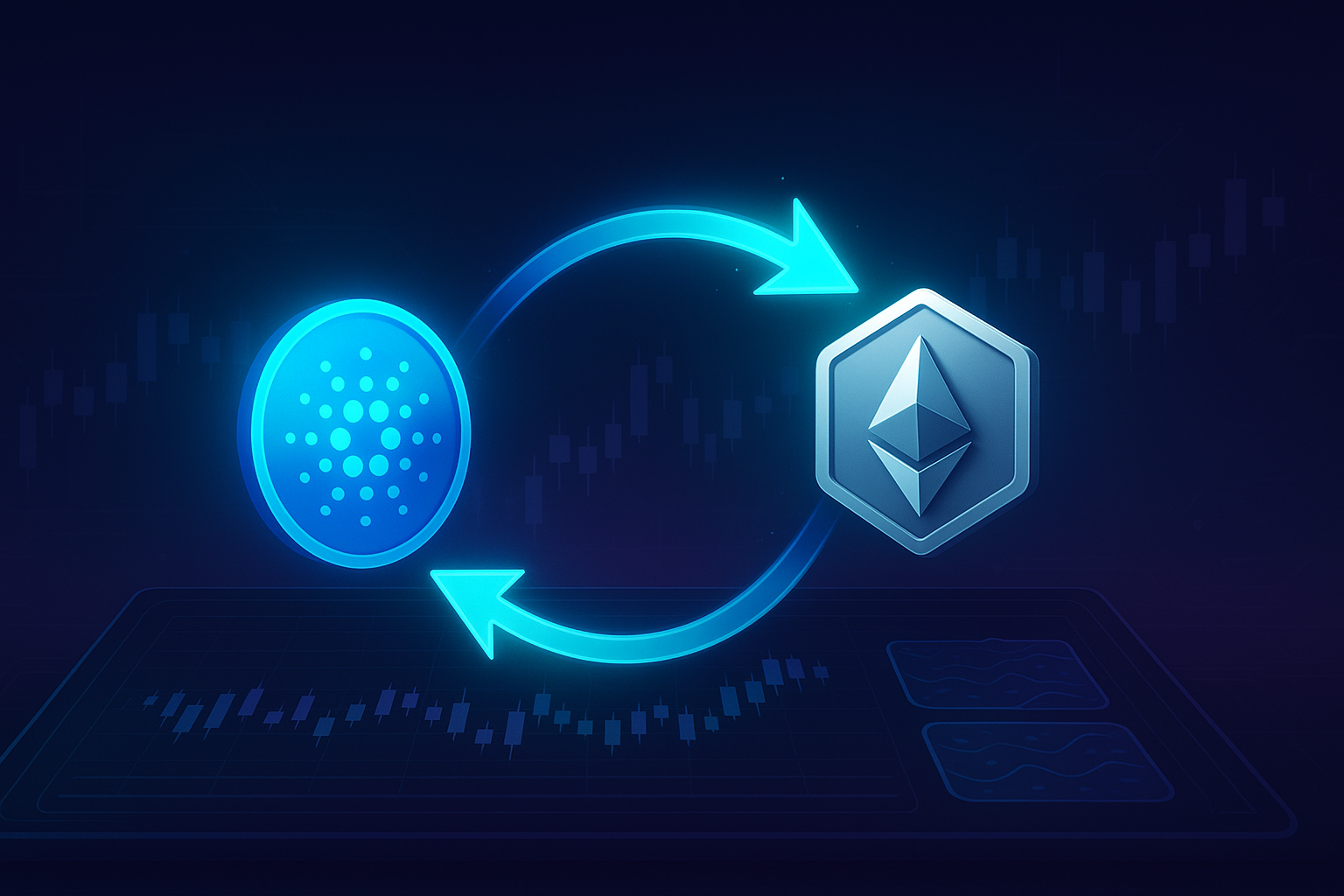
As DeFi, NFTs, and multi-chain investing continue to grow, many crypto users are looking for a fast and secure way to perform an ADA to ETH swap. Cardano (ADA) and Ethereum (ETH) are two of the most popular blockchains, but they live on different networks with different technologies and use cases. That makes moving value between them a critical task for traders, long-term holders, and DeFi users alike.
In this guide, you will learn how to convert ADA to ETH safely, what to watch out for, and how to use a private, non-custodial ada to eth swap service without losing control of your funds. We will also cover common mistakes and practical tips to keep your assets secure.
By the end, you will know the difference between centralized and decentralized options, how cross-chain swaps actually work in practice, and how to choose the most suitable method for your goals and risk tolerance.
Why ADA to ETH Swaps Matter
Cardano and Ethereum both aim to support smart contracts and decentralized applications, but they serve slightly different communities and ecosystems. Being able to move from ADA to ETH effectively can unlock a range of opportunities:
- Access Ethereum DeFi platforms, NFT marketplaces, and L2 ecosystems
- Diversify exposure across different smart contract platforms
- Rebalance your portfolio in response to market conditions
- Take advantage of arbitrage or yield opportunities across chains
Without a smooth ADA to ETH swap process, you are effectively “locked” in one ecosystem. That can limit your flexibility and your ability to react quickly when the market moves or when new projects launch on another chain.
Key Ways to Perform an ADA to ETH Swap
There are three main approaches to exchanging Cardano for Ethereum:
- Centralized exchanges (CEXs) that list both ADA and ETH
- Non-custodial cross-chain swap services
- Bridging + DEX trading using wrapped assets
1. Centralized Exchanges
Most large exchanges list both ADA and ETH, making it relatively straightforward to trade one for the other. The typical flow looks like this:
- Deposit ADA to the exchange
- Trade ADA for ETH (directly or via a stablecoin like USDT)
- Withdraw ETH to your personal wallet
This method is often user-friendly but requires full KYC, custody of your funds by the exchange, and trust in the platform’s solvency and security.
2. Non-Custodial Cross-Chain Swap Services
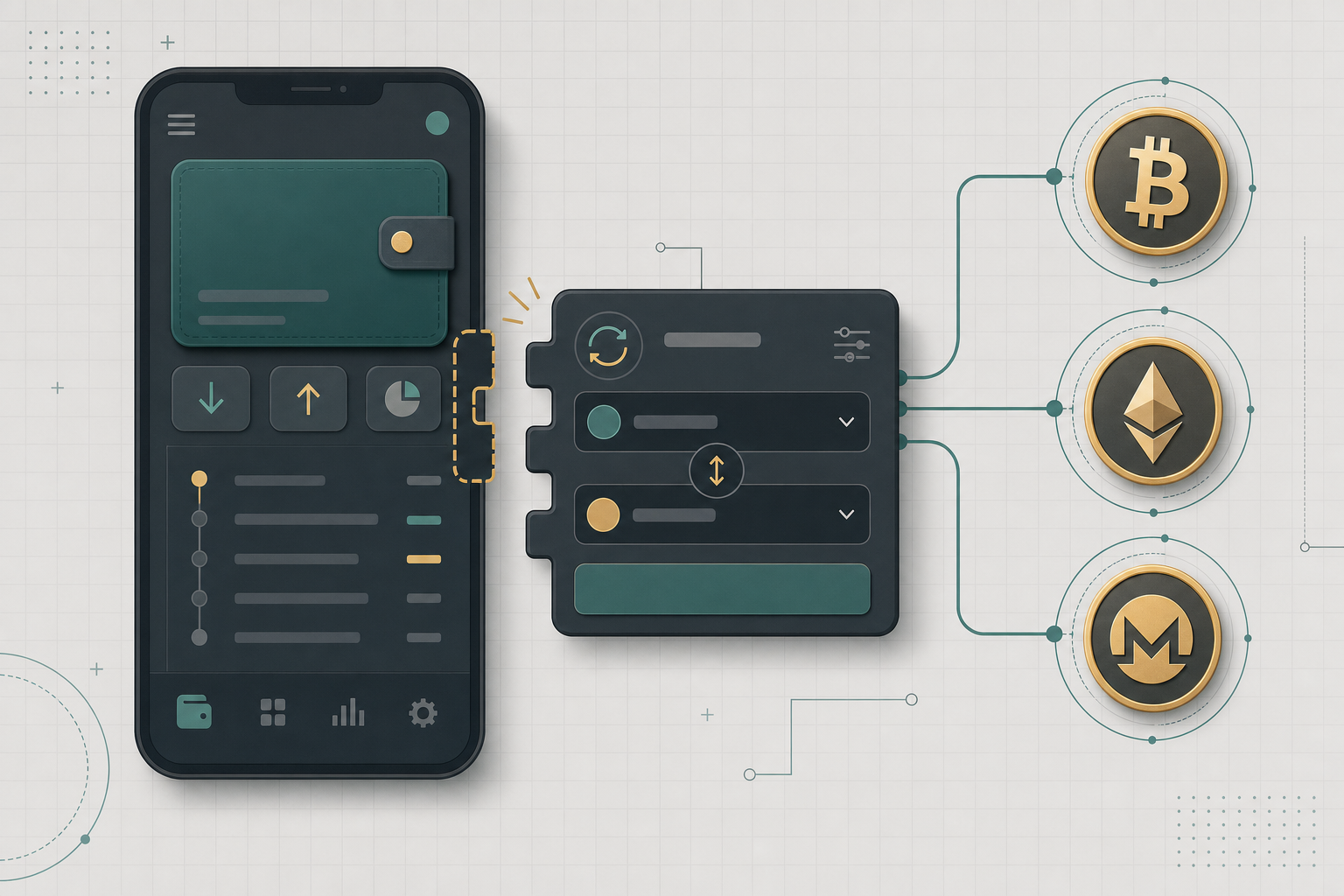
A non-custodial cross-chain service lets you perform an ADA to ETH swap directly between your Cardano wallet and your Ethereum wallet without giving up control of your private keys. You typically specify how much ADA you want to swap, provide your receiving ETH address, and send ADA to a one-time deposit address. The service then delivers ETH to your specified wallet.
Well-designed tools of this kind focus on privacy, simplicity, and minimizing counterparty risk. They are attractive for users who do not want account creation, KYC, or complex trading interfaces.
3. Bridges and Decentralized Exchanges (DEXs)
Another route is to use a cross-chain bridge combined with a DEX:
- Bridge wrapped ADA or a stablecoin from Cardano to Ethereum (or vice versa)
- Trade on an Ethereum-based DEX like Uniswap or SushiSwap
This approach offers more flexibility and composability for advanced DeFi users, but it introduces additional smart contract risk, multi-step workflows, and typically higher transaction fees on Ethereum.
Benefits of Swapping ADA to ETH
Converting ADA to ETH is more than just a speculative trade. It can have strategic benefits for many types of users.
1. Access to the Ethereum DeFi Ecosystem
Ethereum remains the most mature DeFi ecosystem, with:
- Lending and borrowing platforms
- Yield aggregators
- Derivatives and options protocols
- Stablecoin liquidity and on-chain order books
Holding ETH or Ethereum-based tokens gives you access to a broad set of financial primitives that may not yet exist or be as liquid on Cardano.
2. Portfolio Diversification
ADA and ETH differ in monetary policy, tech stack, governance culture, and ecosystem composition. Holding both can:
- Spread risk across two major smart contract platforms
- Reduce exposure to technical setbacks on a single chain
- Capture upside from growth in multiple ecosystems
3. Participation in Ethereum L2 and NFT Markets
To interact with rollups like Arbitrum, Optimism, Base, zkSync, or to buy NFTs on major marketplaces, you usually need ETH. Swapping a portion of your ADA into ETH can be your gateway into these rapidly evolving areas.
4. Non-Custodial Control
Using a non-custodial swap service to swap crypto instantly allows you to keep control of your private keys. Instead of keeping funds on a centralized exchange, you can move directly between self-custodial wallets on different chains. That can reduce some custodial and regulatory risks, while still letting you rebalance quickly.
Risks and Drawbacks of ADA to ETH Swaps
Every crypto transaction carries risk, and cross-chain swaps add a few more layers to consider.
1. Market Volatility and Slippage
Crypto markets are volatile. Between the time you initiate your ADA to ETH swap and the time it settles, prices may move significantly. This can result in:
- Slippage if the exchange rate worsens during the swap
- Inconsistent outcomes vs what you expected from a price quote
Using services with transparent rate information and clear minimum receive amounts helps manage this risk.
2. Counterparty and Smart Contract Risk
Depending on the method:
- Centralized exchanges carry platform, custody, and regulatory risk
- Bridges and DEXs rely on smart contracts that can potentially have bugs or be exploited
- Swap services require you to trust the protocol’s design, uptime, and liquidity sources
3. Network Fees and Congestion
Swapping ADA to ETH involves at least two networks: Cardano and Ethereum. When Ethereum is congested, gas fees can spike, reducing the amount of ETH you effectively receive or making small swaps uneconomical.
4. Human Error
The most common losses still come from mistakes such as:
- Sending ADA from an exchange directly to an incompatible address
- Pasting the wrong recipient address
- Using the wrong network (for example, confusing ERC-20 with another chain)
A careful, step-by-step approach helps prevent these issues.
Step-by-Step Guide: How to Perform an ADA to ETH Swap
Below is a general walkthrough for doing a non-custodial ADA to ETH swap from your own wallet. Exact screens and labels vary by platform, but the core logic is similar.
Step 1: Prepare Your Wallets
- Cardano wallet: Make sure you have ADA in a wallet you control (for example, Eternl, Yoroi, Nami, or Flint). Verify that you can send transactions from it.
- Ethereum wallet: Have a self-custodial ETH wallet ready (for example, MetaMask, Rabby, hardware wallet connected to a Web3 interface). Copy and double-check your ETH address.
Step 2: Choose a Swap Method
Decide whether you prefer:
- A centralized exchange with a full trading interface and KYC
- A non-custodial, privacy-focused swap tool
- A bridge plus DEX for more advanced strategies
For users who prefer privacy and simplicity, using a private exchange for ADA to ETH can be a practical middle ground between convenience and self-custody.
Step 3: Enter Swap Details
On your chosen swap interface:
- Select ADA as the asset you are sending.
- Select ETH as the asset you will receive.
- Enter the amount of ADA you want to swap.
- Paste your receiving ETH address carefully and verify it.
Many services will show you an indicative exchange rate, estimated network fees, and the minimum amount of ETH you can expect to receive if the price moves within a certain range.
Step 4: Confirm and Send ADA
After reviewing all details:
- Confirm the order on the swap interface
- You will receive an ADA deposit address or a QR code
- In your Cardano wallet, send the exact amount of ADA to that address
Always double-check that:
- The amount matches the quote
- The recipient address is exactly as displayed
- You are sending via the correct network (Cardano mainnet)
Step 5: Wait for Confirmations
Once you send ADA, the service waits for enough confirmations on the Cardano blockchain. This can take a short while depending on network conditions.
Afterward, the service executes the corresponding trade and sends ETH to your specified Ethereum address. Ethereum confirmations are usually visible within a minute or a few minutes, depending on gas settings and network congestion.
Step 6: Verify Receipt of ETH
Open your Ethereum wallet and confirm that the expected ETH amount appears. You can also:
- Check the incoming transaction on an Ethereum block explorer (such as Etherscan)
- Save the transaction hash and swap ID (if provided) for your records
Practical Tips for a Safe and Efficient ADA to ETH Swap
1. Start with a Small Test Amount
If you are using a service for the first time or are unsure about any step, start with a small test swap. This lets you verify the process and addresses without risking a large amount of capital.
2. Double-Check Addresses and Networks
- Verify the first and last characters of addresses before sending
- Make sure you are on the official website or interface, not a phishing copy
- Check that your Ethereum wallet is set to the correct network (mainnet, not a testnet)
3. Monitor Fees and Market Conditions
Ethereum gas fees can fluctuate rapidly. Consider:
- Checking fee estimators or gas trackers before initiating a swap
- Avoiding periods of extreme network congestion when possible
- Taking note of how much of your swap value will be consumed by fees
4. Use Non-Custodial, Privacy-Conscious Tools Where Possible
If minimizing data exposure and third-party risk is a priority, use services that:
- Do not hold your funds long term
- Do not require account creation for simple swaps
- Are designed as non-custodial swap tools rather than custodial wallets
5. Keep Records for Tax and Compliance
In many jurisdictions, converting ADA to ETH is a taxable event. Keep:
- Timestamps of your swaps
- Amounts sent and received
- Transaction hashes and any on-screen confirmations
This helps with portfolio tracking, tax reporting, and troubleshooting if you ever need support.
Conclusion
An ADA to ETH swap is a powerful tool for multi-chain investors who want to access Ethereum’s DeFi, NFT, and L2 ecosystems while still benefiting from Cardano’s strengths. With the right approach, you can move between these networks efficiently, maintain control over your funds, and reduce unnecessary risks.
Whether you choose a centralized exchange, a bridge plus DEX, or a non-custodial, private exchange solution, taking the time to understand the process pays off. Prepare your wallets, verify every address, start with small test amounts, and stay aware of fees and market volatility.
As the crypto landscape continues to evolve, the ability to swap ADA to ETH quickly and securely will remain essential for anyone looking to stay flexible, capture new opportunities, and build a robust, diversified on-chain portfolio.
Ready to Swap?
Convert your crypto instantly on GhostSwap — no KYC, no sign-up required.
Popular swaps: BTC to XMR | BTC to ETH | XMR to BTC | ETH to XMR | BTC to SOL