Introduction
Privacy has become a core concern for many crypto users. Between increasingly strict regulations, on-chain surveillance, and centralized exchanges tightening their rules, more people are looking for ways to swap crypto without handing over their identity. One of the most popular routes is an ETH to XMR swap no KYC, combining the liquidity of Ethereum with the privacy features of Monero.
Monero (XMR) is widely regarded as one of the strongest privacy coins available, while Ethereum (ETH) is one of the most used assets in DeFi. Converting ETH to XMR without KYC allows users to move from a relatively transparent chain to a privacy-focused asset without going through centralized exchanges that demand passports, selfies, or bank statements. Services like this eth to xmr swap no kyc interface make that process smoother for users who value anonymity.
This guide walks through why this matters, the main benefits and risks, and a clear step-by-step process. It is written for informational and educational purposes only and is not legal, tax, or investment advice. You alone are responsible for complying with the laws and regulations in your jurisdiction.
Why ETH to XMR Swaps Without KYC Matter
1. Growing surveillance and data collection
Centralized exchanges have become more like traditional financial institutions. They often require:
- Government-issued ID
- Selfie or video verification
- Proof of address (utility bill, bank statement)
- Detailed information about your source of funds
Once collected, this data can be stored indefinitely, shared with third parties, or exposed in data breaches. For many users, especially those in sensitive jurisdictions, this level of surveillance is unacceptable.
2. Privacy as a security feature
Privacy is not only about hiding. It also protects you from being targeted. If your public identity is tied to large on-chain balances, you are more exposed to:
- Phishing and social engineering attacks
- Targeted hacking attempts
- Physical threats or extortion in extreme cases
Moving from ETH to XMR helps break that direct link between visible on-chain balances and your identity, if done correctly.
3. Avoiding unnecessary friction
KYC processes can be slow and invasive. In some regions, people are rejected simply due to nationality, lack of documents, or local regulatory restrictions. A non-custodial, no-KYC swap can be significantly faster and more globally accessible, provided that the user follows all applicable laws.
Key Benefits of an ETH to XMR Swap With No KYC
1. Stronger financial privacy
Ethereum transactions are public and traceable. Anyone can see:
- Wallet balances
- Transaction history
- Interactions with DeFi protocols and NFTs
Monero, on the other hand, uses ring signatures, stealth addresses, and confidential transactions to obscure sender, receiver, and amount at the protocol level. When you perform an ETH to XMR swap no KYC, you move from a transparent ledger to a privacy-focused one, making it much harder for third parties to track your financial activity.
2. No account creation or identity upload
Non-custodial, no-KYC swap services typically let you trade directly from your own wallet. That means:
- No signup forms
- No username or password to manage
- No identity documents or selfies required
This lowers your exposure to data leaks and reduces the attack surface associated with holding accounts at many different platforms.
3. Custody stays with you
With a non-custodial swap, you never deposit funds into a centralized exchange account that controls your private keys. Instead, you:
- Send from your own ETH wallet
- Receive XMR directly into your own Monero wallet
This follows the core crypto principle: not your keys, not your coins.
4. Typically faster than centralized onboarding
Centralized exchanges can take hours or days to approve KYC, especially during peak market activity. A privacy-focused private exchange that lets you swap crypto instantly can often complete the transaction within minutes, depending on network conditions and confirmation requirements.
Risks and Drawbacks You Should Understand
1. Regulatory and legal considerations
Some countries heavily regulate or restrict privacy coins and no-KYC services. You must:
- Research your local regulations before using such tools
- Understand reporting and tax obligations for crypto trades
- Recognize that even private transactions may have legal consequences if misused
This article does not endorse illegal activity. Privacy tools are used legitimately by many people, but legal responsibility lies entirely with you.
2. Counterparty and platform risk
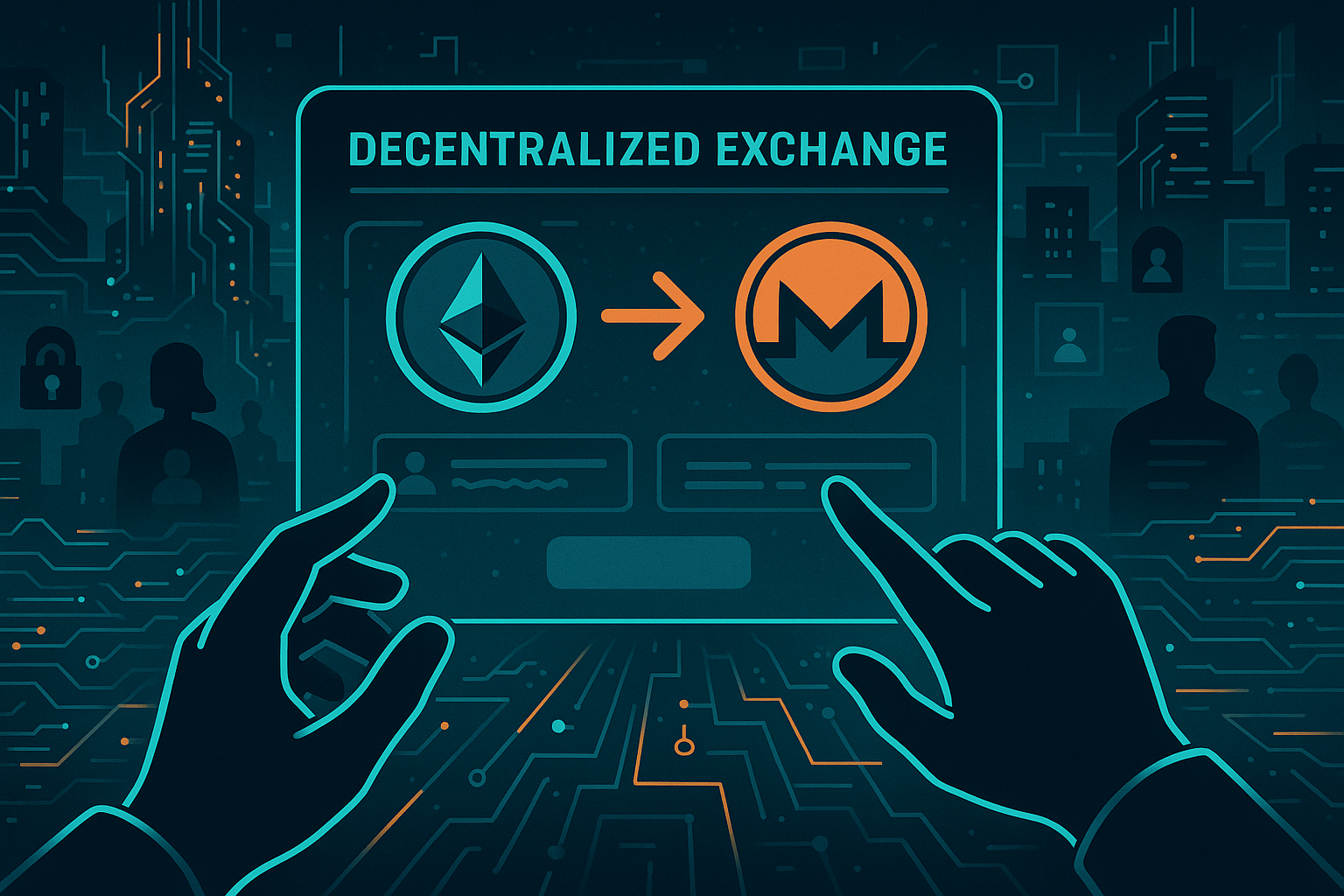
When you use a non-custodial swap service, you interact with a smart contract, a liquidity provider, or a routing backend that executes the exchange. Potential risks include:
- Platform downtime or service disruptions
- Smart contract vulnerabilities or unexpected behavior
- Unfavorable exchange rates or hidden markups
Always do your own research on any platform before sending funds. Look for transparent fee structures, community feedback, and clear documentation on how the swap mechanism works.
3. On-chain traceability of the input side
Even if the output asset is private, your original ETH transaction is still recorded on Ethereum. While the link between the ETH sender and the XMR receiver is not trivially public, sophisticated analytics may still attempt to correlate transactions based on timing, size, and other patterns.
For higher privacy, consider additional operational steps such as:
- Using fresh wallets for each swap
- Avoiding identifiable on-chain behavior
- Varying transaction sizes and timings where appropriate
4. Price volatility and slippage
ETH and XMR are both volatile assets. During a swap you may experience:
- Price swings between quote and execution
- Slippage due to liquidity depth or market conditions
- Network fee spikes on Ethereum, increasing total cost
Check all parameters before confirming the transaction and avoid swapping during extreme market volatility when possible.
Step-by-Step Guide: How to Do an ETH to XMR Swap With No KYC
Step 1: Prepare a secure Monero wallet
Before you start, you need an XMR wallet address. Choose a reputable Monero wallet such as:
- Official Monero GUI or CLI wallet
- A well-reviewed mobile Monero wallet
- A hardware wallet that supports XMR (if available and properly configured)
Create your wallet, write down the seed phrase on paper (not digitally), and store it securely offline. Then locate your primary XMR receiving address in the wallet.
Step 2: Ensure you have ETH ready in a self-custody wallet
You will need ETH stored in a wallet that you control, for example:
- MetaMask or similar browser wallet
- Hardware wallet connected to a desktop app
- Trusted mobile ETH wallet
Confirm that:
- You have enough ETH to swap the desired amount
- You have extra ETH to cover network gas fees
- Your wallet network is set to the correct Ethereum mainnet
Step 3: Choose a non-custodial no-KYC swap service
Next, select a platform that supports direct ETH to XMR swaps without user accounts and KYC. For example, you can use a non-custodial swap interface focused on ETH/XMR that respects user privacy and does not require registration.
When evaluating a service, consider:
- Whether it clearly states it does not require KYC for the intended volume
- Fee transparency and displayed estimated rate
- Reputation, uptime, and user feedback
Step 4: Enter swap details
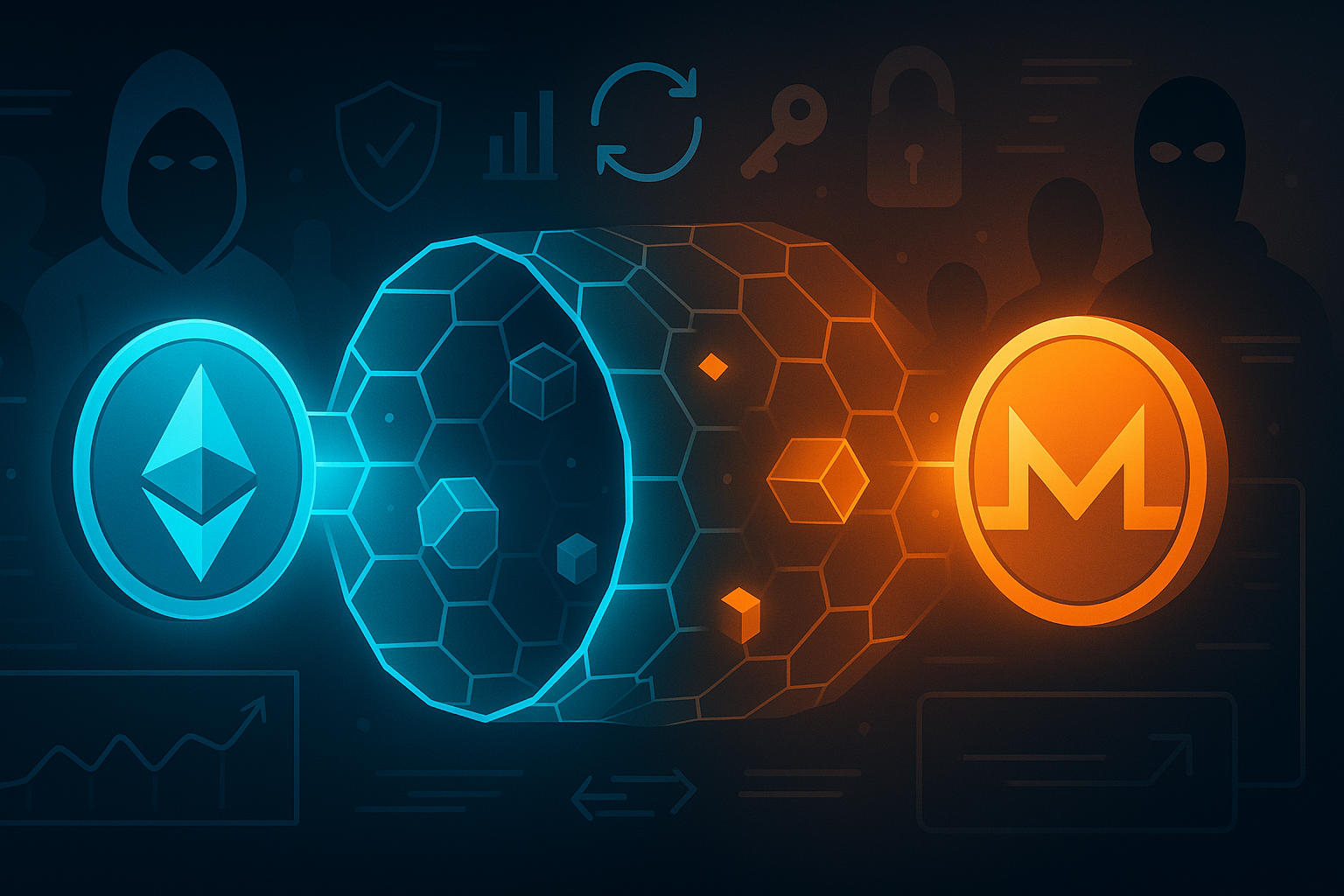
On the swap page, you will usually see two fields:
- From: ETH
- To: XMR
Then:
- Enter the amount of ETH you want to swap.
- Paste your Monero receiving address in the designated field.
- Review the estimated XMR amount you will receive.
- Check the minimum and maximum swap limits, if shown.
Verify the address very carefully. Monero addresses are long; a copy-paste error can result in loss of funds.
Step 5: Confirm the quote and review all parameters
Before sending any ETH, make sure you understand:
- The exact ETH amount you must send
- The estimated XMR output and rate
- Any service fees included in the rate
- Time window to complete the payment, if the quote is time-limited
Only proceed when all details look correct and match your expectations.
Step 6: Send ETH from your wallet
The swap page will give you a deposit address or an on-chain payment request. To complete this step:
- Open your ETH wallet and click “Send”.
- Paste the provided deposit address exactly as shown.
- Enter the precise ETH amount requested by the swap service.
- Set an appropriate gas fee so that the transaction confirms within the expected time.
- Double-check the address and amount, then confirm the transaction.
Do not send from an exchange account; use your self-custody wallet so that the swap can correctly identify and process your payment.
Step 7: Wait for confirmations and XMR delivery
After you send the ETH, the platform will wait for a certain number of on-chain confirmations. Once confirmed, it will execute the swap and broadcast a Monero transaction to your specified XMR address.
Depending on network conditions, this process can take from a few minutes to longer. You can usually monitor status on the swap interface using a transaction ID or session link. Finally, check your Monero wallet for the incoming XMR after the transaction is processed and the wallet has synchronized.
Practical Tips for Safer and More Private ETH to XMR Swaps
1. Use fresh addresses where possible
For privacy-conscious users, it is good practice to:
- Use a fresh XMR subaddress for each new swap
- Avoid reusing the same ETH address across many services
This reduces the chances of someone correlating multiple transactions to a single identity.
2. Avoid public Wi-Fi and insecure devices
Always perform sensitive financial actions, including swaps, on:
- Trusted networks instead of open public Wi-Fi
- Devices with up-to-date operating systems and security patches
- Browsers without malicious extensions or suspicious add-ons
3. Verify URLs and watch for phishing
Attackers commonly clone popular swap services to steal funds. To reduce risk:
- Bookmark the official swap URL and access it from your bookmarks
- Confirm the domain name character by character
- Beware of links from unsolicited emails, DMs, or ads
4. Start with a small test amount
If this is your first time using a given platform, send a small amount of ETH first and verify that XMR arrives as expected. Once you are comfortable that the process works, you can increase the amount according to your own risk tolerance.
5. Keep records for personal tracking and compliance
Even if the service does not require KYC, it may still be wise to keep:
- Local notes of date, time, and amounts swapped
- Transaction hashes from both Ethereum and Monero sides
- Any reference numbers provided by the service
These can help you track your portfolio, calculate taxes, and prove provenance of funds if necessary in the future.
6. Be realistic about privacy limits
No tool or workflow is perfect. While an ETH to XMR swap no KYC can significantly enhance privacy, it does not make you invisible. A strong privacy posture usually involves:
- Good operational security habits
- Careful wallet hygiene and address management
- Thoughtful decisions about where and how you later spend or convert your XMR
Conclusion
Swapping from ETH to XMR with no KYC can be a powerful way to regain control over your financial privacy, avoid invasive identity checks, and maintain custody of your own funds throughout the process. By using a reputable private exchange for non-custodial ETH to XMR swaps, you can move from a transparent blockchain to a privacy-focused asset in a relatively simple, user-friendly flow.
At the same time, it is vital to understand the tradeoffs. You must consider legal obligations in your jurisdiction, evaluate platform risk carefully, protect yourself from phishing or malware, and adopt strong operational security practices. Privacy is a spectrum, not a switch, and tools like Monero are most effective when combined with responsible behavior and informed decision-making.
If you decide that an ETH to XMR swap no KYC fits your goals, follow the step-by-step approach in this guide, start small, and continually refine your process as you learn more about both the technology and the regulatory environment around you.
Ready to Swap?
Convert your crypto instantly on GhostSwap — no KYC, no sign-up required.
Popular swaps: BTC to XMR | BTC to ETH | XMR to BTC | ETH to XMR | BTC to SOL