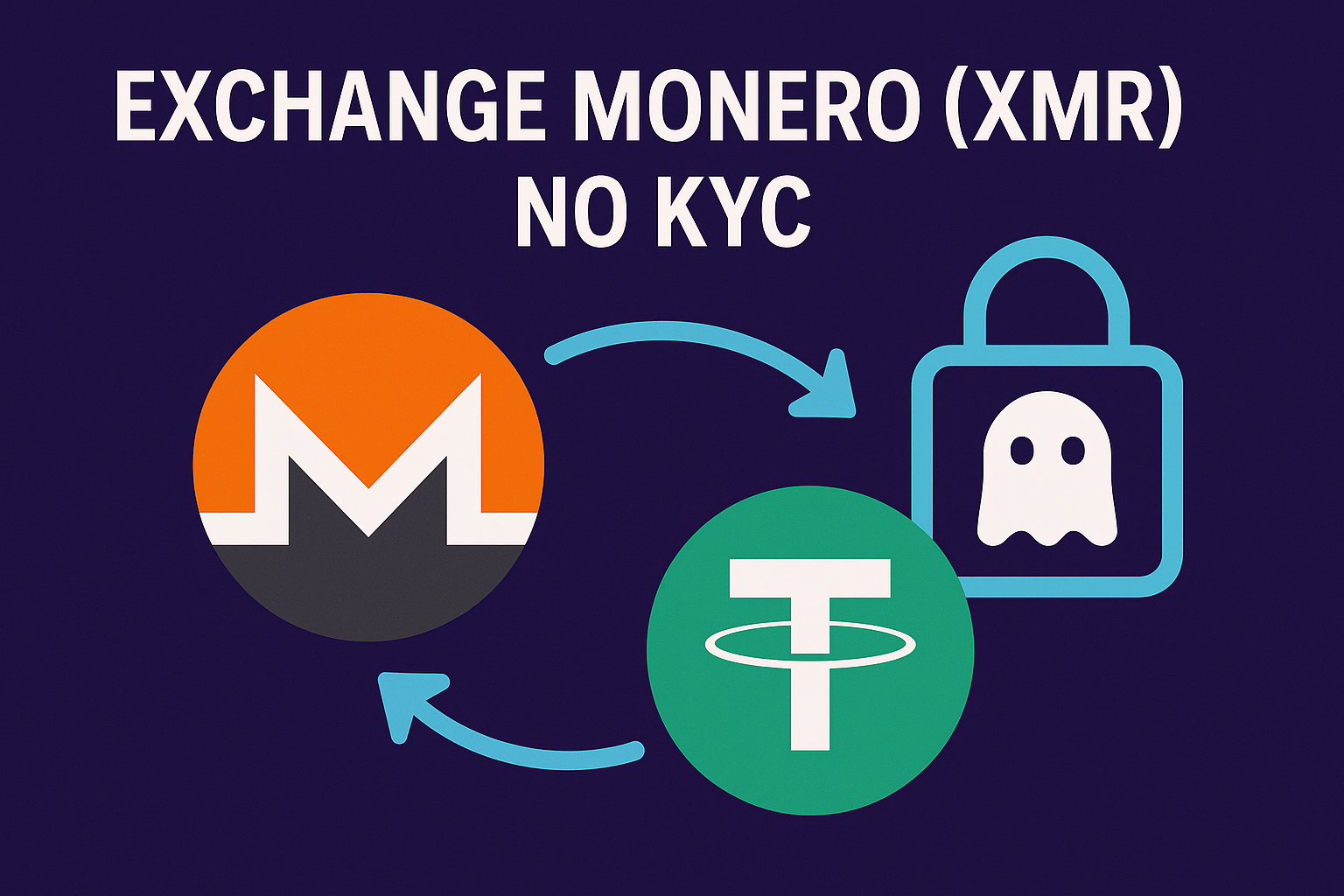
For a quick swap of Monero without KYC, you can exchange XMR no KYC via GhostSwap.
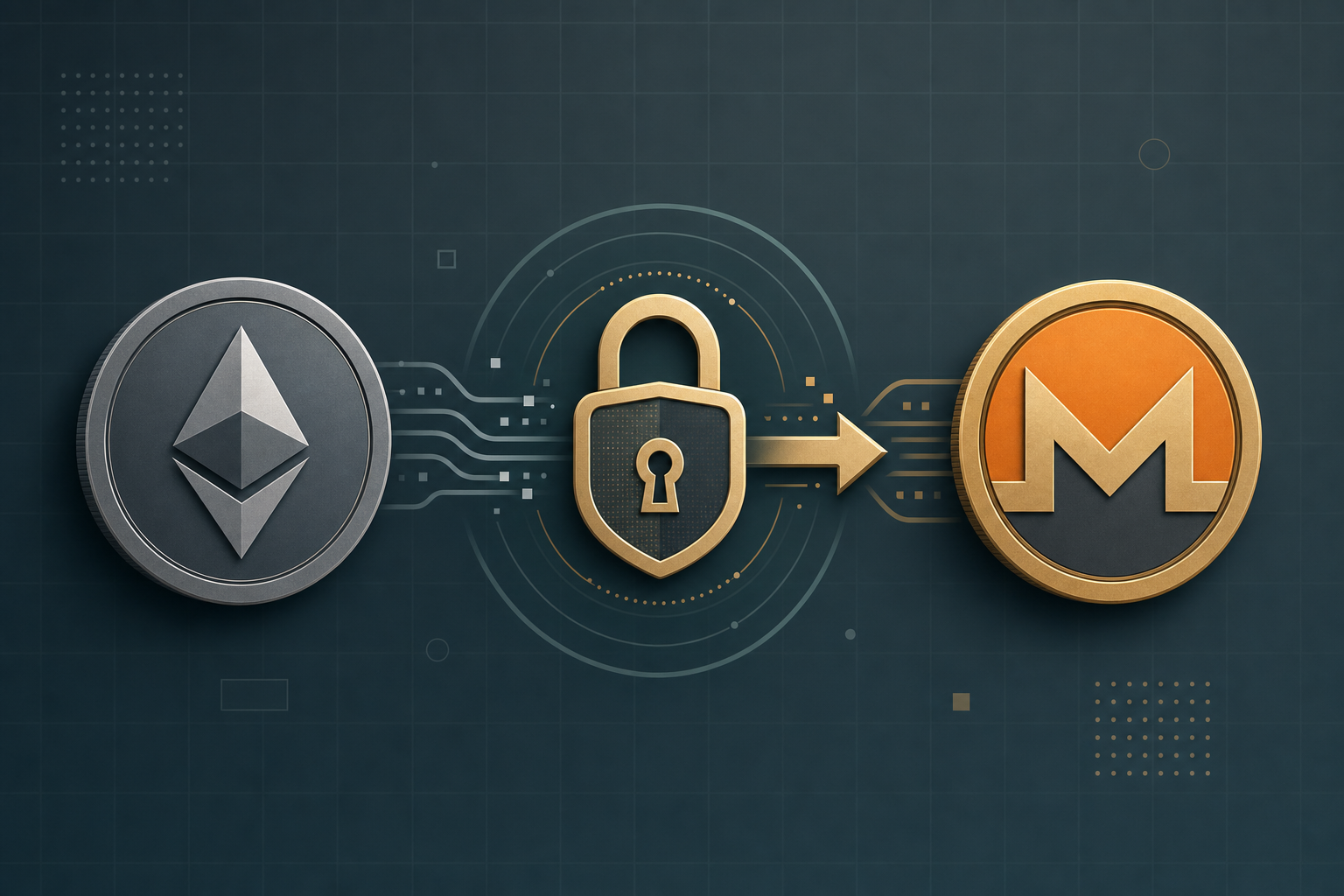
Monero (XMR) is the go-to cryptocurrency for people who care about financial privacy. Its built‑in privacy features make it ideal for those who don’t want every transaction tracked on a public blockchain.
At the same time, more and more exchanges require full KYC (Know Your Customer): passport uploads, selfies, proof of address… even if you just want to do a simple swap.
Because of that, a lot of users look for ways to exchange Monero (XMR) with minimal or no KYC, especially for small, everyday swaps.
This guide will show you:
- What “no KYC” really means in practice
- How to safely exchange XMR to USDT (TRC20) using a swap service
- What to watch out for (fees, scams, legal issues)
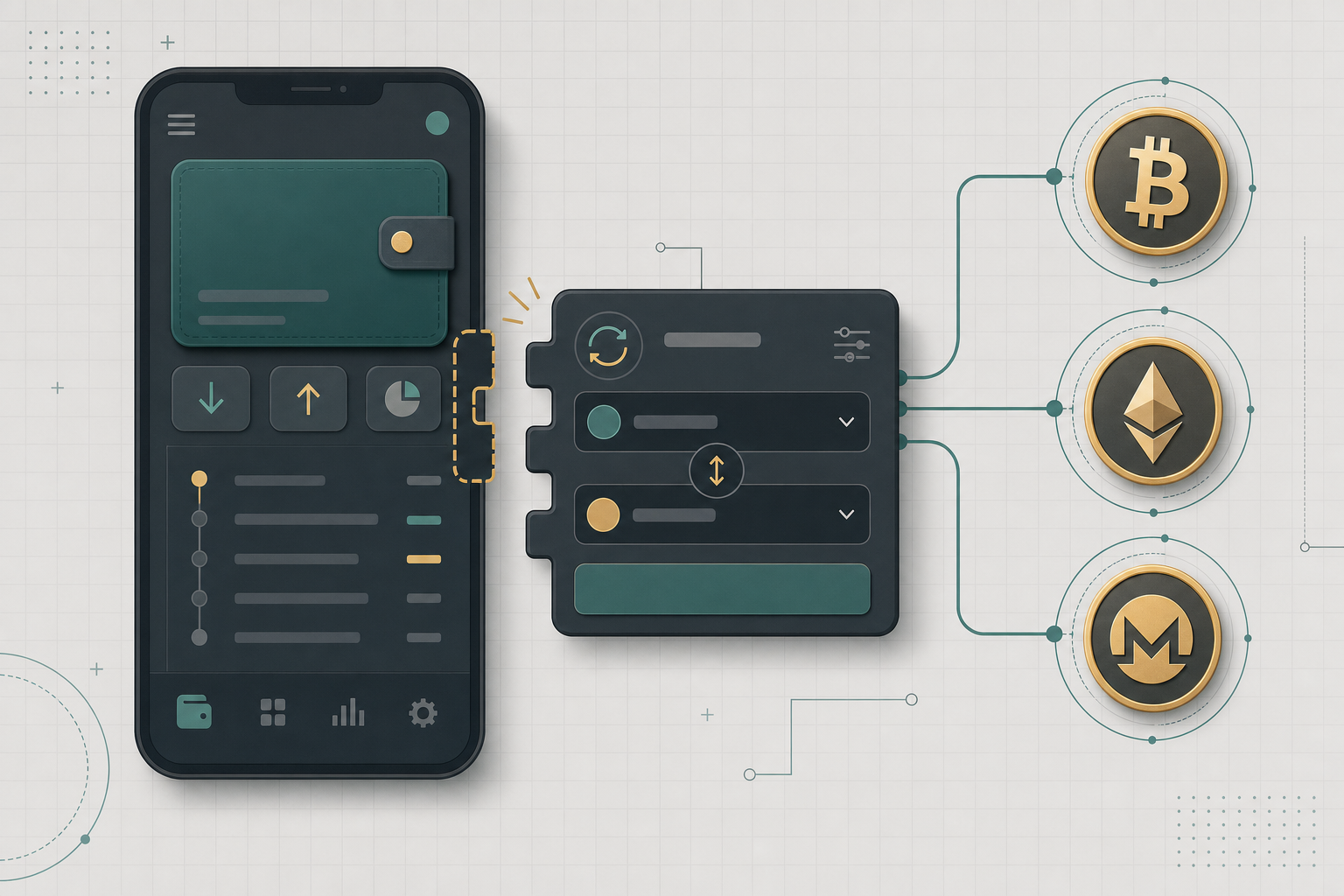
- How a non-custodial swap flow typically works
Important: Nothing here is legal or tax advice. You’re responsible for following the laws and regulations in your own country. Even if a platform doesn’t require full KYC for small amounts, you may still have tax/ reporting obligations.
1. What “No KYC” Actually Means When Exchanging Monero
Before you start searching “Monero no KYC exchange”, it’s important to understand what that phrase really covers.
1.1 What is KYC?
KYC (Know Your Customer) is the process where a financial service collects information such as:
- Name and date of birth
- Government ID (passport, ID card, driver’s license)
- Proof of address
- Sometimes source of funds
Regulated, custodial exchanges usually require KYC to comply with AML (Anti-Money Laundering) and other regulations.
1.2 No KYC vs Minimal KYC vs Full KYC
When people say “no KYC XMR exchange”, they usually mean one or more of these:
- No account registration (no email/password, no dashboard)
- No identity document upload for small amounts
- Non‑custodial: the service doesn’t hold your funds long term, it just swaps from one coin to another
In practice, many “no KYC” swap platforms:
- Are non‑custodial and focus on small/medium retail swaps
- Reserve the right to ask for additional info in suspicious or high‑risk cases
- Still operate within some form of compliance framework
So you get less friction and more privacy, but you’re not magically outside all laws. That’s a key distinction.
2. Why People Exchange Monero Without KYC
Monero users are usually more privacy‑conscious than average.
Here are some common legitimate reasons they prefer no‑KYC or low‑friction swaps:
- They don’t want their personal data stored by dozens of exchanges
- They want to avoid data breaches and leaks of KYC documents
- They only do small or occasional swaps and don’t see the need for full onboarding
- They value non‑custodial services where they control their own wallets
- They’re simply tired of long verification queues for simple trades
As long as you’re operating within your local laws and meeting tax obligations, wanting privacy and convenience is not a crime.
3. Key Features of a Good XMR “No KYC” Exchange
Not all XMR swap services are equal. When you look for a place to exchange Monero without going through heavy KYC, consider:
3.1 Non‑custodial architecture
Ideally, the platform:
- Doesn’t hold your coins long term
- Only receives XMR for the swap and sends out the destination coin
- Shows you the exact amount you’ll receive before you commit
This reduces counterparty risk compared to fully custodial exchanges.
3.2 Transparent fees and rates
Look for:
- Clear display of estimated receive amount
- Indication of whether the rate is fixed or floating
- No hidden network fees or surprises at the last step
3.3 Reasonable limits
Many services have daily and per‑transaction limits, especially for low‑KYC swaps.
- Make sure the minimum amount is not too high
- Check maximum swap sizes if you plan to move larger amounts
- Keep in mind that larger transactions are more likely to trigger extra checks
3.4 Good reputation and uptime
Before trusting a service with your Monero, check:
- How long it has been online
- Whether it’s used by other crypto communities
- Social channels, reviews, and whether they respond to support queries
3.5 Clear legal/disclaimer section
A serious project usually has:
- Terms of service
- Privacy policy
- Some explanation of their approach to compliance/AML
Even if you’re looking for ease and privacy, you still want a professional operation, not a quick hit‑and‑run site.
4. Example Flow: Exchange Monero (XMR) to USDT (TRC20) Without an Account
To make this concrete, let’s walk through a typical non‑custodial XMR swap to USDT (TRC20), like the flow you’d see on a dedicated swap page such as GhostSwap’s XMR → USDT (TRC20) exchange.
The exact UI may differ slightly between services, but the core steps are similar.
Step 1 – Choose your pair (XMR → USDT TRC20)
On the swap interface:
- Select “You send”: XMR (Monero)
- Select “You get”: USDT (TRC20)
- Enter the amount of XMR you want to swap, or the amount of USDT you’d like to receive
The system will show an estimated amount of USDT (TRC20) you’ll receive after fees and spread.
Step 2 – Enter your destination USDT address
Next, you’ll need:
- A TRC20 USDT wallet address (for example, from a wallet that supports TRON USDT)
Paste your USDT TRC20 address carefully. This is where the swapped funds will be sent.
Double‑check:
- Network: it must be TRC20, not ERC‑20 or another chain
- No extra spaces
- You copied the full address
Step 3 – Review rate, fees & time estimate
Before confirming, review:
- Estimated USDT amount you’ll receive
- The exchange rate XMR → USDT
- Any service/network fee indications
- Estimated completion time (many swaps take from a few minutes to maybe an hour, depending on network load and confirmations)
If everything looks good, you approve/continue to the next step.
Step 4 – Send XMR to the provided address
The swap platform will give you:
- A unique XMR deposit address
- A time window in which you must send the funds
- Sometimes a required exact amount
From your Monero wallet:
- Send the specified amount of XMR to the deposit address
- Wait for the required number of confirmations on the Monero network
Once the service detects your payment, it will execute the swap and send USDT (TRC20) to your destination address.
Step 5 – Receive USDT (TRC20)
After processing:
- You should see the USDT arrive in your TRC20 wallet
- On many services, you can track the status of your swap in real-time with a status page or a transaction ID
Keep a note of:
- The time of the swap
- Amount sent and received
- Any transaction IDs (XMR and USDT sides)
This can be important later for personal accounting and tax records.
If you want to see a live example of this type of interface or actually perform a swap, you can check out the XMR to USDT (TRC20) route on GhostSwap here:
👉 https://ghostswap.io/exchange/xmr-usdt20/
5. Pros and Cons of Exchanging XMR Without Full KYC
Like every tool, no‑KYC swaps have upsides and downsides.
Advantages
- Privacy: You share less personal data with third parties
- Speed: You don’t wait days for account verification
- Simplicity: No need to learn a complex exchange interface or order books
- Non‑custodial: You keep control of your coins except during the swap window
Risks & trade‑offs
- Less recourse if something goes wrong: You’re dealing with a swap service, not a fully regulated brokerage with support departments in every country
- Potential for higher spreads: Convenience sometimes comes with slightly worse rates than big exchanges
- Regulatory uncertainty in some countries: Rules around privacy coins and no‑KYC services vary a lot by jurisdiction
- Network risk: Delays or issues on the Monero or TRON network can slow down or complicate swaps
Because of this, many users:
- Use smaller test transactions first
- Keep swaps within reasonable sizes
- Maintain their own records even if the service doesn’t provide detailed history
6. Staying Safe When Swapping Monero Without Heavy KYC
If you want to use a low-friction swap while staying safe and responsible, follow some simple best practices.
6.1 Always verify the URL
Phishing is common in crypto.
- Bookmark the official URL of your chosen swap service
- Don’t follow random shortened links from strangers
- Check for HTTPS and correct spelling
6.2 Start with a small test swap
Before you send a large amount of XMR:
- Do a small test swap (for example the minimum supported amount)
- Confirm that you receive the correct coin in your wallet
- Only then proceed with a larger transaction
6.3 Double‑check addresses and networks
A single mistake in:
- XMR address
- USDT network (TRC20 vs ERC20 vs others)
…can result in lost funds.
Copy‑paste carefully and verify at least the first and last few characters.
6.4 Keep your own records
Even if you’re using a no‑account, no‑dashboard service, it’s wise to:
- Record date, amount, and transaction IDs
- Keep notes for future tax reports or personal accounting
- Export wallet history periodically
6.5 Respect the law
Using a service with lighter verification does not remove your responsibilities:
- Many countries require you to report crypto gains and losses
- Some impose specific rules for privacy coins
- Regulations can change over time
If you’re unsure, talk to a local tax or legal professional rather than guessing.
7. Frequently Asked Questions About No‑KYC Monero Exchanges
Is exchanging Monero without KYC legal?
It depends entirely on your jurisdiction and what you’re doing with it.
- In many places, using non‑custodial swaps for small, personal transactions is not specifically prohibited
- In others, regulators are more strict about privacy coins and unregistered services
Regardless, you may still have tax and reporting obligations on gains, even if you never created an account anywhere.
Do no-KYC swaps mean “no compliance at all”?
Not necessarily.
Many services:
- Monitor transactions for obvious signs of abuse
- May block or flag clearly suspicious flows
- Reserve the right to request additional data in certain cases
“No KYC” usually refers to not forcing every user into a full ID process, especially for small swaps – not to “total lawlessness”.
Are rates worse than big exchanges?
Sometimes yes, sometimes no.
- Large centralized exchanges can offer tight spreads but might charge higher trading or withdrawal fees
- Non‑custodial swap services may have slightly higher spreads, but you save on time and KYC friction
The best approach is to:
- Compare estimated receive amounts
- Factor in withdrawal fees from big exchanges if you’d use them instead
Can I do very large swaps without KYC?
Most services that advertise light or no KYC still have:
- Maximum limits
- Risk systems that may trigger extra checks for large or suspicious transactions
Trying to push very large amounts through any system while avoiding all verification is risky and not recommended. If you need to move truly big value, you’re usually better off working with a fully regulated, transparent setup.
8. Final Thoughts
Exchanging Monero (XMR) without full KYC is possible through non‑custodial swap services that focus on privacy, simplicity and speed. Used correctly, they can be a powerful tool for:
- Everyday users who don’t want to upload IDs everywhere
- People who care about minimizing data exposure
- Those who appreciate Monero’s privacy and want a simple bridge to stablecoins like USDT (TRC20)
The key is to:
- Choose a reputable service
- Understand the risks and limits
- Stay within the law of your country
- Keep good personal records of your swaps
If you’re ready to explore a typical XMR → USDT (TRC20) swap flow in practice, you can check out a dedicated route like the one at GhostSwap here:
👉 https://ghostswap.io/exchange/xmr-usdt20/
Use these tools smartly, stay safe, and always treat privacy as a responsibility, not an excuse to be reckless.
Ready to Swap?
Convert your crypto instantly on GhostSwap — no KYC, no sign-up required.
Popular swaps: BTC to XMR | BTC to ETH | XMR to BTC | ETH to XMR | BTC to SOL