GhostSwap, StealthEx, and FixedFloat are all no-KYC, non-custodial crypto swap services. The practical differences between them come down to three things: whether you can choose a fixed rate or only a floating one, how the service handles custody during the swap, and how fast a swap completes. This page compares the three on those points using each provider's publicly stated features (retrieved 2026-09-01).
TL;DR: All three run no-account, non-custodial swaps. GhostSwap uses a single floating-rate flow across 1,600+ pairs with a median ~8-minute completion. StealthEx and FixedFloat additionally advertise fixed-rate options. Choose on rate type and coin breadth — none of the three requires an account or identity verification.
The short answer
GhostSwap, StealthEx, and FixedFloat all require no account and no identity verification to swap, and all pass funds through non-custodially rather than holding them. GhostSwap runs a floating-rate flow with a median completion time of about 8 minutes across 1,600+ pairs and roughly 200 assets. StealthEx and FixedFloat additionally advertise fixed-rate options on their sites. Because the no-KYC, non-custodial baseline is shared, the real decision is rate type and coin breadth.
How the three compare
Below is a side-by-side of publicly stated features. Sources and retrieval dates are listed under the table.
| Feature | GhostSwap | StealthEx | FixedFloat |
|---|---|---|---|
| Account / KYC to swap | None required | None required | None required |
| Custody | Non-custodial pass-through | Non-custodial | Non-custodial |
| Rate type | Floating | Floating and fixed offered | Floating and fixed offered |
| Supported coins | 1,600+ pairs, ~200 assets | Per their site | Per their site |
Sources: StealthEx and FixedFloat, both retrieved 2026-09-01. GhostSwap figures are from the live product API on 2026-09-01. Tone is neutral: these are all functional no-KYC swap services and the comparison is about which flow fits your needs.
Fixed rate vs floating rate — the real trade-off
The main functional difference between these services is rate type, so it's worth understanding the trade.
- Floating rate takes the market rate at the moment your deposit confirms on-chain. GhostSwap uses floating-rate pricing from aggregated liquidity across leading crypto markets. The upside is you don't pay a premium for a locked number; the cost is that a sharp price move during confirmation changes your output amount.
- Fixed rate locks the receive amount up front. StealthEx and FixedFloat advertise fixed-rate options on their sites. The certainty is paid for in the spread — a fixed quote builds in a buffer against the price moving before your deposit lands.
Neither is strictly better. Floating suits users who want the tightest pricing and accept some variance; fixed suits users who want a guaranteed number and will pay the spread for it.
Speed and custody
All three services are non-custodial — your send coin passes through and the receive coin is delivered to your address, with funds never held by the swap provider. On GhostSwap, most swaps finish in about 8 minutes (median), with a slow tail up to roughly 30 minutes when chains are congested. That tail is confirmation time, not a stuck swap: the engine converts once your deposit is confirmed on-chain.
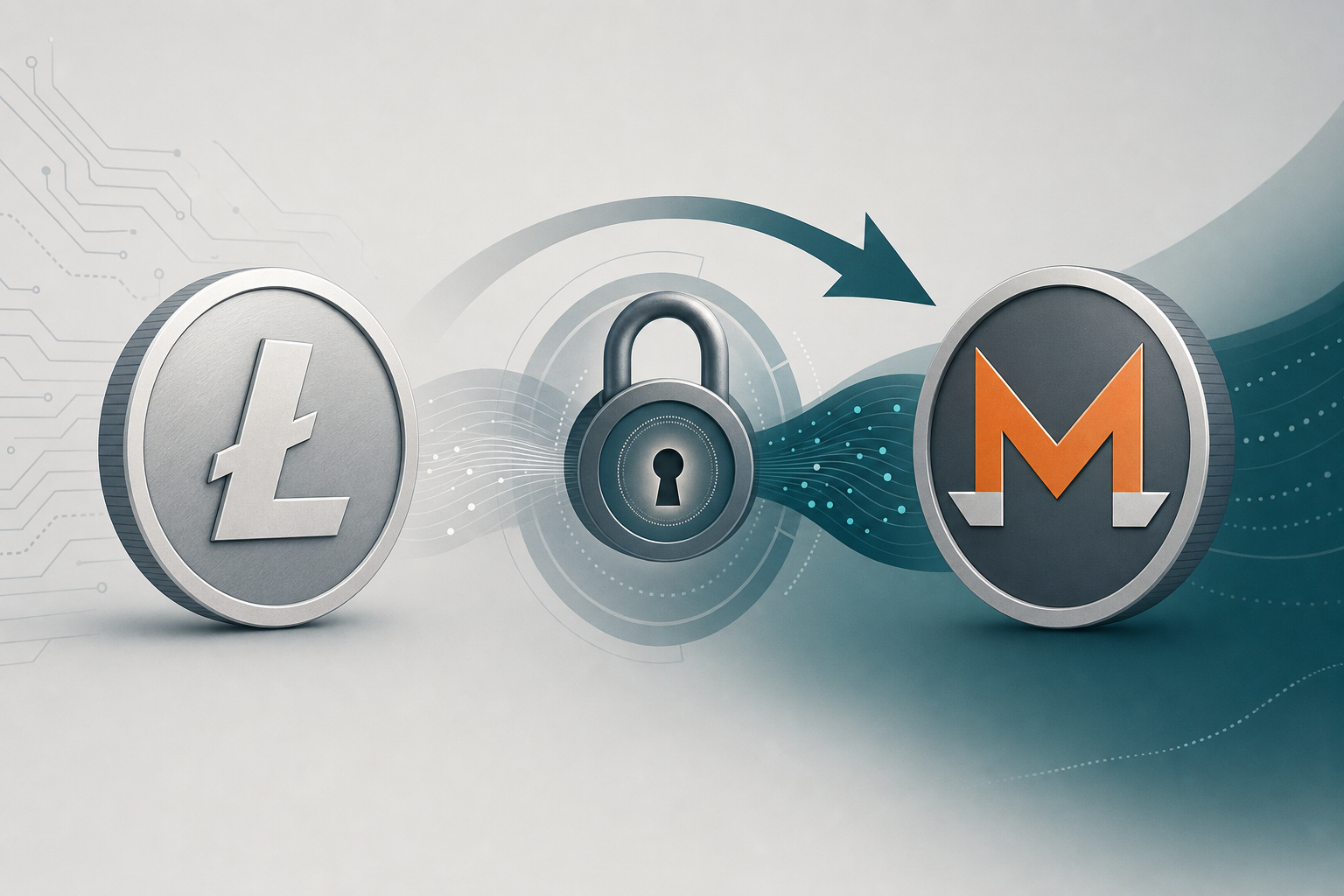
A common use of these services is converting a transparent coin into a privacy coin such as Monero, which shields sender, receiver, and amount by default through ring signatures and stealth addresses — see the Monero whitepaper (van Saberhagen, 2013). Whichever service you use, the input side of the transaction remains a public record on that coin's chain.
How a swap works on GhostSwap
If you choose GhostSwap, the flow is five steps and needs no account:
- Pick the pair — choose your send and receive coins and read the floating-rate estimate.
- Enter your receiving address — an address you control, plus a refund address on the send chain.
- Send your coins — to the one-time deposit address shown.
- The engine converts — at the floating rate when your deposit confirms.
- Receive — typically in about 8 minutes.
You can start from the homepage swap widget or a specific pair page such as swap BTC to XMR.
FAQ
Q: Which is best — GhostSwap, StealthEx, or FixedFloat?
A: It depends on rate preference. All three are no-KYC and non-custodial. GhostSwap uses a single floating-rate flow across 1,600+ pairs; StealthEx and FixedFloat additionally advertise fixed-rate options (retrieved 2026-09-01). Pick floating for tighter pricing, fixed for a locked number.
Q: Do any of them require KYC to swap?
A: Based on each provider's stated features (retrieved 2026-09-01), none of the three require an account or identity verification to swap. You supply only the receiving and refund addresses.
Q: How long does a swap take on GhostSwap?
A: Most swaps finish in about 8 minutes (median). During congestion the slow tail runs up to about 30 minutes, which is on-chain confirmation time.
Q: Is GhostSwap custodial during the swap?
A: No. GhostSwap is non-custodial — your coins pass through and the receive asset is delivered to your address. Funds are never held.
Bottom line
For a no-KYC swap, these three share a non-custodial, no-account baseline; the choice is rate type and coin breadth. To see a live floating-rate quote, use the homepage swap widget or a pair page like BTC to XMR.