How to Make a Smart GRT to ETH Swap: Complete Guide for 2024
Introduction
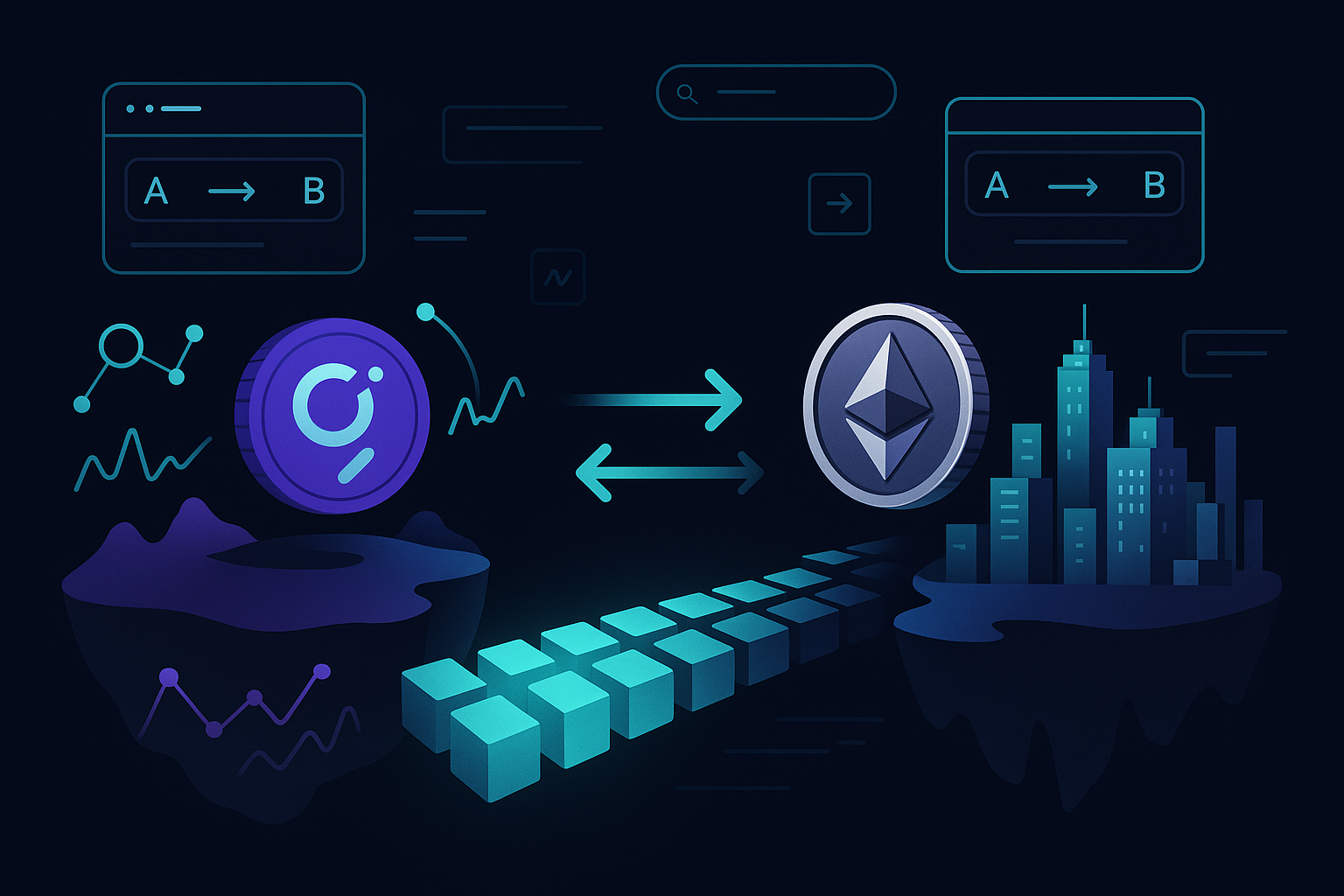
The Graph (GRT) and Ethereum (ETH) are two of the most important tokens in the Web3 and decentralized application ecosystem. As DeFi and indexing protocols mature, many traders and long-term holders look for an efficient way to execute a GRT to ETH swap without losing money on high fees or exposing themselves to unnecessary risk.
Today, you do not need an account on a centralized exchange to move between GRT and ETH. With the rise of non-custodial aggregators, you can swap crypto instantly directly from your wallet, keeping control of your private keys while searching multiple liquidity sources at once.
This guide explains why swapping GRT to ETH matters, the benefits and risks, and provides a detailed step-by-step walkthrough, along with practical tips to keep your transactions efficient, safe, and cost-effective.
Why GRT to ETH Swaps Matter
GRT powers The Graph, an indexing protocol that makes blockchain data accessible to dApps. ETH powers the Ethereum network, used for gas fees, DeFi, NFTs, and thousands of smart contracts. Moving between these two assets is strategically important for several reasons:
1. Managing Exposure Between Infrastructure and Core Layer
- GRT represents exposure to a specific protocol within the Ethereum and multi-chain ecosystem.
- ETH represents broader exposure to the base layer used by countless protocols, including The Graph itself.
Swapping GRT to ETH lets you rebalance from a more specialized token into a more foundational asset, which many investors view as lower relative risk within the crypto market.
2. Funding Gas Costs and DeFi Activities
If you hold a large GRT position but need ETH for gas or DeFi participation, a grt to eth swap is a functional necessity. Typical use cases include:
- Paying gas fees for transactions, contract interactions, or NFT mints
- Providing liquidity on decentralized exchanges
- Depositing collateral into lending protocols
- Participating in yield strategies that require ETH or ETH-based tokens
3. Responding to Market Conditions
Crypto markets move quickly. A flexible GRT to ETH swap option allows you to:
- Take profits from a GRT rally by rotating into ETH
- Reduce exposure to a single protocol while keeping crypto-native
- Position for new opportunities in the Ethereum ecosystem
Key Benefits of a Smart GRT to ETH Swap
Not all swaps are equal. The way you execute your GRT to ETH swap can have a significant impact on your effective price, slippage, and security.
1. Non-Custodial Control
Using a non-custodial swap interface means you do not deposit coins into an exchange wallet or relinquish control of your private keys. Instead:
- Your funds move directly from your wallet to the smart contract or liquidity route executing the trade.
- You avoid exchange account freezes and withdrawal delays.
- Your coins are not pooled with other customers under a centralized custodian.
2. Better Pricing from Aggregation
Modern swap aggregators scan multiple decentralized exchanges and liquidity sources to find the best route at the time of your trade. For GRT to ETH, this can:
- Reduce slippage on large orders
- Improve the effective rate compared to a single-DEX trade
- Automate complex multi-hop routes (GRT → token A → token B → ETH) behind the scenes
3. Faster Execution Than Centralized Alternatives
With a wallet-connected swap, you avoid slow account creation, KYC checks, and internal transfers on exchanges. Once your wallet is funded, you can complete a GRT to ETH swap in minutes, limited mostly by:
- Network congestion
- Your chosen gas settings
- Confirmation depth you are comfortable with
4. Additional Privacy Compared to CEX Trading
While on-chain transactions are transparent, you no longer provide personal documents or link swaps to a centralized exchange account. With some interfaces focused on private exchange workflows and minimal tracking, you can separate your identity from your trading patterns more effectively than when using fully KYC-based platforms.
Risks and Drawbacks to Consider
Every GRT to ETH swap involves trade-offs. Understanding the risks before you click “Confirm” will help you avoid common pitfalls.
1. Smart Contract and Protocol Risk
Even audited smart contracts can contain bugs or be integrated incorrectly by front-end tools. Before trusting any swap interface:
- Verify the contract addresses independently where possible.
- Start with a small test transaction when using a new platform.
- Avoid signing arbitrary approvals you do not understand.
2. Market Volatility and Slippage
Crypto prices can move in seconds. The rate you see when initiating your GRT to ETH swap might differ slightly from the execution price. To manage this:
- Set a reasonable slippage tolerance.
- Avoid very low liquidity pools that exaggerate price impact.
- Be cautious during sharp market moves or major news events.
3. Gas Fees and Network Congestion
On Ethereum mainnet, gas can be expensive during peak usage. High gas costs can erode the value of smaller swaps. Some ways to mitigate this:
- Monitor average gas prices and execute during quieter periods.
- Avoid repeatedly changing approvals unless needed.
- Batch actions where feasible instead of multiple small swaps.
4. Phishing and Fake Interfaces
One of the largest practical risks is interacting with a malicious or spoofed site that imitates a legitimate DEX or aggregator. To protect yourself:
- Always double-check the URL in your browser.
- Bookmark the official swap page to avoid typo-squatting attacks.
- Never share your seed phrase or private key. Real swap sites will never ask.
Step-by-Step Guide: How to Execute a GRT to ETH Swap
The following walkthrough assumes you are using a non-custodial aggregator with support for GRT and ETH. Specific button labels may vary, but the process is broadly similar across interfaces.
Step 1: Prepare Your Wallet
- Install and set up a compatible wallet such as MetaMask, Trust Wallet, or another Web3 wallet that supports Ethereum.
- Confirm your GRT is on the correct network (for example, Ethereum mainnet if that is what the swap route uses).
- Ensure you have enough ETH to pay gas fees, even if you are primarily swapping GRT to ETH. Gas must always be paid in ETH.
Step 2: Open a Reliable GRT to ETH Swap Interface
Navigate to a trusted platform that allows direct GRT to ETH swaps. For example, you can use this dedicated pair page for a streamlined experience: grt to eth swap.
Step 3: Connect Your Wallet
- Click “Connect wallet” and select your wallet provider.
- Approve the connection request inside your wallet extension or mobile app.
- Verify that the correct address and network are displayed on the swap interface.
Step 4: Choose Tokens and Amount
- Select GRT as the token you are selling.
- Select ETH as the token you want to receive.
- Enter the amount of GRT you wish to swap, or click “Max” if you plan to use your full balance (leaving a small margin if necessary for subsequent fees).
- Review the quoted amount of ETH that you will receive, along with any estimated fees and price impact.
Step 5: Set Slippage and Transaction Preferences
Most swap interfaces allow you to adjust key parameters:
- Slippage tolerance: Minimum percentage difference between the quoted and actual execution price you are willing to accept.
- Transaction deadline: How long the quote is considered valid before the transaction cancels.
- Gas settings: Standard, fast, or custom, depending on how quickly you need confirmation.
Conservative settings reduce the odds of a failed transaction or poor execution but may increase the chance that the transaction reverts if conditions change too quickly.
Step 6: Approve GRT Spending (If Required)
The first time you trade a specific token via a given contract, you may need to sign an “Approve” transaction:
- This grants the swap contract permission to spend your GRT up to a specified limit.
- Consider using a reasonably tight allowance instead of an unlimited approval to limit risk if a contract is compromised later.
- Pay attention to the token and amount being approved in your wallet’s confirmation window.
Step 7: Confirm the Swap
- After approval (if needed), click “Swap” or the equivalent button.
- Review the transaction details one more time: GRT amount, minimum ETH received after slippage, gas fee estimate.
- Confirm the transaction in your wallet.
Step 8: Wait for Confirmation and Verify Receipt
- Wait for the transaction to be included in a block.
- Check your wallet to ensure your GRT decreased and your ETH increased as expected.
- Optionally, open the transaction on a block explorer to verify details such as gas paid, tokens transferred, and contract addresses involved.
Practical Tips to Optimize Your GRT to ETH Swap
1. Time Your Swaps Around Network Conditions
Ethereum gas costs vary throughout the day. To maximize value:
- Use gas tracking sites or tools that show current and historical gas prices.
- Try swapping during off-peak hours (often nights or weekends, depending on your region).
- Avoid major token launch events or NFT mints that drive gas fees up sharply.
2. Compare Effective Rates, Not Just Headline Prices
When you evaluate a GRT to ETH swap, look beyond the quoted token price:
- Include estimated gas fees in your calculation, especially for smaller trades.
- Account for slippage and price impact in lower liquidity environments.
- Compare outcomes between different routes or platforms if you are executing large volume.
3. Use Non-Custodial Platforms for Better Security Practices
Maintaining custody of your assets significantly reduces reliance on third parties. Non-custodial swap tools allow you to integrate directly with your wallet without creating centralized accounts. This aligns with the core Web3 principle: “Not your keys, not your coins.”
4. Test with Small Amounts First
If you are using a new interface or smart contract for the first time:
- Send a small test swap of GRT to ETH.
- Confirm the funds arrive correctly and in a reasonable time.
- Only then proceed with larger amounts, confident that your setup is correct.
5. Revoke Old Token Approvals Periodically
Over time, you might grant multiple protocols permission to spend your GRT. To reduce potential exposure:
- Use a reputable approval manager to view active allowances.
- Revoke approvals you do not use anymore.
- Adopt the habit of granting only as much allowance as you actually need for each swap.
6. Keep Records for Portfolio Tracking and Taxes
Each GRT to ETH swap is a taxable event in many jurisdictions. To simplify future reporting:
- Save transaction hashes and timestamps for each trade.
- Note the fiat value of GRT and ETH at the time of the swap if you track gains and losses.
- Consider using portfolio trackers and tax tools that integrate directly with your wallet.
Conclusion
A well-executed grt to eth swap can help you manage risk, access Ethereum-based opportunities, and keep your portfolio aligned with changing market conditions. By choosing non-custodial tools, understanding smart contract and market risks, and following a disciplined process, you can move between GRT and ETH with confidence.
If you want a streamlined way to convert between these assets without going through a centralized exchange, consider using a private exchange interface for GRT and ETH that connects directly to your wallet, routes through deep liquidity, and keeps you in full control of your keys.
Always double-check URLs, start with small test swaps, and monitor gas and price conditions. With these best practices, your future GRT to ETH swaps can be fast, efficient, and aligned with a long-term, security-first crypto strategy.
Ready to Swap?
Convert your crypto instantly on GhostSwap — no KYC, no sign-up required.
Popular swaps: BTC to XMR | BTC to ETH | XMR to BTC | ETH to XMR | BTC to SOL