Introduction
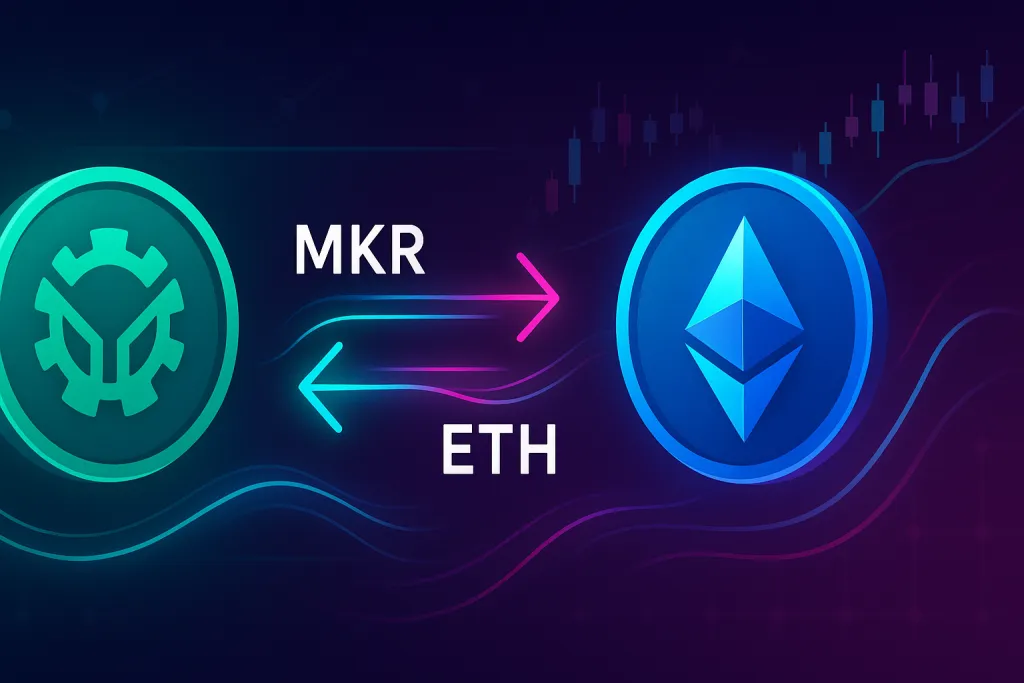
Maker (MKR) and Ether (ETH) are two of the most important tokens in the Ethereum ecosystem. Whether you are rebalancing your DeFi portfolio, exiting a governance position, or simply chasing a better yield opportunity, understanding how to execute an efficient and secure mkr to eth swap is essential.
With modern non-custodial aggregators, you can swap crypto instantly without giving up control of your private keys. That convenience comes with a few trade-offs and best practices you should know before clicking “Confirm.”
This guide walks through why MKR to ETH swaps matter, key benefits and risks, and a clear step-by-step process, along with practical tips to help you reduce fees, avoid slippage, and stay safe.
Why MKR to ETH Swaps Matter
1. Portfolio Rebalancing and Risk Management
MKR is a governance and recapitalization token for the MakerDAO ecosystem, while ETH is the base asset of Ethereum and a dominant collateral in DeFi. Over time, the relative prices of MKR and ETH can move significantly. Rebalancing between them helps you:
- Lock in profits when MKR outperforms ETH
- Reduce risk if you feel overexposed to governance tokens
- Increase ETH exposure when planning to stake or use ETH in DeFi
2. Moving from Governance to Infrastructure
Holding MKR often signals a long-term belief in MakerDAO governance and the DAI stablecoin system. But not every holder wants to actively participate in governance or bear the associated risk. Swapping MKR for ETH lets you shift from a more specialized governance token to a more general infrastructure asset that:
- Serves as gas for the entire Ethereum network
- Is widely accepted across exchanges and protocols
- Can be staked for yield on many platforms
3. Liquidity and On-Ramp into DeFi
ETH is the entry point to countless DeFi protocols, DEXs, and NFT marketplaces. If your capital is locked in MKR, a timely MKR to ETH swap gives you the liquidity and flexibility to:
- Provide liquidity on DEX pools
- Supply collateral to lending platforms
- Participate in new token launches or DeFi strategies
Benefits of Swapping MKR to ETH via Non-Custodial Platforms
1. You Keep Control of Your Keys
Non-custodial platforms let you swap without depositing funds into a centralized exchange account. This reduces counterparty risk and preserves self-custody. Your MKR stays in your wallet until the transaction executes, and the ETH is returned directly to you.
2. Instant Execution and Aggregated Liquidity
Modern DEX aggregators pull liquidity from multiple decentralized exchanges and routing protocols. The result is:
- Better price quotes for your MKR to ETH swap
- Less slippage, especially on larger trades
- Faster execution, often in a single transaction once confirmed on-chain
3. Privacy and Fewer Account Requirements
With a non-custodial private exchange, you typically do not need lengthy registration, KYC, or personal data submission. You connect a wallet, sign a transaction, and the swap happens on-chain. Blockchain transparency remains, but you avoid off-chain data collection by centralized intermediaries.
4. No Withdrawal Limits or Lockups
Since your assets never leave your wallet except to perform the trade, you avoid withdrawal limits, account freezes, or unexpected lockups that sometimes occur on centralized venues. You are free to move your new ETH immediately into staking, DeFi lending, or self-custody.
Risks and Drawbacks to Consider
1. Price Volatility and Slippage
Both MKR and ETH are volatile. Between the time you see a quote and the time your transaction is mined, price can move. This introduces:
- Slippage where you receive less ETH than expected
- Failed transactions if the price moves outside your set tolerance
Managing your slippage settings and watching short-term price action can help, especially for large swaps.
2. Gas Fees on Ethereum
Ethereum gas fees can spike during network congestion. A simple MKR to ETH swap might become expensive at peak times. High gas can cut into profits or make small swaps uneconomical. Tools that let you choose gas priority and estimate fees are critical.
3. Smart Contract and Routing Risks
Non-custodial swaps rely on smart contracts. Although major DEXs and aggregators undergo audits, there is no such thing as zero risk. Potential issues include:
- Bugs in routing or swap contracts
- Unexpected behavior during extreme market conditions
- Relying on illiquid pairs or thin markets that impact price
4. User Errors
Common mistakes can lead to lost time or funds, such as:
- Sending MKR to the wrong contract or address
- Setting slippage too high and receiving a poor rate
- Confirming a transaction with an outdated quote
Carefully checking transaction details before approving is your best defense.
Step-by-Step Guide: How to Perform an MKR to ETH Swap
The exact steps will vary slightly by platform, but most non-custodial interfaces follow a similar flow. Here is a typical process to help you navigate a secure MKR to ETH swap.
Step 1: Prepare Your Wallet and Network
- Choose a compatible wallet such as MetaMask, Trust Wallet, Rabby, or a hardware wallet connected via WalletConnect or browser extension.
- Check your network and ensure you are connected to the Ethereum mainnet, not a testnet or other chain.
- Confirm your balances:
- Sufficient MKR to swap
- A small amount of ETH to pay for gas (you cannot pay gas with MKR)
Step 2: Choose a Non-Custodial Swap Interface
Select a trusted platform that supports a direct MKR to ETH route. A dedicated mkr to eth swap page can streamline the process, aggregating liquidity behind the scenes while you interact with a simple interface.
Step 3: Connect Your Wallet
- Click “Connect Wallet” or similar on the platform.
- Choose your wallet type from the list of supported options.
- Approve the connection in your wallet application. This allows the dApp to read your public balances and request transaction signatures, but does not give it control over your funds.
Step 4: Set MKR as the Token You Pay and ETH as the Token You Receive
- In the “From” field, select MKR and enter the amount you want to swap.
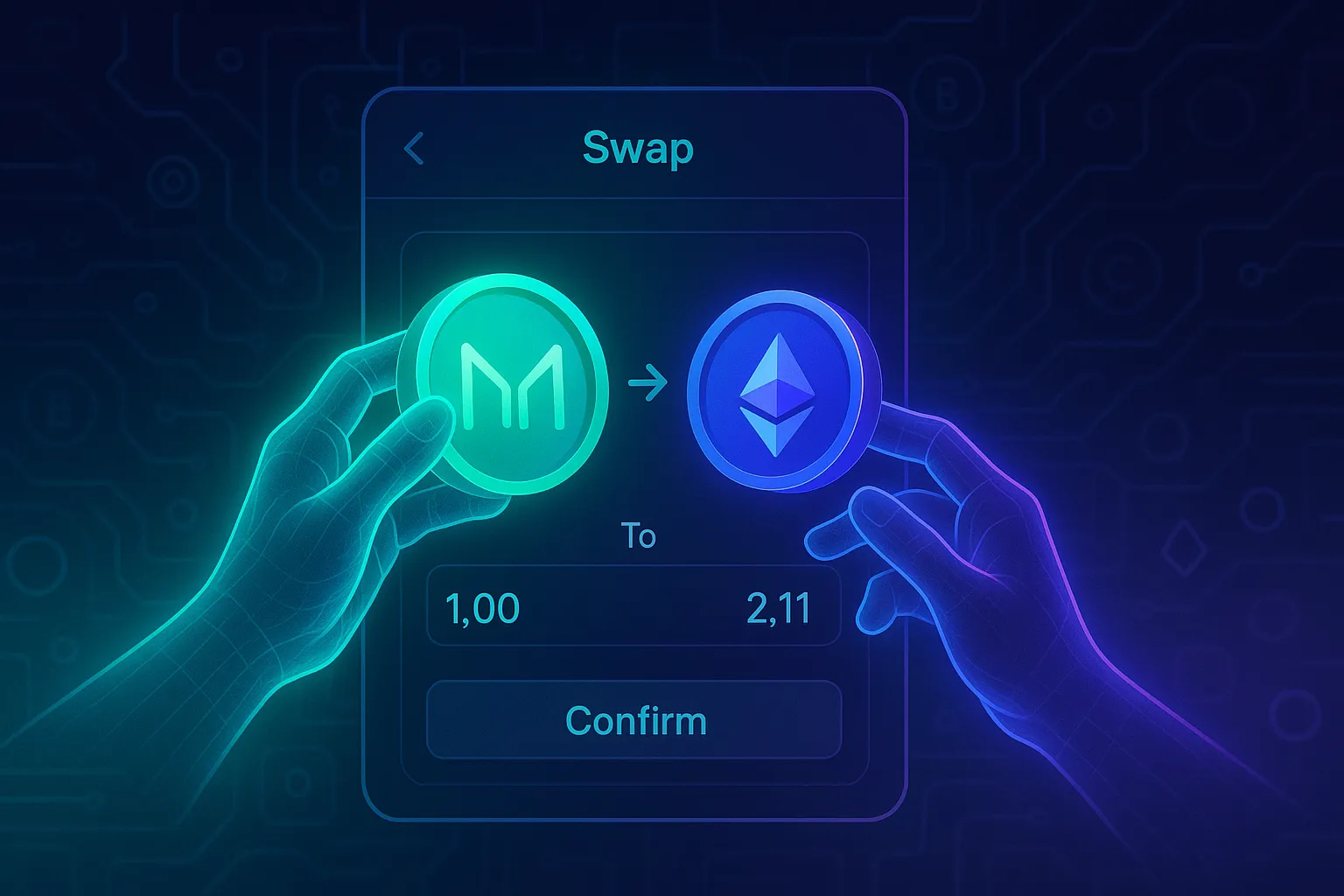
- In the “To” field, select ETH. The interface should automatically calculate how much ETH you will receive based on current market rates and route aggregation.
- Review:
- The expected ETH output
- The minimum received after slippage
- Estimated gas cost
Step 5: Adjust Slippage Tolerance and Settings
Before executing, most platforms let you configure:
- Slippage tolerance (for example 0.5% to 2%) which defines how much the rate can move before your transaction will revert.
- Transaction deadline to prevent stuck or unexpectedly late transactions.
For large trades or volatile markets, use a conservative slippage setting and consider breaking the swap into smaller chunks.
Step 6: Approve MKR Spending (If Required)
If you are using a token for the first time with a particular smart contract, you will usually need to sign a one-time “Approve” transaction that allows the contract to spend your MKR up to a specific limit.
- Click “Approve MKR” or equivalent.
- Confirm the transaction in your wallet, paying a small gas fee.
- Wait for the approval to be mined before proceeding.
Step 7: Confirm and Execute the Swap
- Once approval is complete, click “Swap” or “Confirm Swap.”
- Check all details in your wallet:
- Token spend: MKR
- Expected ETH received
- Gas fee and total cost
- Destination address (should be your own wallet)
- Confirm the transaction in your wallet.
- Wait for the Ethereum network to mine your transaction. You can track progress via the platform’s interface or an explorer like Etherscan.
Step 8: Verify Receipt of ETH
After confirmation:
- Check your wallet to ensure the ETH balance has updated.
- Verify that your MKR balance has decreased by the expected amount, including any dust or small residual balances.
- Optionally, view the transaction on a block explorer to confirm all details are correct and immutable on-chain.
Practical Tips for a Better MKR to ETH Swap
1. Time Your Swap for Lower Gas Fees
Gas prices on Ethereum follow market demand. To reduce costs:
- Check gas trackers to find off-peak times, often weekends or non-US business hours.
- Select a reasonable gas priority: “Standard” or “Low” when the network is quiet.
- Avoid swapping during NFT mints, major airdrops, or high-volatility events.
2. Compare Effective Rates, Not Just Headline Quotes
Look beyond the initial MKR and ETH numbers. Effective rate includes:
- Swap price
- Slippage impact
- Gas fees
For medium or large trades, a route with slightly higher gas but much better price and slippage can still be more cost-effective overall.
3. Use Reasonable Slippage Tolerances
Setting slippage too low can cause failed transactions and wasted gas, while setting it too high exposes you to bad fills during volatility. As a starting point:
- Small, liquid swaps: 0.3% to 0.5%
- Larger trades or more volatile conditions: up to 1% or 2%
Adjust based on market conditions and how urgently you need the ETH.
4. Double-Check Contract Addresses and Tokens
Impersonation and UI scams remain a risk in DeFi. To stay safe:
- Access your chosen platform via its official domain, not through random ads or links.
- Verify that MKR is the official Maker token (check the contract address if needed).
- Ensure your wallet is connected to the correct site before approving any spending.
5. Consider Splitting Very Large Swaps
If you are swapping a significant amount of MKR, one large order can move the market or consume thinner liquidity routes. Splitting into multiple smaller swaps can:
- Reduce slippage
- Distribute execution over time
- Lower the impact of short-term volatility on your final average price
6. Secure Your Wallet Environment
Even the best routing or aggregator cannot protect you from compromised keys. Good security hygiene includes:
- Using hardware wallets for larger balances
- Keeping seed phrases offline and never typing them into websites
- Regularly reviewing and revoking unnecessary token approvals
Conclusion
Swapping MKR to ETH is more than a simple token trade. It can reshape your risk profile, unlock new DeFi opportunities, and transition your holdings from a governance-centric asset to the foundational currency of the Ethereum ecosystem.
By using a reliable non-custodial platform for your MKR to ETH swap, controlling your slippage, and paying attention to gas conditions, you can execute swaps that are fast, cost-efficient, and aligned with your broader strategy. Combine these technical steps with disciplined risk management and wallet security, and your MKR to ETH trades can become a seamless, repeatable part of your crypto toolkit.
Ready to swap?
Convert your crypto instantly on GhostSwap, a private crypto exchange — no KYC, no sign-up required.
Popular swaps: BTC to XMR BTC to ETH ETH to BTC USDT (TRC20) to ETH ETH to USDT (TRC20)