Best No KYC Crypto Exchange 2025: The Complete Guide to Private, Instant Swaps
Introduction
If you are searching for the best no KYC crypto exchange 2025, you are not alone. As regulations tighten and centralized exchanges collect more personal data, a growing number of crypto users are looking for ways to trade privately without sacrificing speed, convenience, or security.
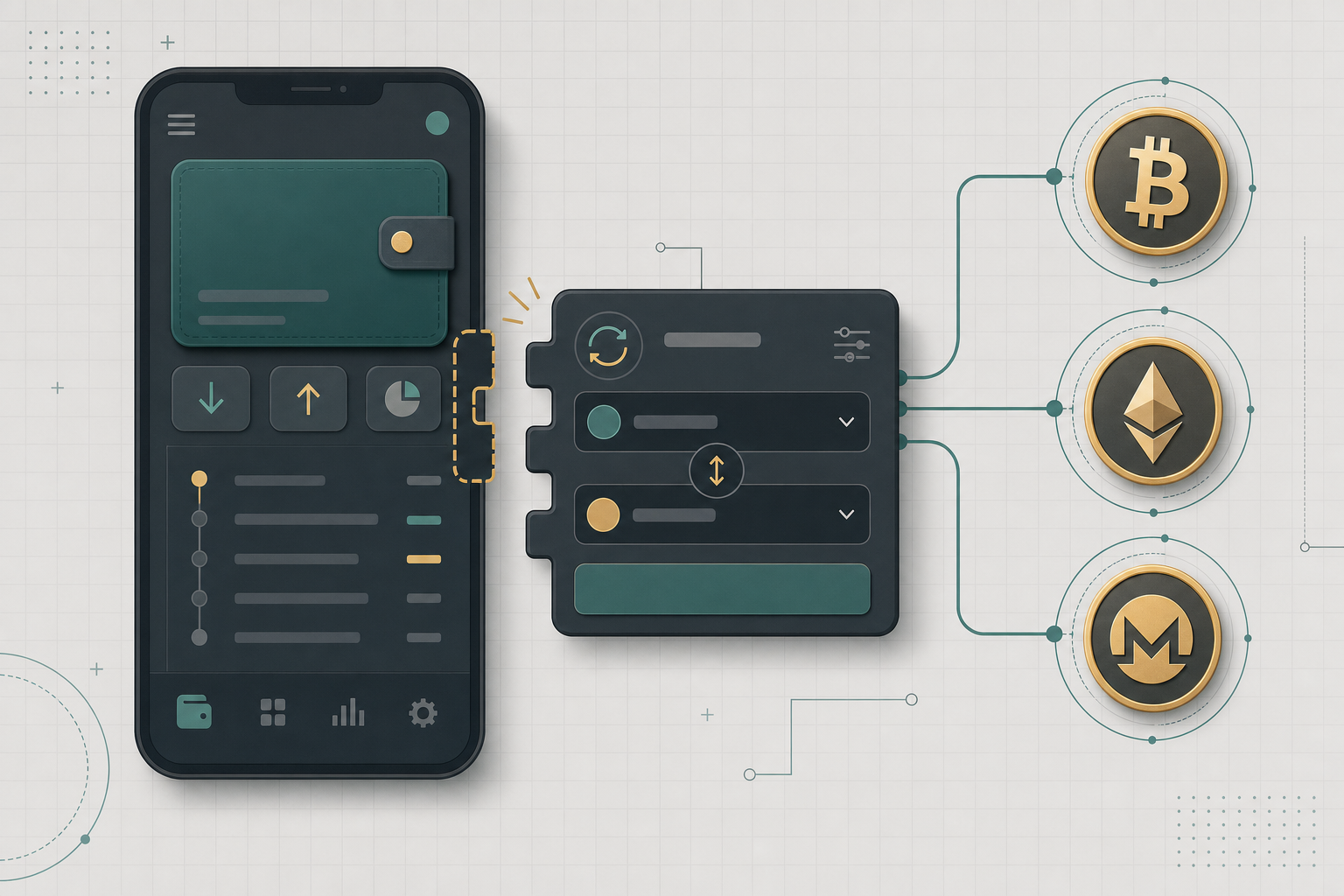
In 2025, the landscape has shifted decisively toward non-custodial, no KYC swap platforms that let you connect your wallet and trade directly on-chain. Services like GhostSwap, a private exchange for instant swaps, illustrate how simple and fast anonymous trading can be when you control your keys and data.
This guide breaks down what “no KYC” actually means, how it works in practice, the benefits and risks, and what to look for when choosing the best no KYC crypto exchange in 2025. You will also get a step-by-step walkthrough and practical tips to stay safer while trading privately.
Why the “Best No KYC Crypto Exchange 2025” Matters
What “No KYC” Actually Means
KYC (Know Your Customer) is the process where an exchange verifies your identity, usually with:
- Government-issued ID
- Selfie or video verification
- Proof of address (utility bill, bank statement, etc.)
A no KYC crypto exchange lets you trade without submitting this personal information. Usually, these platforms are:
- Non-custodial you trade directly from your wallet
- On-chain or hybrid using smart contracts or DEX-like liquidity
- Accessed through a web or dApp interface without account registration
In 2025, the “best” no KYC exchanges are the ones that combine strong privacy, deep liquidity, transparent pricing, and good security practices while remaining easy to use.
Why People Prefer No KYC in 2025
There are several reasons privacy-focused traders seek the best no KYC crypto exchange 2025:
- Data security Reducing the amount of sensitive information stored by centralized entities lowers your exposure to hacks and leaks.
- Financial privacy Your crypto transactions are less directly tied to your real-world identity through exchange records.
- Faster access No waiting for verification, no rejected documents, and no regional blocks due to KYC rules.
- Censorship resistance It is harder for third parties to track, freeze, or limit your trading based on identity.
Privacy is not about hiding something “bad.” It is about preserving a normal level of confidentiality over your financial life in a world where data collection is becoming default.
Key Benefits of Using a No KYC Crypto Exchange in 2025
1. Privacy and Data Minimization
The core benefit is that you typically do not submit:
- Passports or ID cards
- Selfies and biometric data
- Utility bills or bank statements
On a non-custodial, no KYC platform, the main identifiers are:
- Your wallet address
- Your IP or device fingerprint (if you do not take additional precautions)
While on-chain activity is transparent, removing centralized KYC records reduces the number of centralized entities that can tie your real-world identity to every trade you make.
2. True Ownership with Non-Custodial Swaps
The best no KYC crypto exchange in 2025 is often a non-custodial swap interface, where:
- Funds stay in your wallet until the swap executes
- You sign transactions with your own keys
- The platform never has withdrawal permissions unless you explicitly grant and manage approvals
This is fundamentally different from centralized custodial exchanges that hold balances on your behalf and can freeze, delay, or limit your withdrawals.
3. Speed and Convenience
No KYC flows tend to be lightweight:
- No registration or email required
- No waiting days for verification
- No extra friction when you change devices or travel
You connect a wallet, choose tokens, confirm the swap, and you are done. Platforms designed to let you swap crypto instantly with non-custodial control highlight how streamlined this can be.
4. Reduced Geographic Restrictions
While no service is truly “jurisdiction-proof,” non-custodial swap interfaces generally:
- Are less dependent on banking partners
- May not require strict region-based KYC rules
- Usually focus on crypto-to-crypto rather than fiat ramps
That makes them more accessible to users in regions where traditional exchanges are highly restricted or over-regulated.
Risks and Drawbacks of No KYC Crypto Exchanges
No KYC is not a free lunch. There are important trade-offs and responsibilities you accept.
1. Regulatory Uncertainty
In many jurisdictions, regulations for DeFi, DEXs, and non-custodial exchanges are still evolving. Potential issues include:
- Future restrictions on access from certain countries
- ISP-level blocking of certain domains
- Higher scrutiny on anonymity-focused services
You should always check your local laws and understand that what is accessible today may face restrictions tomorrow.
2. Self-Custody Responsibility
With non-custodial, no KYC trading, you are in charge of your own security:
- If you lose your seed phrase, your funds are gone.
- If you sign a malicious transaction, there is no support desk reversing it.
- If your device is compromised, your wallet may be at risk.
This is the flip side of the “no KYC, no custodian” advantage. Control comes with responsibility.
3. Limited Fiat On-Ramps
Most no KYC crypto exchanges in 2025 focus on:
- Crypto to crypto swaps
- Stablecoin conversions
- Cross-chain or multi-chain routes
You often cannot deposit or withdraw traditional currencies like USD or EUR directly. To move between crypto and fiat, you may still need a regulated on-ramp that performs KYC.
4. Potential for Slippage and Illiquidity
Some no KYC platforms aggregate liquidity smartly, but you should still be aware of:
- Price impact on very large trades
- Slippage on volatile or thinly traded tokens
- Higher network fees during congestion
Always double-check the final price estimate and slippage tolerance before confirming a transaction.
What to Look For in the Best No KYC Crypto Exchange 2025
Not all no KYC platforms are equal. When comparing options, consider the following criteria.
1. Non-Custodial Design
Prefer platforms that:
- Let you keep assets in your own wallet
- Use open, auditable smart contracts
- Do not require deposits to centralized accounts
This architecture greatly reduces counterparty risk.
2. Liquidity and Pricing
Ask:
- Does it aggregate liquidity from multiple DEXs or pools?
- Are quotes transparent with clear fee breakdowns?
- Are there stable routes for major pairs (BTC, ETH, stablecoins)?
A good no KYC swap interface should provide competitive rates with minimal slippage on popular pairs.
3. Security Practices
Evaluate whether the platform:
- Has public documentation on contracts and routing logic
- Uses audited or battle-tested smart contracts where possible
- Provides clear information on permissions and token approvals
Read community feedback and look for any history of exploits or major outages.
4. Privacy Features
While “no KYC” helps, also consider:
- Does the platform minimize logging of IPs and device information?
- Can you access it with privacy tools (VPN, privacy-respecting browsers)?
- Is the front-end free of invasive tracking scripts, as far as you can tell?
Remember that on-chain activity is still public. Extra privacy layers may be needed depending on your threat model.
5. User Experience
The best no KYC crypto exchange 2025 will also be easy to use:
- Clean, understandable interface
- Clear steps for connecting wallets
- Simple configuration for networks and slippage
- Fast quoting and execution
You should never feel lost or uncertain about what you are approving or swapping.
Step-by-Step Guide to Using a No KYC Crypto Exchange
Below is a generic, practical walkthrough for using a non-custodial, no KYC swap platform in 2025. Exact steps can vary slightly between services, but the flow is similar.
Step 1: Choose Your Platform
Select a reputable no KYC exchange interface that matches your needs for:
- Supported networks (Ethereum, BSC, Arbitrum, etc.)
- Token selection
- Fees and liquidity
- Privacy approach
Read recent community reviews and check that the site you are visiting is the official one, not a phishing clone.
Step 2: Set Up and Secure Your Wallet
If you do not already have one:
- Install a reputable non-custodial wallet (browser extension, mobile app, or hardware wallet).
- Back up your seed phrase securely offline. Do not store it in cloud notes or email.
- Enable extra security (PIN, password, hardware signing) where possible.
Connect your wallet to the correct network for the tokens you plan to use.
Step 3: Fund Your Wallet
Transfer the crypto you plan to trade into your wallet:
- Use a centralized exchange or fiat on-ramp if you are starting from bank funds.
- Withdraw to your non-custodial wallet address, double-checking the network and address.
- Ensure you have enough native tokens (like ETH) to pay network gas fees.
Step 4: Connect Wallet to the No KYC Exchange
On the exchange interface:
- Click “Connect Wallet” or similar.
- Select your wallet type (MetaMask, WalletConnect, hardware wallet, etc.).
- Approve the connection in your wallet.
Verify in your wallet that you are connecting to the correct domain.
Step 5: Choose Tokens and Trading Pair
Within the interface:
- Select the token you want to swap from.
- Select the token you want to swap to.
- Enter the amount or use a percentage of your balance.
The platform should show:
- Estimated amount you will receive
- Fees and price impact
- Network selected and estimated gas costs
Step 6: Review and Set Slippage
Before confirming, check:
- That the rate is acceptable
- Slippage tolerance (too high can be risky, too low may cause failure)
- The destination network and token contract (avoid fake or spoofed tokens)
Adjust slippage to a reasonable value based on token volatility and liquidity.
Step 7: Approve Token (If Needed)
For ERC-20 style tokens, you may need to:
- Sign an “Approve” transaction that lets the swap contract spend your token.
- Confirm this approval in your wallet.
- Wait for the approval transaction to be confirmed on-chain.
For security, many users:
- Limit approvals to the exact amount needed, where possible
- Periodically revoke old token approvals they no longer use
Step 8: Confirm the Swap
Once approval (if required) is done:
- Click “Swap” or “Confirm” on the platform.
- Review the transaction one last time in your wallet.
- Confirm the transaction and pay gas fees.
Monitor the progress in your wallet or a block explorer until it confirms.
Step 9: Verify Receipt of Tokens
After the swap is confirmed:
- Check your wallet balance for the new token.
- If it does not appear, you may need to add the token contract manually in your wallet UI.
- Optionally, verify the transaction details on a block explorer.
You have now completed a no KYC, non-custodial swap.
Practical Tips for Safer and Smarter No KYC Trading
1. Always Double-Check URLs
Phishing is common around crypto exchanges. To protect yourself:
- Bookmark official sites.
- Do not follow random links in DMs or comments.
- Verify SSL certificates and domain spelling.
2. Use Hardware Wallets for Larger Amounts
For serious capital:
- Store long-term holdings in hardware wallets.
- Only connect hardware wallets to trusted interfaces.
- Keep firmware and wallet software up to date.
This significantly reduces the risk of key theft from malware on your computer or phone.
3. Be Cautious with Token Approvals
When a platform asks to “spend” your tokens:
- Review the requested amount.
- Prefer limited approvals when possible.
- Regularly review and revoke old approvals using tools specific to your network (e.g., token approval checkers).
4. Mind Your OPSEC and Network Privacy
“No KYC” does not mean total anonymity. To improve your operational security:
- Use a reputable VPN to avoid exposing your IP address directly.
- Separate wallets for different purposes (e.g., trading vs. long-term storage).
- Consider privacy coins or privacy layers if your use case demands stronger anonymity, within legal bounds.
5. Start Small and Learn the Interface
When using a new platform:
- Begin with small test transactions.
- Confirm that swaps execute as expected and that you understand the fee structure.
- Only scale up after you are comfortable with the process.
6. Stay Informed on Regulatory Changes
Regulations affecting no KYC exchanges can change quickly. Keep an eye on:
- Announcements from major platforms you use
- Updates from blockchain analytic and compliance firms
- Local legal guidance on crypto activity in your jurisdiction
Adjust your tools and practices if new restrictions arise.
Conclusion: How to Approach the Best No KYC Crypto Exchange 2025
The best no KYC crypto exchange 2025 is not a single platform for everyone, but rather the set of tools that fits your:
- Privacy and security expectations
- Preferred networks and tokens
- Tolerance for regulatory and technical risk
- Comfort with self-custody and on-chain transactions
Modern non-custodial interfaces that help you trade via a private, non-custodial swap environment show what a balance between user control, speed, and privacy can look like in 2025. For a fast, private option, you can BTC to XMR swap on a non-custodial platform with no account required. You can also buy crypto no KYC directly through a non-custodial platform.
If you want to reduce reliance on centralized custodians, minimize KYC exposure, and keep control over your keys, then learning how to use privacy-conscious, non-custodial no KYC swap platforms is a valuable step. Combine them with strong security habits, careful token research, and awareness of local regulations, and you can trade more privately without abandoning responsible risk management.


Ready to Swap?
Convert your crypto instantly on anonymous crypto exchange — no KYC, no sign-up required.
Popular swaps: BTC to XMR | BTC to ETH | XMR to BTC | ETH to XMR | BTC to SOL