OP to BTC Swap: A Complete Guide to Converting Optimism to Bitcoin
Introduction
Optimism (OP) has become one of the most popular Layer 2 tokens in the Ethereum ecosystem, while Bitcoin (BTC) remains the flagship store of value in crypto. As traders and long-term investors rebalance their portfolios, interest in the OP to BTC swap has grown quickly. Whether you are moving profits from DeFi into a more conservative asset or simply rotating between ecosystems, understanding how to swap OP to BTC safely and efficiently is essential.
There are many ways to make this conversion, from centralized exchanges to non-custodial aggregators. For users who prioritize speed, privacy, and simplicity, a dedicated swap interface such as the op to btc swap on GhostSwap can be especially convenient.
This guide explains what an OP to BTC swap is, why it matters, what benefits and risks to consider, and provides a clear, step-by-step walkthrough so you can complete your swap with confidence.
Why OP to BTC Swaps Matter
1. Portfolio Rebalancing and Risk Management
OP is a governance and utility token tied to the Optimism Layer 2 ecosystem. Its value is influenced by protocol usage, governance decisions, and the broader Ethereum environment. BTC, on the other hand, is widely viewed as a macro asset and digital store of value.
Swapping OP to BTC lets you:
- Lock in profits from OP after price appreciation
- Reduce exposure to ecosystem-specific risks
- Rebalance into a more established, lower-volatility crypto asset
For many traders, OP is a growth asset while BTC functions more like a long-term reserve.
2. Moving Between Ecosystems
Layer 2 tokens like OP often sit at the center of DeFi activity on their own networks. Bitcoin exists on its own blockchain, with a different set of tools and financial products. An OP to BTC swap enables you to reposition capital between:
- Ethereum and Optimism DeFi protocols
- Bitcoin-centric tools such as Lightning Network services or BTC-backed loans
This cross-ecosystem mobility is vital if you participate in multiple parts of the crypto market.
3. Liquidity and Exit Strategy
In volatile markets, you may want fast access to BTC liquidity without going through banks or fiat on-ramps. Having a clear path to convert OP to BTC:
- Provides an exit route from smaller ecosystem tokens into a major asset
- Gives you collateral you can use on other platforms
- Makes it easier to hedge against downturns in altcoins
Key Benefits of an OP to BTC Swap
Not every swap method is equal. Benefits depend on the route you choose, but in general, an efficient OP to BTC swap offers several advantages.
1. Non-Custodial Control
Using a non-custodial swap service or DEX aggregator lets you keep control of your keys until the moment of swap. This helps you avoid:
- Exchange withdrawal freezes
- Account suspensions or KYC issues
- Counterparty risk from centralized custodians
Some platforms, like the non-custodial swap route for OP to BTC, are designed to streamline this experience while still allowing you to retain ownership over your funds through the process.
2. Speed and Convenience
Swapping OP to BTC directly can be much faster than:
- Depositing to an exchange
- Waiting for confirmations
- Completing KYC or additional verification
- Withdrawing BTC back to your wallet
An optimized route lets you initiate the trade from your wallet and receive BTC at your destination address with minimal friction.
3. Privacy
If you prefer not to link your on-chain activity to exchange accounts:
- Non-custodial and private exchange routes avoid traditional user profiles
- You often do not need full KYC, especially for smaller amounts
- You minimize the centralization of your transaction history
This does not make you anonymous, but it reduces the number of parties that can associate your trades with personal data.
4. Competitive Rates and Flexible Sizes
A good swap service will:
- Aggregate liquidity from multiple markets or routing paths
- Show you expected rates and fees before you commit
- Support both small test swaps and larger portfolio moves
This flexibility is especially useful if you want to ladder into or out of positions in stages.
Risks and Drawbacks of OP to BTC Swaps
Every crypto transaction carries risk. Before executing an OP to BTC swap, understand the main drawbacks and how to mitigate them.
1. Price Volatility and Slippage
Both OP and BTC are volatile. During your swap:
- The OP price could drop against BTC before your transaction confirms
- Low liquidity on a specific route can lead to slippage, where you receive fewer BTC than expected
Mitigation strategies:
- Check quoted rate and minimum received amount before confirming
- Avoid swapping during extreme volatility or thin order book conditions
- For large trades, consider splitting the swap into smaller chunks
2. Smart Contract and Routing Risk
If your route uses bridges, DEXes, or aggregators, you rely on smart contracts and third-party infrastructure. Risks include:
- Contract bugs or vulnerabilities
- Bridges being paused or exploited
- Routing failures that delay or revert transactions
Mitigation:
- Use reputable services that have been live and battle-tested
- Start with a small test transaction, especially on a new platform
- Review the estimated completion time and terms of service
3. Network Fees and Congestion
Your OP lives on Optimism, while BTC is on the Bitcoin network. A swap route may touch multiple networks. Costs you might incur:
- Gas fees on Optimism or Ethereum mainnet (if bridging is involved)
- Network fees to send BTC to your final address
In times of high network congestion, fees can spike and settlement times may lengthen.
4. Counterparty and Compliance Risk on Centralized Exchanges
If you use a centralized exchange for OP to BTC swaps:
- Your assets are subject to that platform’s solvency and security
- Your account can be frozen due to compliance flags or regional rules
- Withdrawals might be delayed for manual review
This is one reason many users increasingly prefer swap crypto instantly via non-custodial tools instead of holding funds on exchanges.
Step-by-Step Guide: How to Swap OP to BTC
Below is a generalized process for an OP to BTC swap using a non-custodial, instant swap service. Specific interface elements vary, but the core flow is similar across providers.
Step 1: Prepare Your Wallets
You need:
- A wallet containing OP on the Optimism network
- A BTC wallet address where you want to receive Bitcoin
Make sure:
- You control the private keys (not a custodial wallet)
- You have a small amount of ETH on Optimism if gas is required for OP transfers
Step 2: Choose a Swap Provider
Go to a reputable OP to BTC swap interface. For instance, you can visit the dedicated OP to BTC conversion page on GhostSwap as one non-custodial option.
When evaluating a platform, check:
- Supported networks and tokens
- Transparency about rates and fees
- Reputation, uptime, and user reviews
Step 3: Select OP as the Asset You Send and BTC as the Asset You Receive
On the swap interface:
- Choose OP in the “You send” field
- Choose BTC in the “You receive” field
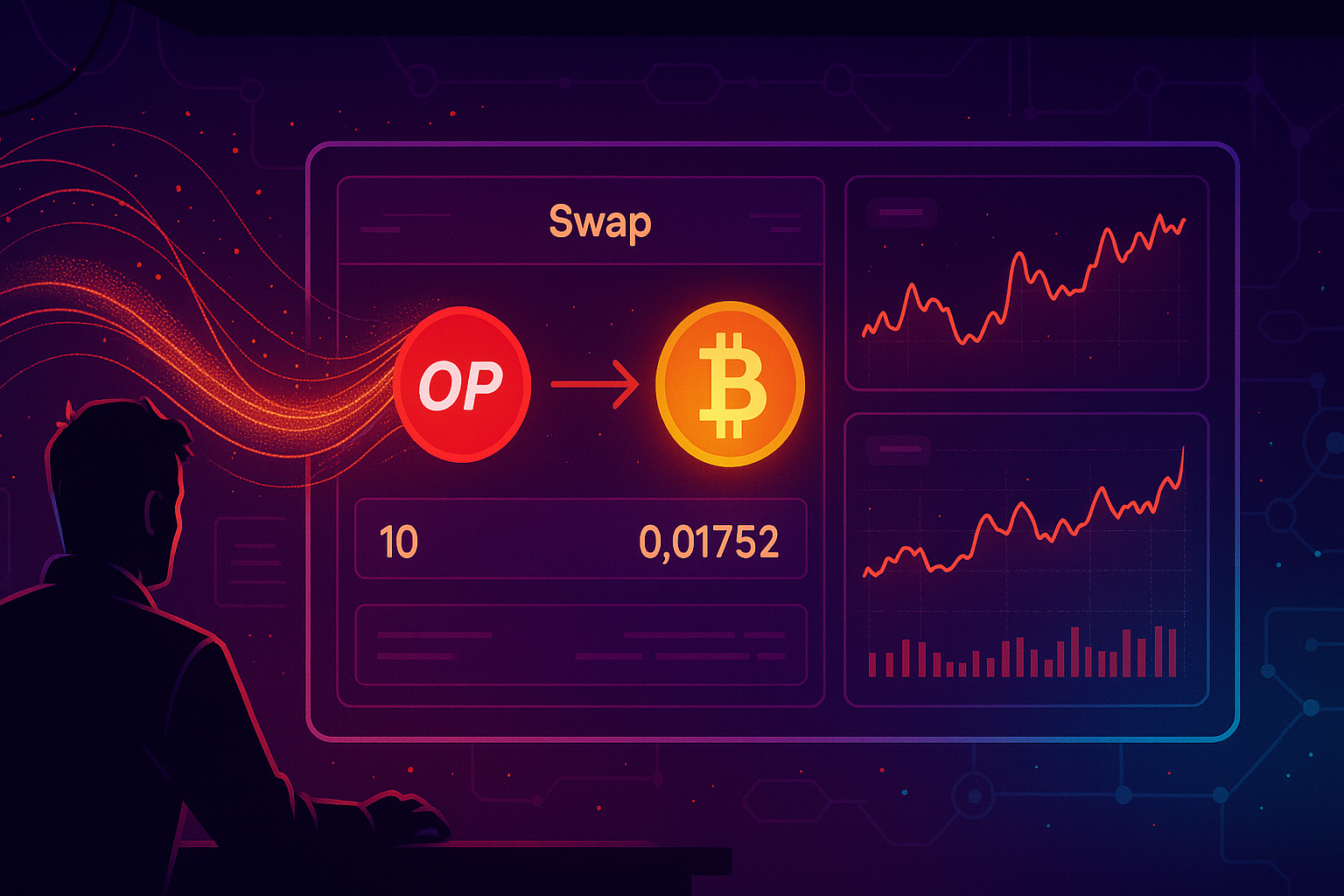
- Enter the amount of OP you want to swap
The platform should display:
- Estimated amount of BTC you will receive
- Rate and any service fees included in the quote
Step 4: Enter Your BTC Receiving Address
Paste your BTC wallet address carefully:
- Double-check the address for typos
- Confirm the address type is supported (for example, bech32 “bc1” or legacy formats)
- Consider using a fresh address for privacy
Some services automatically detect address type and warn you if it is invalid.
Step 5: Review Terms, Rate, and Limits
Before sending funds:
- Verify the minimum and maximum swap amounts
- Check how long the rate is locked (if at all)
- Review the “minimum received” BTC amount after fees and slippage protection
If the platform supports fixed-rate and floating-rate swaps, decide whether you prefer:
- Fixed rate: More predictable outcome, potentially higher fee
- Floating rate: Depends on live market changes, can be cheaper but less predictable
Step 6: Send OP to the Provided Deposit Address
Once you confirm the swap request, the service will generate a deposit address or a unique payment link for OP:
- Copy the OP deposit address
- Open your Optimism wallet
- Send the exact OP amount to the provided address
- Include any memo or tag if explicitly required (rare for OP, but always check)
Important tips:
- Send from the Optimism network, not another chain
- Do not send a different token than OP to that address
Step 7: Wait for Confirmation and BTC Delivery
After your OP transaction is broadcast:
- The swap provider waits for required confirmations on Optimism
- Then it executes the trade route
- Finally, it sends BTC to your destination wallet
You can typically monitor status via:
- A transaction status page on the swap site
- On-chain explorers for Optimism and Bitcoin
When the BTC transaction is transmitted, your BTC wallet will show an incoming transaction that gains confirmations over time.
Practical Tips for a Smooth OP to BTC Swap
1. Start Small, Then Scale Up
If it is your first time using a new service or route:
- Begin with a small test swap such as 5 to 10% of your intended amount
- Confirm that BTC arrives as expected
- Increase the amount only after a successful test
This helps you verify the process and reduce the impact of any mistakes.
2. Check Network Conditions Before Swapping
Look at:
- Gas prices on Optimism or Ethereum (if bridging is involved)
- Bitcoin transaction fees and mempool congestion
When networks are overloaded:
- Your swap may take longer than usual
- BTC fees may reduce the net value you receive
If timing is not urgent, waiting for quieter periods can save money.
3. Use Hardware Wallets for Larger Amounts
To improve security:
- Store your OP and BTC on hardware wallets where possible
- Connect your hardware wallet to a compatible interface to initiate transactions
- Verify recipient addresses on the device’s screen, not just the computer
This protects you from many common malware and phishing threats.
4. Keep Records for Accounting and Taxes
In many jurisdictions, swapping OP to BTC is a taxable event. Keep:
- Timestamps of swaps
- Amounts of OP sent and BTC received
- Fiat values at the time of the transaction
These records simplify tax reporting and portfolio tracking later.
5. Avoid Reusing Bitcoin Addresses When Possible
For better privacy:
- Generate a fresh BTC receive address for each new swap
- Avoid sending ALL your BTC later from a single address unless necessary
Reusing addresses links multiple swaps to the same on-chain identity.
Conclusion
An OP to BTC swap is a practical way to shift value from the Optimism ecosystem into Bitcoin, whether you are managing risk, taking profits, or repositioning across chains. By choosing a route that is non-custodial, transparent, and easy to use, you can maintain control over your funds while still benefiting from fast execution and competitive rates.
Before you swap, take time to understand the fees, risks, and technical steps involved. Start with a small test, verify addresses carefully, and keep proper records. For many users, using a focused interface to swap crypto instantly from OP to BTC provides a good balance of convenience, privacy, and control.
By following the guidelines in this guide, you will be well prepared to move between OP and BTC as market conditions and your own strategy evolve.

Ready to Swap?
Convert your crypto instantly on GhostSwap — no KYC, no sign-up required.
Popular swaps: BTC to XMR | BTC to ETH | XMR to BTC | ETH to XMR | BTC to SOL