DOT to BTC Swap: A Complete Guide to Exchanging Polkadot for Bitcoin
Introduction
The ability to swap one cryptocurrency for another quickly and securely is essential for modern crypto investors. One of the most common asset rotations today is the DOT to BTC swap, where users exchange Polkadot (DOT) for Bitcoin (BTC). Whether you are rebalancing your portfolio, locking in profits, or seeking a more conservative asset, understanding how to perform this swap efficiently can save you both time and money.
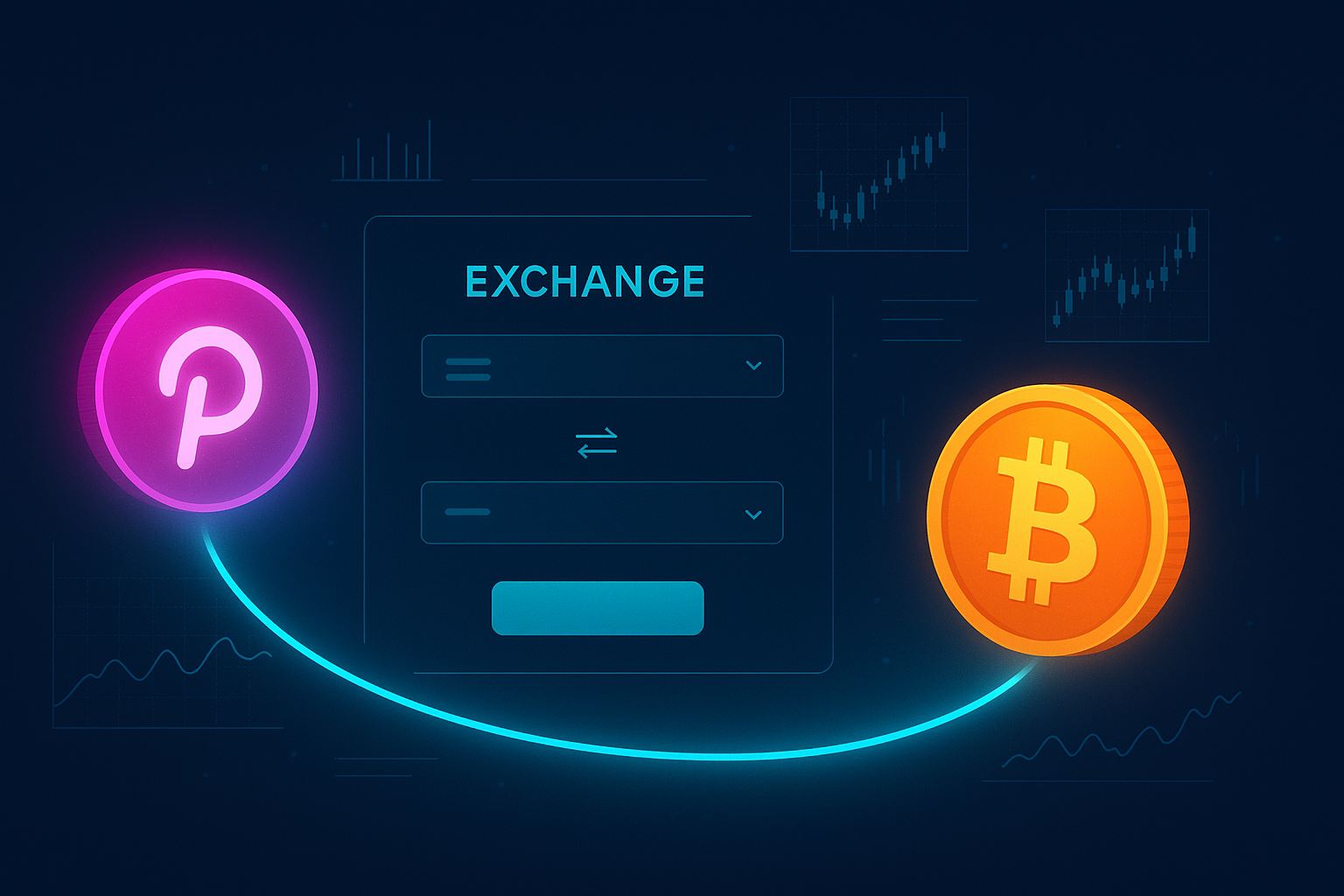
Rather than going through complex trading interfaces or multiple accounts, you can use services that let you complete a dot to btc swap directly, often without sign-up or KYC. This makes it easier for both beginners and experienced traders to move between ecosystems.
This guide explains why swapping DOT to BTC matters, the benefits and risks, and how to complete the process step by step. You will also find practical tips to avoid common mistakes and get the most out of your exchange.
Why DOT to BTC Swap Matters
Different roles in your crypto portfolio
Polkadot and Bitcoin serve different purposes within the crypto market:
- Bitcoin (BTC) is considered digital gold, often used as a store of value, hedge, or base asset for long-term holdings.
- Polkadot (DOT) is a multi-chain interoperability protocol token used for governance, staking, and bonding parachains within the Polkadot ecosystem.
Shifting from DOT to BTC can reflect a move from a higher-risk, ecosystem-focused asset to a more established and widely adopted cryptocurrency.
Responding to market conditions
Crypto markets are volatile. Many traders choose to swap DOT to BTC when:
- They expect increased uncertainty and want to consolidate into BTC.
- DOT has appreciated relative to BTC and they want to lock in profits.
- They believe BTC dominance will rise compared to altcoins.
Being able to perform a DOT to BTC swap quickly gives you tactical flexibility so you can react to these changing conditions without being stuck on one chain.
Accessing different ecosystems
Holding BTC instead of DOT opens doors to different financial products, such as:
- Bitcoin-focused lending and borrowing platforms.
- Derivatives and futures markets with BTC collateral.
- On-ramps and off-ramps where Bitcoin has deeper liquidity.
In contrast, DOT keeps you deeply involved in the Polkadot ecosystem. Swapping between the two allows you to tap into what each ecosystem does best at any given time.
Key Benefits of Swapping DOT to BTC
1. Portfolio diversification and risk management
Moving a portion of your holdings from DOT to BTC can help balance your portfolio. Here is why:
- BTC is more established with longer price history and stronger institutional interest.
- DOT is more growth oriented with potential upside but also higher volatility.
- A mix of both can help spread risk rather than betting on a single network.
2. Liquidity and market depth
Bitcoin is the most liquid crypto asset. Swapping DOT into BTC can give you:
- Faster access to fiat off-ramps if you plan to cash out.
- Better execution when moving into other assets that pair with BTC.
- Reduced slippage on larger trades thanks to deeper order books.
3. Simpler long-term holding strategy
Some investors prefer to accumulate BTC over time as their primary long-term asset. In that context, DOT to BTC swaps can be part of a disciplined strategy:
- Rotate profits from DOT rallies into BTC.
- Gradually concentrate into a single, long-term conviction asset.
- Reduce the need to monitor multiple ecosystems and token-specific news.
4. Convenience with instant non-custodial swaps
Modern swapping platforms allow you to convert DOT to BTC directly from your wallet. With the right service, you can swap crypto instantly without creating an exchange account or giving up custody. This helps you maintain control of your funds while still being able to move between assets when you need to.
Risks and Drawbacks of a DOT to BTC Swap
1. Market risk and price volatility
Crypto prices can move sharply in seconds. During a DOT to BTC swap you face:
- Slippage if the market moves while your transaction is processing.
- Opportunity cost if DOT later outperforms BTC after you swap.
- Short-term volatility making timing difficult.
It is important to understand that any swap between volatile assets includes the risk of unfavorable price changes.
2. Fees and hidden costs
Several types of costs can affect your final amount of BTC received:
- Network fees for DOT transfers and BTC outputs.
- Swap service fees either as a fixed fee or embedded in the quoted rate.
- Spread between buy and sell prices, especially on low-liquidity routes.
Always compare the quoted amount you will receive against a reference rate so you know what you are paying in total.
3. Custodial and counterparty risk
Using centralized exchanges introduces additional risks:
- Funds might need to be deposited, creating counterparty risk.
- Withdrawal delays or limits can slow down your access to BTC.
- Account freezes, KYC issues, or regulatory changes can impact your funds.
Non-custodial swap platforms reduce some of these risks by not holding your funds longer than necessary, but you still need to use reputable services.
4. Operational mistakes
Human error can be costly in crypto. Common mistakes include:
- Sending DOT to the wrong address or the wrong network.
- Entering an incorrect BTC destination address with no way to reverse the transfer.
- Underestimating network fees so the transaction gets stuck for a long time.
Double checking details before confirming any swap is essential.
Step-by-Step Guide: How to Swap DOT to BTC
The exact process depends on the platform you choose, but the following example outlines a typical flow using a non-custodial DOT to BTC swap service.
Step 1: Prepare your wallets
- DOT wallet: Ensure you have DOT in a compatible wallet that can send transactions (e.g., a Polkadot wallet or a multi-chain wallet that supports DOT).
- BTC wallet: Have a Bitcoin address ready to receive your BTC. This might be a hardware wallet, a mobile wallet, or a desktop wallet.
- Confirm that you control both wallets and can access the recovery phrases or private keys if needed.
Step 2: Choose a swap platform
Look for platforms that:
- Support direct DOT to BTC swaps.
- Offer transparent rates and low fees.
- Operate in a non-custodial way so you keep control of your keys.
- Have a track record of successful swaps and user trust.
Some services allow you to perform a private exchange without registration, which can save time and preserve privacy.
Step 3: Enter swap details
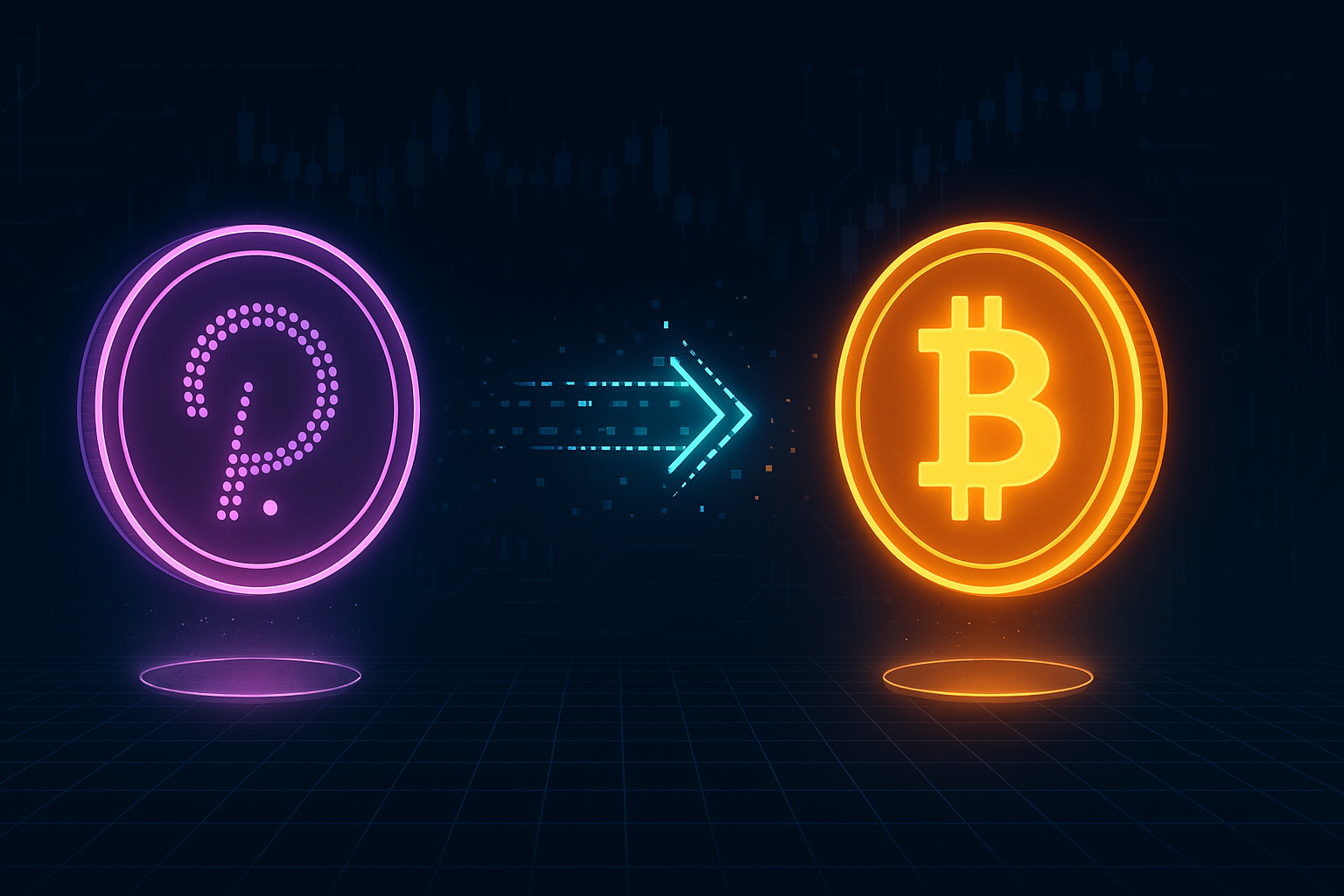
- Select DOT as the coin you are sending and BTC as the coin you are receiving.
- Enter the amount of DOT you want to swap or the amount of BTC you want to receive if the platform supports that input.
- Paste your BTC receiving address accurately. Take extra care here, as BTC transactions are irreversible.
- Review the quoted rate, estimated fees, and final amount of BTC you will receive.
Step 4: Confirm the quote and send DOT
- Once you are satisfied with the quote, confirm the swap on the platform.
- You will be given a DOT deposit address. Copy it carefully or scan the QR code into your DOT wallet.
- From your DOT wallet, send the exact amount of DOT specified to that deposit address.
- Wait for network confirmations. The platform will typically display the status as it detects your DOT transaction.
Step 5: Receive BTC in your wallet
- After your DOT transaction is confirmed and the swap is executed, the platform will send BTC to your specified BTC address.
- Check your Bitcoin wallet for incoming funds. Confirmation times depend on the Bitcoin network conditions and fee settings.
- Once confirmed, your DOT to BTC swap is complete and you fully control the received BTC.
Practical Tips for a Smooth DOT to BTC Swap
1. Start with a small test amount
If it is your first time using a particular platform or wallet setup, consider doing a small test swap. This helps you:
- Confirm that addresses and networks are correct.
- Understand how the interface works.
- Build confidence before moving larger sums.
2. Double check addresses and networks
Before you send DOT:
- Verify that the DOT deposit address on the swap platform matches what you pasted in your wallet.
- Ensure you are sending from the correct network (native DOT on Polkadot) and not a wrapped or bridged version on another chain.
Before you finalize your BTC address:
- Check a few characters at the beginning and end to confirm it matches your wallet.
- Consider using your wallet’s copy function rather than typing it manually.
3. Monitor fees and network congestion
Both Polkadot and Bitcoin have network fees that change with congestion. To avoid surprises:
- Look at current average fees for DOT and BTC transfers.
- Avoid extremely busy periods if you are sensitive to costs or timing.
- Remember that a slightly higher fee on BTC can accelerate confirmation, which might be important for time-sensitive swaps.
4. Use non-custodial, privacy friendly options
If you value privacy and control, choose a non-custodial swap service where you do not need to deposit funds into an exchange wallet or pass identity checks for modest amounts. This limits exposure to centralized entities and can streamline the process.
5. Keep clear records for tax and accounting
In many jurisdictions, swapping DOT to BTC is a taxable event. To stay organized:
- Record the date, time, and amounts for each swap.
- Save screenshots or transaction hashes from both chains.
- Note down the fiat value at the time of the swap if possible.
These records will make it easier to calculate gains and losses and to comply with any reporting requirements.
6. Align swaps with your overall strategy
Instead of swapping impulsively, connect each DOT to BTC move to your broader plan:
- Are you rebalancing to maintain a target percentage of BTC vs altcoins?
- Are you taking partial profits after a strong DOT rally?
- Are you reducing exposure to a particular ecosystem for risk reasons?
Clear goals help you evaluate whether a specific swap fits your long-term objectives.
Conclusion
Executing a DOT to BTC swap is a straightforward process when you understand the mechanics, risks, and best practices. By choosing reliable platforms, verifying addresses, and staying aware of fees and market conditions, you can move from Polkadot to Bitcoin smoothly and securely.
Whether you are hedging volatility, rebalancing your holdings, or consolidating into a long-term Bitcoin position, the key is to stay in control of your assets and follow a clear strategy. Using a non-custodial swap service can provide a fast, private way to transition between DOT and BTC without giving up your keys or dealing with complex order books.
As with any crypto activity, take the time to educate yourself, move carefully, and adapt your approach as markets evolve. A well-executed DOT to BTC swap can be a powerful tool for managing risk, capturing gains, and aligning your portfolio with your long-term vision.
Ready to Swap?
Convert your crypto instantly on GhostSwap — no KYC, no sign-up required.
Popular swaps: BTC to XMR | BTC to ETH | XMR to BTC | ETH to XMR | BTC to SOL