How to Swap ETH to USDT With No KYC: A Practical Privacy Guide
Introduction
The demand for ETH to USDT no KYC swaps has grown rapidly as crypto users become more privacy conscious and tired of lengthy verification processes. Traders want to move quickly between volatile assets like Ethereum (ETH) and stablecoins like Tether (USDT) without uploading identity documents, waiting for approval, or risking centralized account freezes.
Thanks to non custodial, privacy friendly protocols, it is now possible to exchange ETH to USDT without opening an account on a centralized exchange. Platforms such as eth to usdt no kyc tools allow you to connect your own wallet, create a one off swap, and receive USDT directly to an address you control.
This guide explains how no KYC ETH to USDT swaps work, the benefits and risks, and provides a clear step by step process to complete a private exchange while avoiding common mistakes.
Why “ETH to USDT No KYC” Matters
On the surface, exchanging ETH for USDT is straightforward: you sell ETH and receive a dollar pegged stablecoin. The real issue is how you do it and what information you must hand over in the process.
Centralized exchanges require extensive data
Most major centralized exchanges (CEXs) now impose strict KYC (Know Your Customer) requirements. To do a basic swap, you may be asked for:
- Full name, address, and date of birth
- Government issued ID, selfies, and sometimes live video verification
- Proof of address documents such as bank statements or bills
- Information about the source of your funds
For many everyday users, this is overkill. They simply want to convert ETH to USDT quickly, not open a regulated brokerage account.
Privacy and self custody are core to crypto
Crypto was built around the idea of self custody and peer to peer transactions. Forcing identity verification and custodial deposits conflicts with that ethos. Non KYC swaps aim to restore some of that original design by letting you:
- Maintain control of your keys and funds
- Avoid creating centralized profiles tied to your trading activity
- Reduce reliance on any single platform that could be hacked or censored
For users in restrictive jurisdictions or those who value financial privacy, the ability to perform an ETH to USDT no KYC trade is not just convenient, it is essential.
Key Benefits of ETH to USDT No KYC Swaps
1. Faster access and instant execution
KYC onboarding can delay trading for hours or days. By contrast, using a swap crypto instantly service that does not require registration means you can:
- Connect your wallet in seconds
- Specify how much ETH you want to swap
- Confirm a single transaction and receive USDT shortly after
This speed is crucial when markets are volatile and you need to reduce risk by moving into a stablecoin quickly.
2. Increased privacy
No KYC services typically do not collect identity documents or tie your real world data to your wallet. While blockchain activity is still public, removing the identity layer reduces the amount of information that can be linked to you.
This can be important if you:
- Do not trust centralized entities to safeguard your personal data
- Want to avoid large, permanent datasets about your financial behavior
- Live in a place where crypto usage may attract unwanted attention
3. True non custodial control
With non custodial swaps, you keep your assets in your own wallet until the moment the trade is executed. You do not deposit funds onto an exchange balance that can be frozen, hacked, or mismanaged.
Non custodial models reduce several key risks:
- No exchange custody risk or withdrawal suspensions
- Less exposure if a platform suffers a data breach
- No lockups or arbitrary account limits
4. Fewer geographic restrictions
Centralized exchanges often block entire regions or require additional documents depending on your location. Non KYC swapping solutions, while still constrained by their own compliance obligations, tend to be more globally accessible as they focus on smart contracts and liquidity rather than full brokerage services.
Risks and Drawbacks of No KYC ETH to USDT Swaps
Privacy and speed come with trade offs. Before using an ETH to USDT no KYC option, you should understand the main risks.
1. Regulatory uncertainty
Regulation around non KYC services evolves quickly. Some jurisdictions take a strict stance on any financial service that does not perform identity checks, while others focus more narrowly on fiat on ramps and custodial platforms.
You are responsible for understanding your local laws and tax obligations. Non KYC does not mean “no compliance” and it certainly does not exempt you from reporting gains where required.
2. Smart contract and protocol risk
When swaps are handled via smart contracts or routing aggregators, you take on:
- Smart contract risk code bugs or vulnerabilities that could be exploited
- Liquidity risk slippage or failed trades if liquidity is shallow or volatile
- Routing risk unfavorable price routes across decentralized exchanges
To mitigate this, users often choose well known, audited protocols and always verify contract addresses.
3. Less recourse if something goes wrong
Centralized exchanges that perform KYC usually have structured customer support, dispute resolution processes, and in some cases insurance policies. With non custodial, non KYC swaps, your options can be limited if:
- You send funds to the wrong address
- You sign a malicious transaction
- A protocol experiences a bug or outage
This makes self education and careful transaction review absolutely critical.
4. Potential for higher fees or slippage
Depending on market conditions, decentralized routes or specialized no KYC services might involve:
- Higher gas fees on networks like Ethereum
- More slippage on large trades
- Protocol or service fees added on top of network costs
Always check the quoted rate, estimated gas, and any service fees before confirming a swap.
Step by Step Guide: Swap ETH to USDT With No KYC
Below is a general workflow to convert ETH to USDT without going through exchange registration or KYC checks. The exact steps may vary slightly depending on the platform or protocol you choose.
Step 1: Prepare a compatible wallet
You will need a self custodial wallet that supports Ethereum and USDT on the same network you intend to use. Popular options include:
- MetaMask (browser extension and mobile)
- Trust Wallet
- Rabby, Frame, or other Web3 wallets
- Hardware wallets (Ledger, Trezor) connected via Web3 interfaces
Make sure:
- You have enough ETH to cover both the swap amount and gas fees
- Your wallet is backed up with a recovery phrase stored securely offline
Step 2: Choose a non custodial, no KYC swap service
Look for services that clearly state:
- No account registration required
- No document uploads or identity checks
- Non custodial design where you connect your wallet directly
For example, you can use a dedicated private exchange interface that focuses specifically on ETH to USDT swaps and similar pairs, routing through on chain liquidity.
Step 3: Connect your wallet securely
When connecting your wallet:
- Check the URL carefully to avoid phishing sites
- Use the official wallet connection flow (e.g., “Connect Wallet” button)
- Review the permissions requested; in most cases, viewing your address and requesting transaction signatures is sufficient
You should never be asked to reveal your seed phrase or private key. If you see such a request, close the page immediately.
Step 4: Enter the swap details
Once connected:
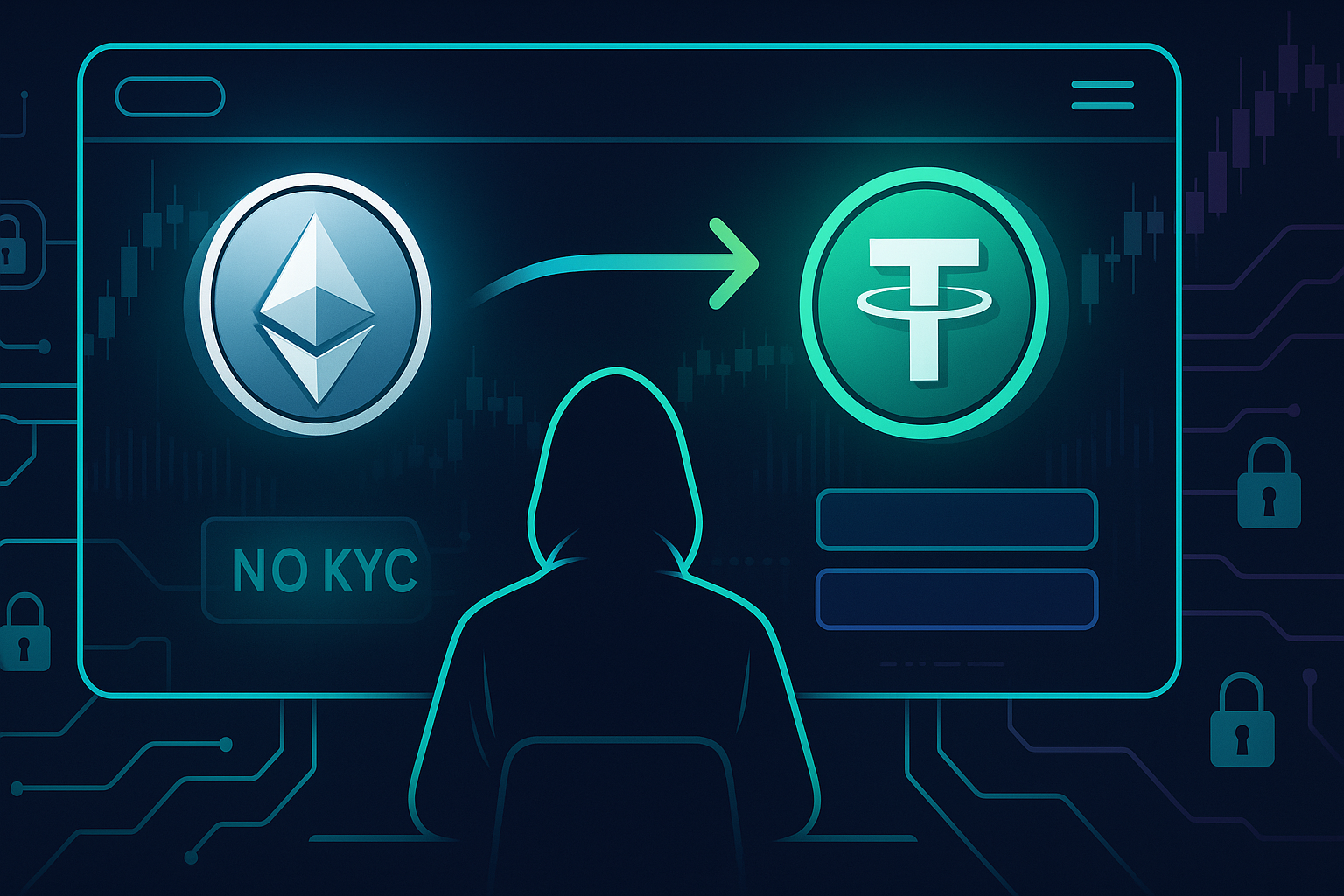
- Select ETH as the token you are sending.
- Select USDT as the token you want to receive.
- Specify the amount of ETH or the target amount of USDT.
- Verify the network (commonly Ethereum mainnet) and ensure that USDT is being received on the correct chain.
Most interfaces will show:
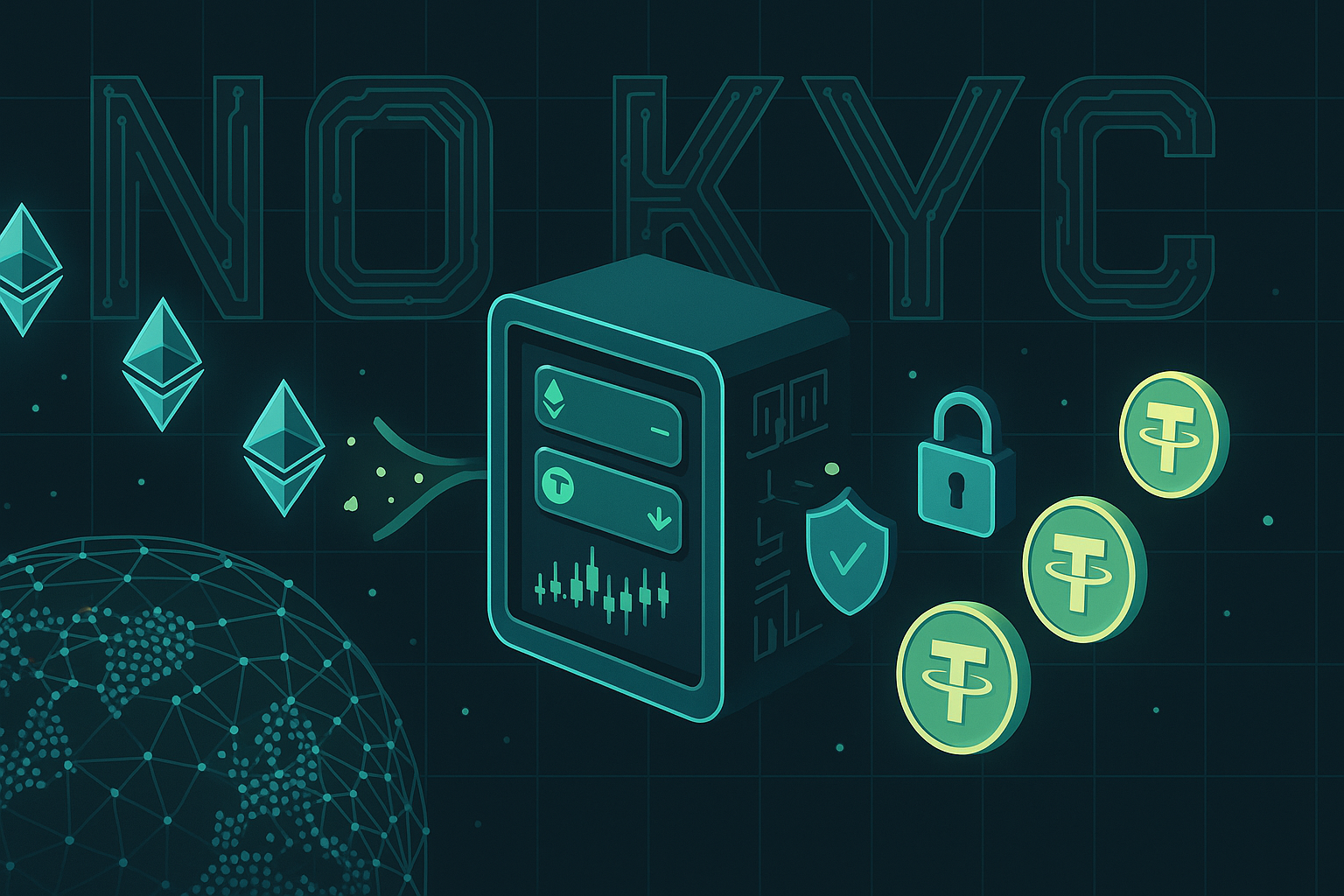
- The estimated amount of USDT you will receive
- The exchange rate
- Estimated gas fees
- Any additional protocol or service fees
Step 5: Review the quote and slippage
Before you confirm:
- Check the minimum amount of USDT you will receive after slippage
- Ensure the route and fee structure look reasonable
- Adjust slippage tolerance if necessary, but avoid setting it excessively high
For larger trades, consider splitting the order into smaller parts to reduce the impact of price movements and liquidity depth.
Step 6: Confirm and sign the transaction
Click “Swap” or “Confirm” on the interface, then:
- Your wallet will open a transaction window
- Review the transaction details, including the contract address and gas fee
- Confirm and sign the transaction only if everything looks correct
After broadcasting, you can track the transaction on a block explorer such as Etherscan by using the transaction hash.
Step 7: Verify receipt of USDT
Once the transaction is confirmed:
- Open your wallet and check the USDT balance
- If USDT does not show automatically, add the correct USDT contract address for the relevant network
- Confirm that the received amount matches or is close to the estimate, within the slippage range you accepted
Your ETH to USDT no KYC swap is complete, and your USDT is now held in your own wallet, not on an exchange account.
Practical Tips for Safer No KYC Swaps
1. Double check contract addresses
Always verify:
- The official USDT contract address on the network you are using
- Any contract addresses your wallet is interacting with during the swap
Use reputable sources like official project websites or widely known explorers, and avoid clicking random contract links from social media or ad banners.
2. Start with a small test amount
When using a new platform or route:
- Perform a small swap first to ensure everything works as expected
- Confirm that USDT arrives correctly and that fees are acceptable
- Scale up only after you are comfortable with the process
3. Protect your privacy beyond KYC
Skipping identity verification is only one part of privacy. Consider:
- Using fresh wallet addresses for different activities
- Avoiding public reuse of addresses tied to on chain identities
- Being mindful of IP address exposure when accessing DeFi interfaces
For those who take privacy seriously, a consistent operational routine is critical.
4. Monitor gas fees and timing
Gas fees on Ethereum can spike during periods of high activity. To optimize costs:
- Check average gas prices before swapping
- Consider scheduling swaps during off peak times
- Adjust gas settings in your wallet when appropriate, but avoid setting them too low to prevent stuck transactions
5. Stay informed about evolving rules
Regulatory frameworks around non custodial and non KYC tools continue to change. Keep up with:
- Guidance from local regulators or tax authorities
- Updates from the protocols and interfaces you use
- Community discussions around best practices and new risks
Being informed helps you adapt quickly if policies or platform behaviors shift.
📚 Related Articles
Conclusion: Balancing Privacy, Control, and Responsibility
Converting ETH to USDT with no KYC gives users a powerful way to maintain privacy, move quickly between assets, and avoid the burden of centralized onboarding. By using non custodial swap services such as a dedicated non custodial swap interface, you preserve control of your funds and minimize the personal data you share.
At the same time, these advantages come with responsibilities. You must manage your own security, verify contracts and addresses, account for gas and slippage, and remain compliant with laws in your jurisdiction. There is no support desk to recover lost keys or reverse mistaken transactions.
If you are comfortable with self custody and take basic precautions, ETH to USDT no KYC swaps can be an efficient, privacy respecting part of your crypto toolkit, letting you access stablecoin liquidity quickly without sacrificing your identity and autonomy.
Ready to Swap?
Convert your crypto instantly on GhostSwap — no KYC, no sign-up required.
Popular swaps: BTC to XMR | BTC to ETH | XMR to BTC | ETH to XMR | BTC to SOL